A BMW mechanic electrocuted due to KERS
Today marks the first day of private testing in Jerez, Spain. On this occasion, several teams have tested new aerodynamic features. BMW, for its part, tested the KERS, which will be mandatory on single-seaters starting in 2009. After a few laps completed this morning, many noticed that this new device, meant to recover energy produced […]

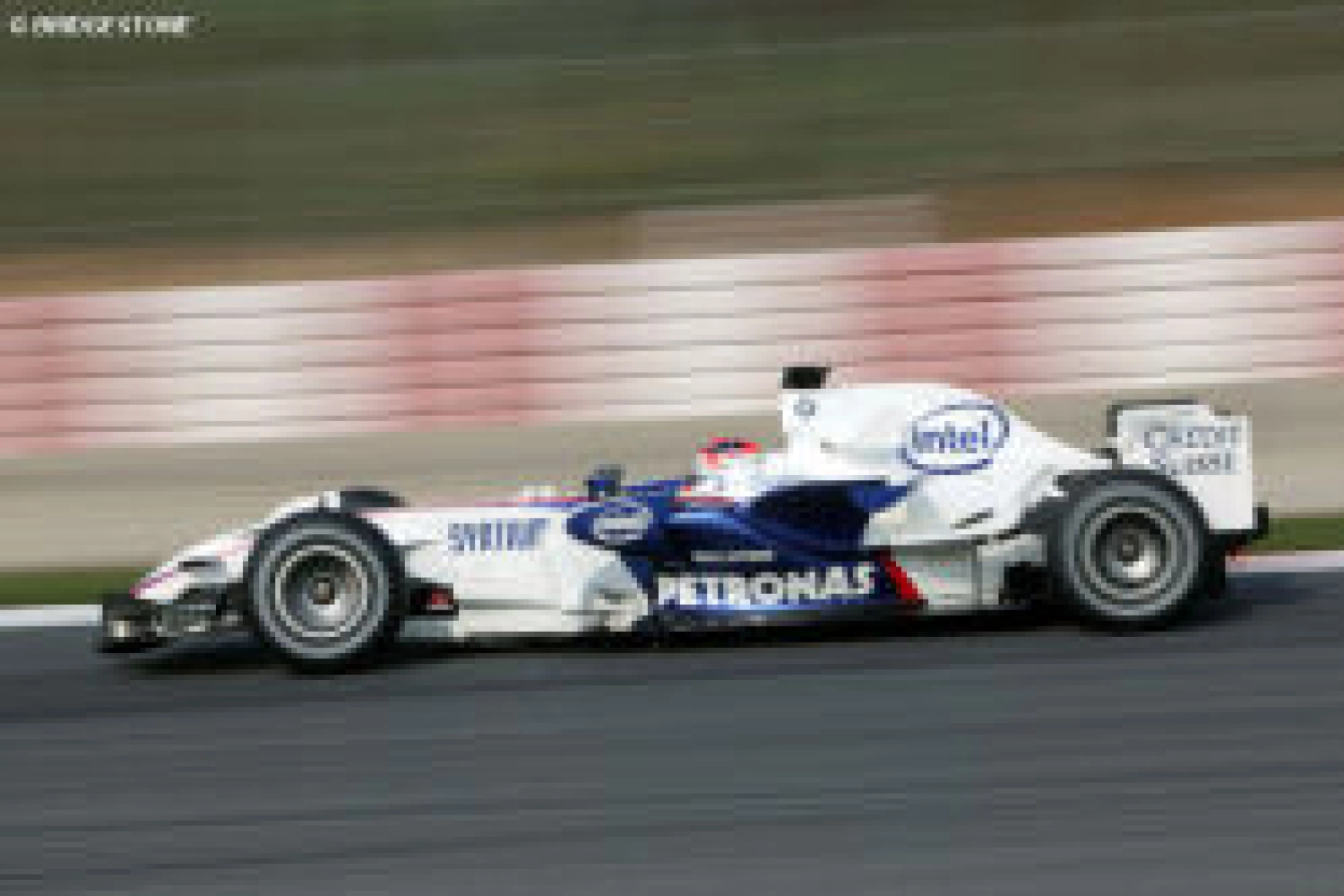
Today marks the first day of private testing in Jerez, Spain. On this occasion, several teams have tested new aerodynamic features. BMW, for its part, tested the KERS, which will be mandatory on single-seaters starting in 2009.
After a few laps completed this morning, many noticed that this new device, meant to recover energy produced during braking, was not quite ready after the electrocution of one of the Bavarian team’s mechanics.
Christian Klien, BMW’s test driver, is responsible for developing the F1.08 2009 evolution single-seater today. The Austrian driver completed three installation laps this morning and, upon returning to his pit box, parked diagonally in front of the BMW garage. Two mechanics, as is standard for any Formula 1 team, were then in charge of backing the single-seater into the garage. It was at this moment that the incident occurred.
The first mechanic to have touched the F1.08 using the KERS was thrown to the ground following an electric shock. Conscious, he was quickly taken to the medical center of the Spanish circuit. He suffers from a severe burn on his left hand, the part that came into contact with the bodywork, as well as slight scratches on the same left arm and back, a spokesperson indicated. He very quickly resumed his place within the team, but the KERS thus raises several questions regarding safety.
Indeed, just a week earlier, a Red Bull factory (in Milton Keynes, near London) had to be partially evacuated after a KERS battery caused an uncontrollable effect during a test. High-voltage batteries where the recovered energy is stored are the most challenging part to control, explain Toyota engineers. We must now understand a new area, connecting the engine, the battery, the central unit (the brain of the car), and the chassis. We have never done this before.
The FIA has entrusted the delicate task of developing the KERS distinctly to each team on the grid… It must be used starting in 2009 to recover kinetic energy created by an F1 car during braking, for example. The surplus is then stored in a super battery, allowing the driver to ‘boost’ their car during overtaking.
The KERS (Kinetic Energy Recovery System) is currently being tested by Red Bull, BMW, as well as recently by McLaren and Williams.