Victor Jabouille: “You feel what the legends experienced”
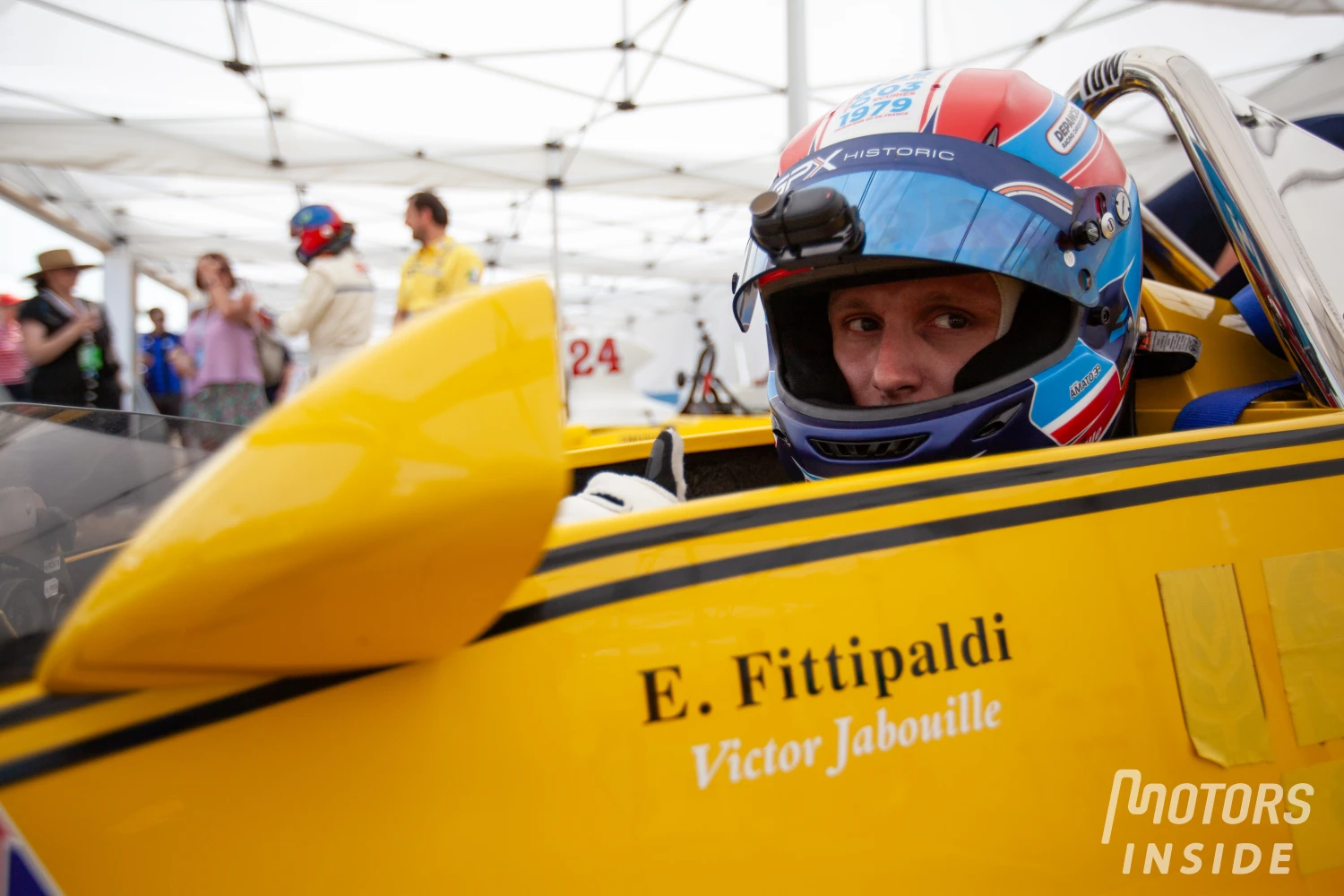
At last weekend's Imola Grand Prix, Victor Jabouille drove the Fittipaldi F8: a myhtic single-seater raced in Formula 1 in 1980. During a weekend marked by tributes and references to the past, driving Emerson Fittipaldi's F1 car was a magical experience: he recounts.
Historic races have been gaining in popularity lately. Even more so in this year 2024, as Formula 1 is paying multiple tributes to one of its greatest champions: Ayrton Senna. This May marks thirty years since the Brazilian champion tragically left us after an accident on the Imola circuit.
A story of passion and the transmission of heritage
Thus, for the Monaco Grand Prix, the McLaren team designed a specific livery dedicated to Ayrton Senna. The Brazilian was a McLaren driver and driving on the streets of the Principality represents some of his finest achievements. The Silverstone circuit is also preparing an event dedicated to the Brazilian icon during its “Classic” race.
Today, historic races represent an essential part of the global motorsport world. Many races take place all over the world, reviving the spirit of ancient races. You could see it during the Historic Grand Prix of France at the Paul-Ricard circuit last April.
It is above all about continuing to operate machines that are still able to offer huge sensations to their pilots, but also a lot of emotions to the increasingly numerous spectators.
These single-seaters, these prototypes, these exceptional racing cars have built the history of our favorite discipline in the hands of drivers and teams committed with passion and often at the risk of their lives. With dedication and fierce battles, this history has been written little by little through numerous exploits.
Today, in Imola, a fleet of F1 cars from the 70s/80s (among others) has hit the track again to make us relive these exploits, to dive back into this golden age of Formula 1.
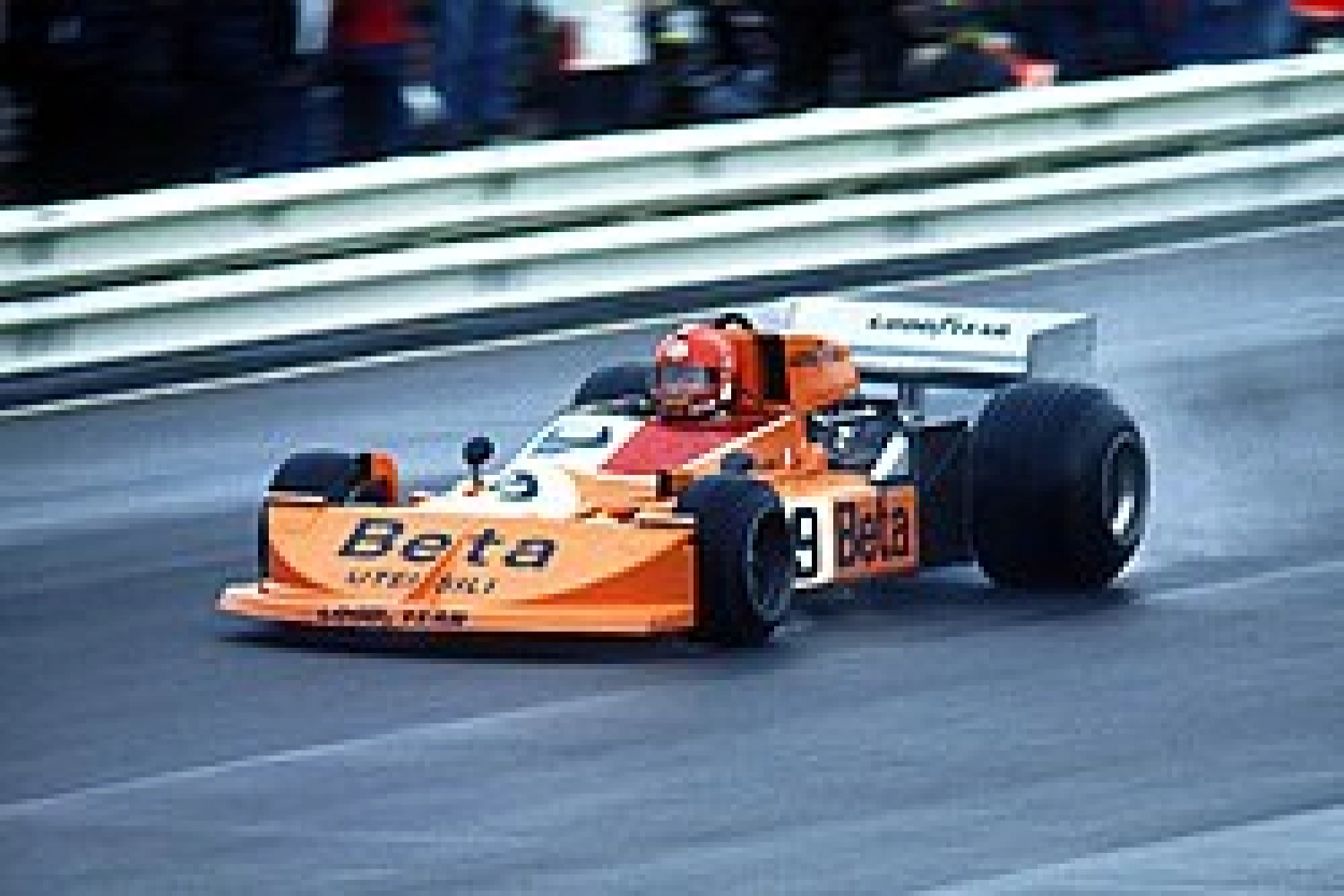
Among them, Victor Jabouille drivers the Fittipaldi F8. For him, it is above all the opportunity to continue to perpetuate his surname. The name “Jabouille” resonates in the minds of all Formula 1 enthusiasts, and we are fortunate to find it attached to a single-seater that once on the track conveys the emotions of that era to us. The heritage is well transmitted!
Here is our meeting with Victor Jabouille.
« It’s back to the past
During a weekend that began with the moving “run for Senna,” tributes honoring the Brazilian driver and Roland Ratzenberger continued throughout the weekend. On this occasion, many drivers were behind the wheel of historic Formula cars. Victor Jabouille (son of Jean-Pierre Jabouille) was one of them.
Like at the Historic French Grand Prix a month ago, he was the driver of the Fittipaldi F8. All smiles after his last driving session, he granted us an interview in the heart of the paddock before the F1 cars hit the track… Not to mention his relaxation and his naturalness that characterize him so well:
Valentin Vallet: The Imola circuit is a special track, driving such a car on a legendary circuit, what does it represent for you?
Victor Jabouille: These are unheard-of experiences because when you drive with old historic cars, historic formulas, it remains etched in your memory forever. Especially Ayrton Senna’s story, it doesn’t leave you indifferent. Especially since today marks the 30th anniversary of his passing.
So yes, there is a real tribute and a real enthusiasm in the historical field. And I think that even the spectators really liked the aspect of old vehicles, and that they are present in the F1 paddock, it’s great!
V.V.: From your pilot’s point of view, what changes when driving these cars?
V.J.: Wow!
You have so many things, so many sensations. In fact, it’s back to the past, you feel the sensations of what the legends were experiencing. When you drive Emerson Fittipaldi’s car, who is an icon of F1, it’s huge. The sensations are exceptional… You have the ground effect, you have lateral grip and you are all in a mechanical gearbox. So, when you push the limits of the car, it’s much more primal. It’s totally different from current single-seaters. I think we all have something to learn from history.
V.V.: Do you think it helps you improve your driving?
V.J .: Yes and no, actually. I think you learn concepts. Each category has its own specificity. But I still think we have things to learn from history because you have limits and constraints that you no longer face in today’s car races. And that, I think, is something missing in current categories.
V.V.: The taste for risk is even more felt in old single-seaters I imagine. As a driver, is it something stimulating despite the danger?
V.J.: This is where you feel the reality of the pleasure of driving and observing difficulties, danger, and handling because often you can miss a gear, you can miss your turning point. You hit the limiter a little too much and you lose completely…almost by 5 tenths!
This is completely crazy.
With the current F1 cars, you go off into the gravel trap, in fact, you lose two tenths and just run the tyres through the gravel.
While others before were really… You were all in, on the edge, living on the edge of a knife, and you could die from it, and behind you had a real…
You were focused, you had real adrenaline, real concentration.
V.V.: You drove with Sebastian Vettel, what does it feel like to be next to him on the track?
V.J. Ah extraordinary driver! Sorry, I’m not sure if swearing is okay, but it just came out. But extraordinary, when you drive with him and he looks back at you… and when you’re side by side with this world champion, it’s iconic. Especially since he also has a story and drives with old single-seaters, including Senna’s McLaren. It’s extraordinary. You can’t remain indifferent.

Victor Jabouille’s driving photo album
Find Victor’s performance in about thirty historical photos.
With Nicolas LEROOY