The DRS: false good idea?
The DRS, drag reduction system, allows drivers to open their rear wing on straight lines to overtake when they are within one second of the driver in front. It also has other advantages but comes with its fair share of disadvantages. Some also argue that overtaking with the DRS is too easy or lacks excitement. So, should it be removed? Regulated? Reduce its activation zones on certain tracks?

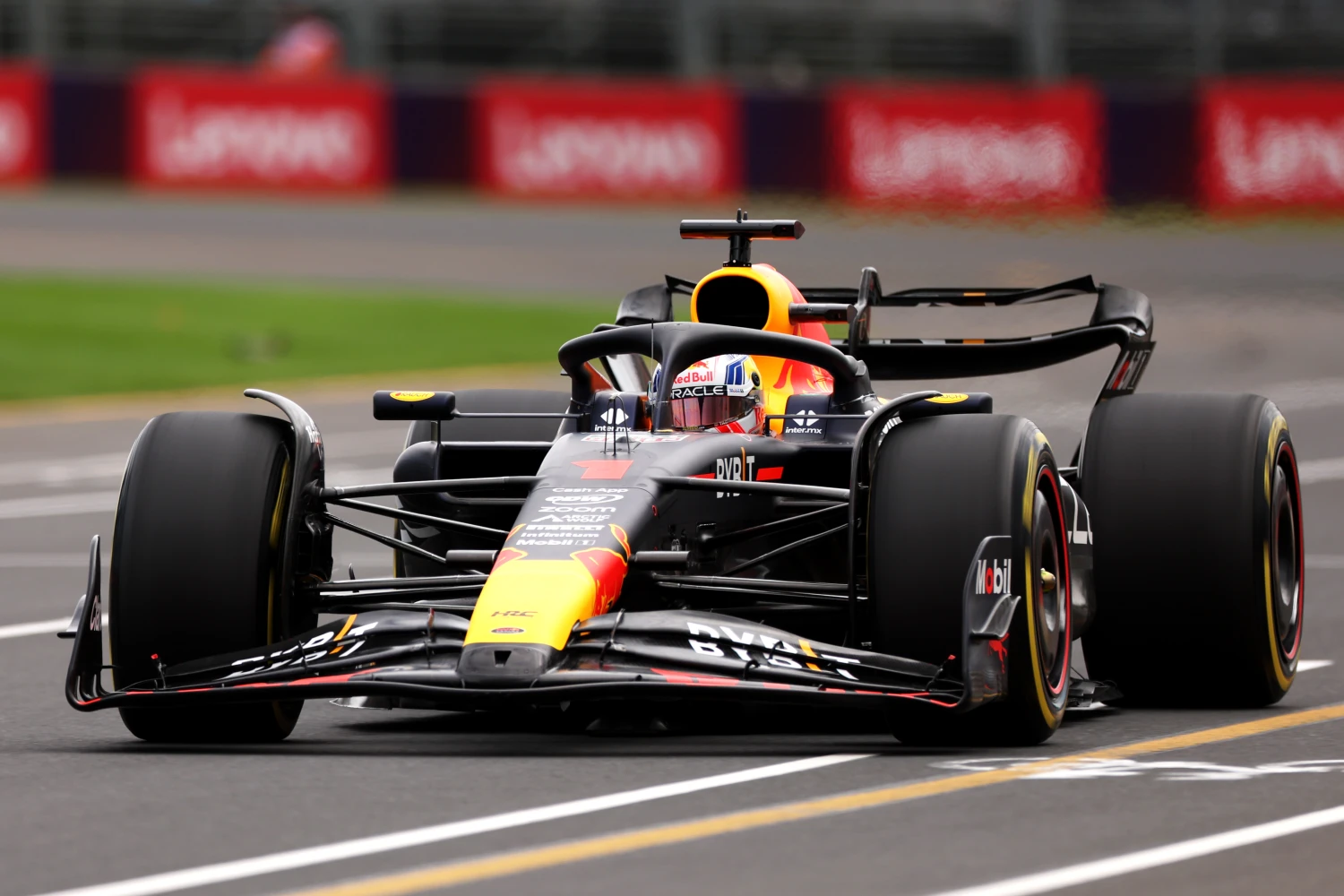
The “Drag Reduction System” (DRS), a drag reduction system, was implemented in Formula 1 in 2011. Since then, it has never left the cars. However, its presence sometimes raises questions: it greatly benefits cars with high top speeds, sometimes even spoiling the show. Nevertheless, overtaking is one of the main reasons for its implementation.
Better overtakes without DRS?
The issue of overtaking is therefore increasingly being raised. We can see on many circuits that single-seaters are capable of reaching insane speeds compared to their competitors, who are easily overtaken thanks to the DRS.
Some regret this lack of fighting because of the DRS, sometimes very advantageous. Even worse, the drivers no longer dare to overtake in corners or before a DRS zone all the time, for fear of being overtaken on the next straight.
The DRS has become a strategic tool, perhaps even too much. In Brazil in 2021, Hamilton built his victorious weekend on the power of his Mercedes engine and, as a result, on his top speed with the activation of the DRS. Last year, there were many moments when Charles Leclerc’s Ferrari was unable to compete with Max Verstappen’s Red Bull and his speed. In the Saudi Arabian Grand Prix in 2022, for example, these two had fun with the DRS but Leclerc ultimately couldn’t win against Verstappen’s speed.
Today in Formula 1, the majority of overtakes are made on straight lines, with the DRS. There are not fewer overtakes, but they are sometimes lacking flavor. How can we blame the drivers for waiting for a straight line to overtake? The easiest solution is the best. Moreover, on certain tracks, the phenomenon of drafting between cars could be enough to generate beautiful overtakes.
Review activation zones on a case-by-case basis
There are circuits where the DRS proves to be indispensable, those where straight lines are not predominant for example. In Hungary, there is only one DRS zone, almost essential considering the difficulty of overtaking on the rest of the circuit. It therefore provides an opportunity to overtake. But on certain fast tracks with numerous straight lines, the DRS starts to pose problems.
Jeddah, Baku, Miami, São Paulo, and soon Las Vegas, are circuits where the DRS can become troublesome. Why? Simply because the straight lines on these circuits are long and numerous. The DRS allows for overtaking with extreme ease, even before reaching the end of the straight.
The solution to this could simply be to not allow DRS on very long straight lines. If the driver behind is close enough to the driver in front, slipstreaming could be sufficient and create more battles. This would also require drivers to be clean in their driving in order to approach the straight line as close as possible to the driver in front.
Later in the year, on the Las Vegas circuit, drivers will be able to experience a new long straight line: the famous Las Vegas Strip, a luxurious boulevard in the American city, measuring 1.9 km in length. The drafting effect there would be more than enough to overtake. Yet another thing to frustrate drivers with low top speeds and fans.
The risks
The DRS system also involves risks, which can be very dangerous. Opening the rear wing reduces the car’s downforce, which is why it is only used on straight lines. The car would be completely destabilized with the DRS open during corners.
In 2018 in Monza, Marcus Ericsson got caught. At the end of the straight, his DRS did not close and when he braked to approach the chicane, his car hit the wall and rolled several times. Luckily, he emerged unscathed. The same thing happened to Ricciardo with Renault during testing in Barcelona in 2019: the Australian crashed into the wall after the upper part of the rear wing exploded. The DRS can become dangerous in case of malfunction.
Change the functioning of the DRS?
Finally, among the numerous solutions to change the operation of the DRS, one seems particularly interesting. Of course, there is no question of allowing the DRS anywhere other than on straight lines, but allowing the driver to use it whenever they want and with a limited number of openings.
No longer needing to be within a second, the driver will be able to activate their DRS to attempt to gain speed on the straight in order to try and get closer. With a limited number of uses, a strategic aspect would come into play. And what if a driver catches up to a competitor but no longer has any DRS openings available? They would then have to pass them in a different way or simply take advantage of the slipstream.
This operation is only at the hypothesis stage. However, on paper, it seems interesting for track battles and strategy. Now, it will be necessary to convince the officials of F1 and the FIA. The DRS is a tool that has become essential but deserves to be reevaluated for better use.