Ross Brawn: “We did not anticipate this situation on the pontoons”
The Mercedes surprised everyone in the paddock this morning by presenting its new features, including the Formula 1 technical and sporting director, Ross Brawn.

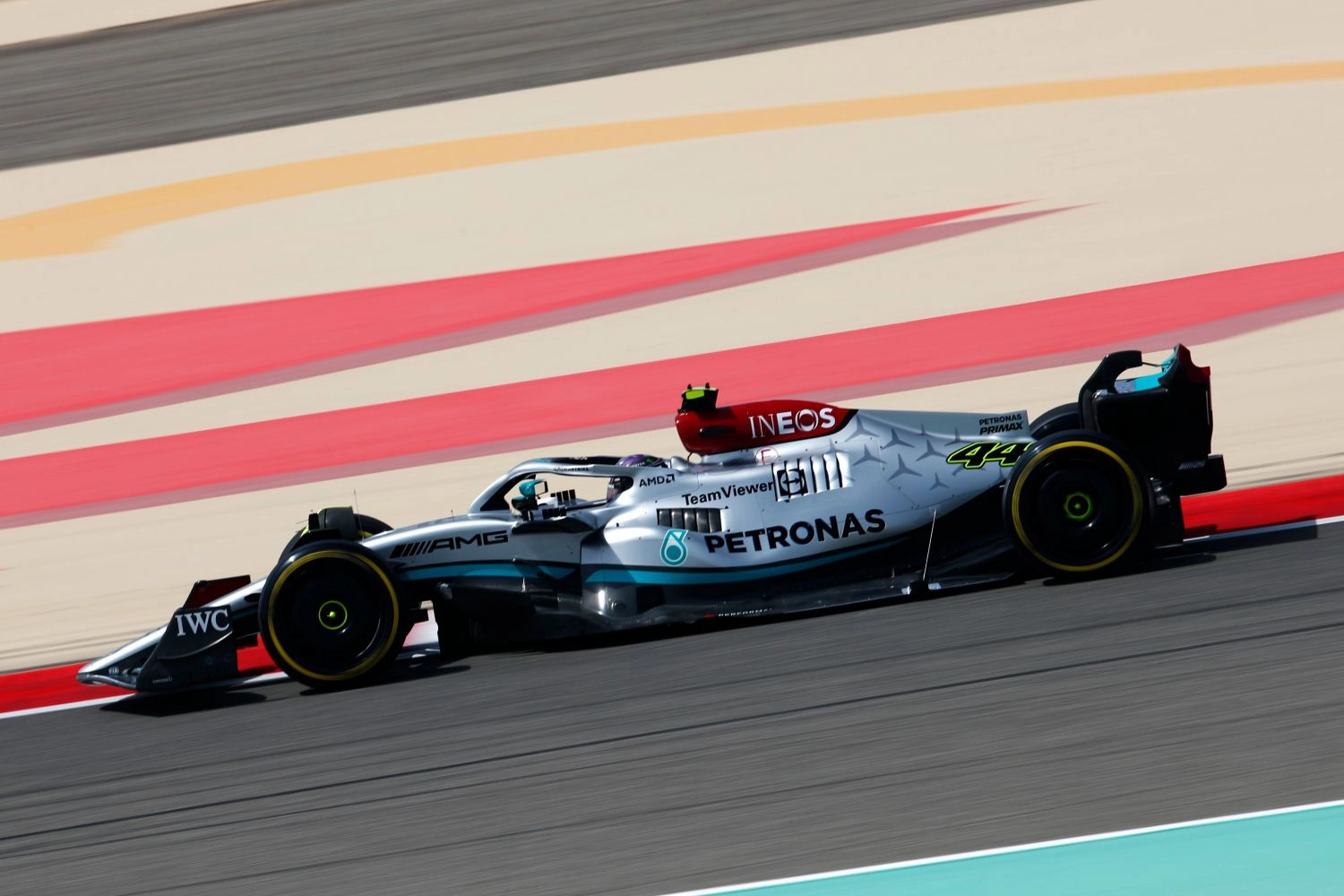
The impressive evolution of the W13 has sparked conversation in the paddock during this first testing session in Bahrain. No one expected to see the Mercedes with barely visible sidepods, while they were clearly present in Barcelona.
This new solution has never been considered by anyone in Formula 1, which is why the question of the legality of the process was raised. A question to which Ross Brawn promptly responded.
« I think there’s no doubt that we didn’t anticipate the concept of Mercedes, admits Brawn. » It’s an extreme interpretation of the regulations. And I believe inevitably, there will be a lot of debates about this interpretation. That’s what happens when there are new rules. And it doesn’t matter if you’ve tried to block all the options, and believe me, we have closed hundreds, as I said, innovation in F1 is always extreme, he explains.
From our point of view, it is important to know if it affects the objective of the regulations, says Ross Brawn. From the teams’ point of view, it is mainly about making sure that no one goes down a path they do not deem correct. So I think it will lead to a lot of discussions in the coming days.
The FIA has assessed the legality of all the cars. However, it would only take one team showing excessive interest in the Mercedes to discover a detail that had gone unnoticed until now. And of course, this completely unexpected new concept already piques the interest of Christian Horner, the team principal of Mercedes’ biggest rival, Red Bull.
The importance of innovations in F1.
Ross Brawn continues his explanations: « It’s impressive [the W13]. And I think it’s a brilliant innovation for Formula 1 and it pushes the boundaries very sensitively. And as I said, there are no compromises in terms of the objectives we wanted to achieve. I think we should be fair. If a team comes up with ideas, innovations, novelties, we should not penalize them directly […]. I think they [the FIA] agree with that.
But of course, a team can come along and raise an objection that the FIA did not take into consideration. And there, you have a problem […]. And afterwards, a team comes with a perspective that has never been taken into account and has a strong argument. So I am sure that there will be a lot of discussions. But it is impressive for a set of rules that everyone has deemed too prescriptive. We are looking at all these solutions.
Also read: Mercedes arrives with almost invisible sidepods at Bahrain testing.
Ross Brawn reminds that it is possible to adjust the technical regulations during a season, even if two teams see things differently. Indeed, the rule states that the approval of 80% of the teams is sufficient.
Towards a modification of the rules?
« I think that once the interpretation of Mercedes has been understood, then we can have a fair vision of its impact, what effects it will have. Because imagination is a very vague area. At the end of the day, you have to look at the details of the regulations because you have to go in front of a court, that’s what they will judge. But the wording can change, with a majority of 80% of the teams. So if something has slipped through, then the teams know that it could have happened, and that it can happen during the season. We must therefore see how this [Mercedes’ innovation] will play out », concludes Brawn.
The FIA must therefore ensure that this new concept aligns with the federation’s objectives for the upcoming season, otherwise the rivals of the star team will take care of it.