Close-up on the future track of the French Grand Prix
The French Grand Prix of Formula 1 is fast approaching, and as the weeks go by, the organizers are revealing a clearer picture of what the event will be like. This time, the track layout has been presented, and Motorsinside was on-site to take a tour of the circuit, accompanied by Stéphane Clair, the Director of the circuit, as well as Cyril Abitboul and Frédéric Vasseur, the Sporting Director of Renault Sport F1 and Alfa Romeo Sauber, respectively.

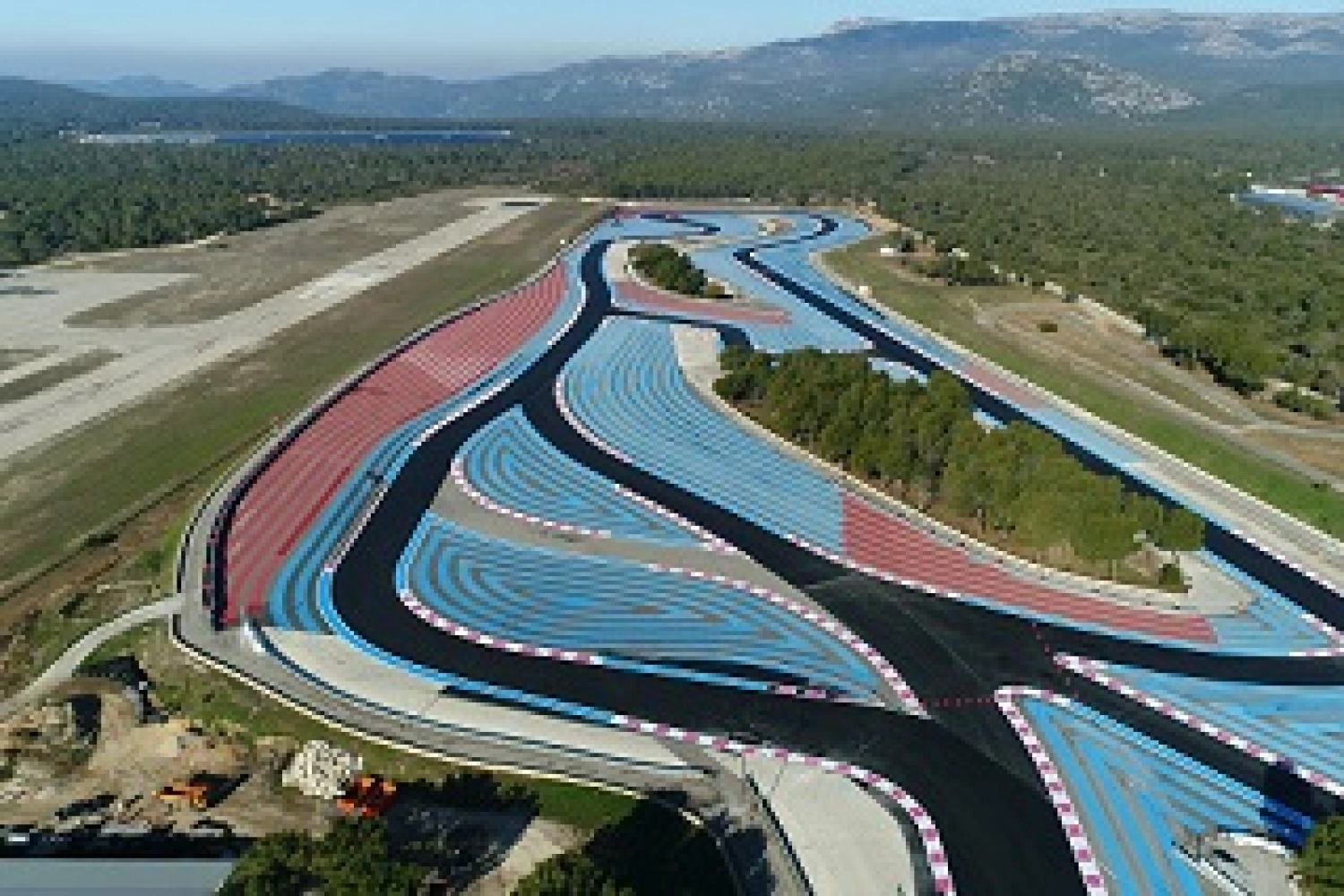
Fully equipped with a new surface that might pose some issues for Pirelli to solve, the track of the upcoming French Grand Prix, which will take place on the weekend of June 24th at the Paul Ricard circuit, is expected to cover a distance of just under 6 kilometers.
The primary intention of Stéphane Clair, the track director, was above all to preserve the character and speed of the layout that had built its reputation until now. A total investment of seven million and two million specifically allocated to efforts concerning the track were necessary to host Formula 1 this year.
Access to the public has, of course, been a major focus of these modifications with 22 additional grandstands to be built for a capacity of 51,000 seats. Furthermore, almost the entire track will be accessible on foot, and, as the ultimate pleasure for the most daring spectators, they will be able to invade the track at the last turn after the race to attend the concert that will close the weekend. This, therefore, validates the timing choice of the new Formula 1 owners with the race starting on Sunday at 4:10 PM, a wise choice according to Christian Estrosi, President of the Public Interest Group organizing the Grand Prix.
Before that and aside from Formula 1, spectators will be able to attend various sessions and races of F2 and GP3 that have confirmed their presence for this French round.
On the track side, drivers should discover a character-filled layout, particularly with the first corner, a slight uphill left/right chicane enhanced by a bump that obscures visibility upon exit. However, it is especially at the Camp corner that spectators should be in for a treat, with a view of the end of the starting line and the beginning of the Mistral straight. The grandstands, numbering four, should be arranged to give a stadium-like atmosphere to this crucial hairpin as it will serve one of the DRS zones on the circuit in the following straight. Speeds approaching 340 km/h are already predicted.
Furthermore, many corner entries have also been widened to encourage overtaking, such as turn number 15, known as the Pont turn, the last turn on the track, which will therefore be very selective.
Of course, as is customary on modern circuits, the run-off areas are asphalted. Stéphane Clair justified this choice, rejecting the idea of old-fashioned gravel traps, to promote better race fluidity and a quicker response capability from track marshals if needed.
The starting line:

The first corner chicane:

The Turn of the Camp:

The Turn of the Bridge:

Copyright photo: Drone06