2017 Review – Sauber: A Turbulent Transition
At the end of 2017, the Motorsinside editorial team invites you to look back on the past season and assess the teams and drivers. For this first retrospective, we honor the last with the Sauber team.

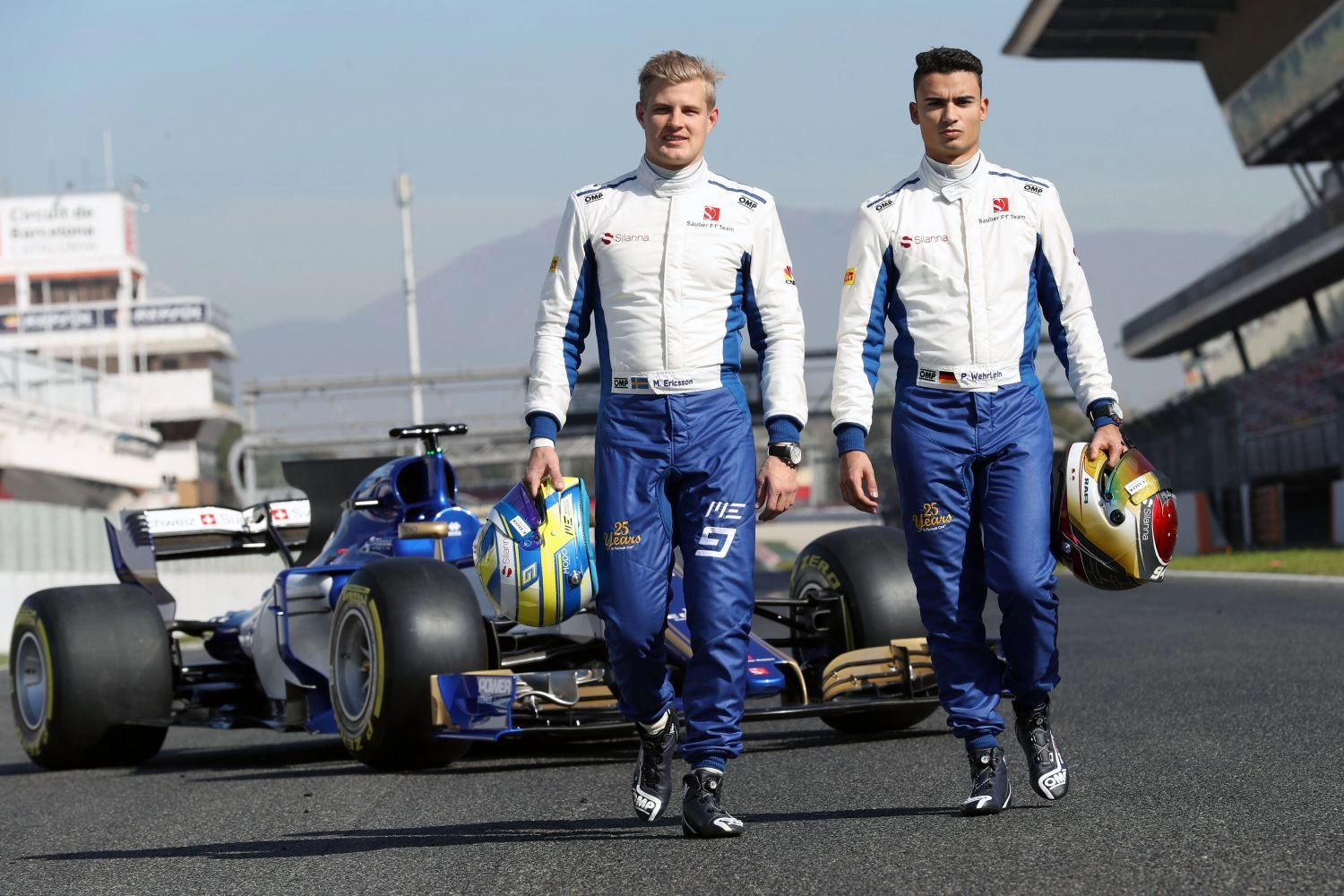
10th in the championship, 5pts
Best qualification: 11th
Best race result: 8th
With a 2016 Ferrari engine, limited financial resources, and opaque management, the Sauber team started the year in complete uncertainty, expecting to struggle on the track. Additionally, their main driver Pascal Wehrlein got injured just before the season during the Race of Champions, thus missing the first two Grand Prix.
Antonio Giovinazzi called in as a reinforcement to cover the absence of the German, the situation of the Swiss team was disastrous on the morning of the first race of the year in Australia. The Italian, an accomplished but rookie driver, is undergoing the tough learning process of high-level motorsport and breaks a lot of carbon, which results in costly repairs for Sauber.
Alas, mid-season, just before the Azerbaijan Grand Prix, the new consortium owning the team decides to dismiss Monisha Kaltenborn and place trust in Frédéric Vasseur as the team’s Sporting Director to reconstruct a team lacking direction. Fortunately, at the start of the season, a returning and fit Wehrlein manages to secure 5 championship points by finishing in the Top 10 twice, in Spain and in Baku.
The rest of the season was nothing but a long ordeal, with, however, the satisfaction of having been able to compete with Toro Rosso, and even surpass them in the last races. The announcement of the technical and commercial partnership with Alfa Romeo for 2018 opens up enticing prospects for the future of one of the oldest artisanal teams on the grid.
Editorial note: 11/20
Pascal Wehrlein:
18th in the championship, 5 pts
Best qualification: 12th
Best race result: 8th
The German missed the first two Grand Prix of the season due to his neck injury following his accident at the Race of Champions in January. His team and manager, Toto Wolff, remained discreet about his recovery, casting doubt on his ability to return to driving a Formula 1 car. But Wehrlein quickly proved he hadn’t lost any of his talent and promptly scored important points for his team in Spain and Azerbaijan, the only ones of the season for the Swiss team.
The rest of the season will be a bit more complicated for the German-Mauritian who has been somewhat overshadowed by his teammate Marcus Ericsson. A record that will unfortunately likely not allow him to secure a full-time seat for the 2018 season.
Editor’s Note: 13/20
Marcus Ericsson
Unranked in the championship, 0 pts
Best qualification: 11th
Best race result: 11th
Lacking success, the Swede failed to open his points tally for the entire year. Often aggressive, Ericsson retired six times during the season, an inconsistency too significant to hope for a good result, even by persistence. But the future of the Kumla native seems closely tied to Sauber for a long time, as the Longbow Finance consortium, owner of the team, is closely connected to its management.
Editorial note: 7/20
Antonio Giovinazzi
Not ranked in the championship, 0 pts
Best qualification: 16th
Best race result: 12th
The Italian made his Formula 1 debut with the Swiss team, pushed into Wehrlein’s seat by Ferrari, of which he is a member of the Driver Academy. To say the least, his learning experience was painful. A solid 12th in Australia for the inaugural round, Giovinazzi completely missed his race in China, destroying his car twice against the barriers, both in qualifying and during the race. Sidelined after Wehrlein’s return, he found refuge with Haas where he took part in several free practice sessions.
Editor’s Note: 8/20