Renault powertrain performance better than expected"
After a complete overhaul in 2017, Renault wanted to see the improvements of its new engine dedicated to F1 2017. And the results seem better than expected.

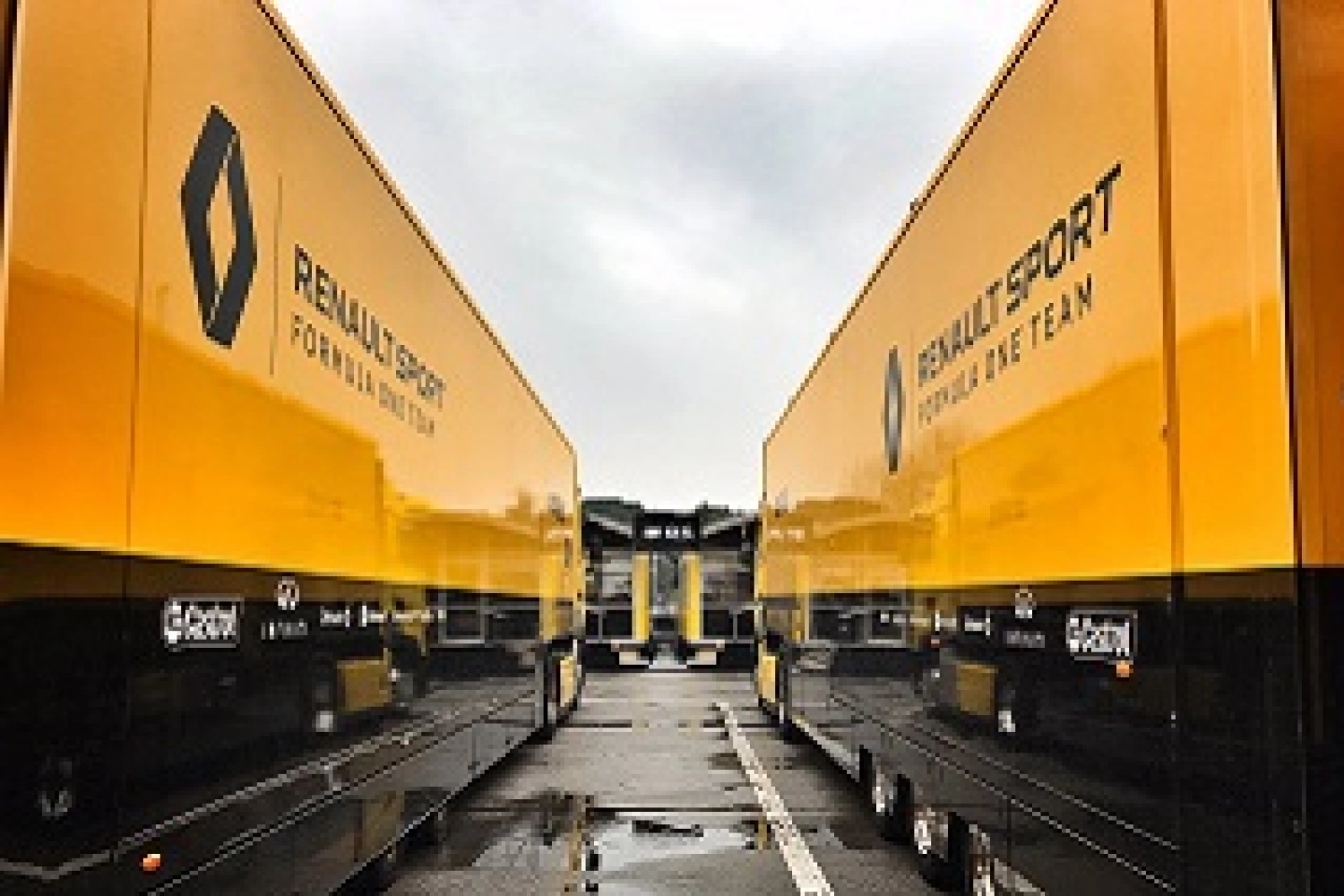
Renault’s entry into the new engine regulations was very difficult in 2014, with mediocre reliability, which improved over time, and performance well below the competition. Although the Viry-Chatillon team made significant progress in 2015 and then in 2016, Renault decided to completely revise its approach for 2017, taking advantage of the end of the token system, which allowed for unrestricted development of power units.
However, some issues with the power unit have forced Renault to ask the drivers to use a rather conservative mapping to reduce problems related to the ERS of the French block: “We are at the level of the set objectives, maybe even better for reliability,” says Cyril Abiteboul, director of the Renault F1 team. “This year, we have an entirely new architecture, not only at the engine level but also the ERS. This involves a big challenge, especially in terms of reliability, so there is no surprise.”
However, the times achieved by the Renault-powered drivers are far from ridiculous, with a 6th place for Max Verstappen, less than a second from the best time, followed by Carlos Sainz. “We have seen the performances we wanted. The potential is there,” according to the Renault manager.
However, performance doesn’t mean much if the car doesn’t make it to the finish line, which requires Renault to do a conscientious job at the start of the season, namely choosing which engine specification to use to balance power and reliability: « Anything can happen in Melbourne, we are doing everything we can so that only positive things happen to us. We think we have the situation more or less under control, but these power units are so complex to manage that we have a large number of decisions to make before Melbourne that will impact our position at the end of the Grand Prix, but also whether we cross the finish line or not. »
One of Renault’s clients, Red Bull Racing, which uses a Renault engine rebranded as Tag Heuer, obviously wants to compete for the title every year. In a year where engine power is truly critical with the new regulations, whether for chassis or engines, Cyril Abiteboul stated that his customer team will be “clearly in a position to fight for the championship” with the French engine.
If Renault may have encountered some reliability issues during winter testing, the performance seems to be there, although slightly below Mercedes and Ferrari. The French engine manufacturer still needs to ensure the reliability of its engine for the first Grand Prix, to enable its team and customer teams to reach the finish line quickly.