Newey: F1 Faces a “Serious Danger”
For Red Bull's technical director, Adrian Newey, the regulatory direction favoring engines presents a risk, especially in the event of prolonged domination by one engine manufacturer over others.

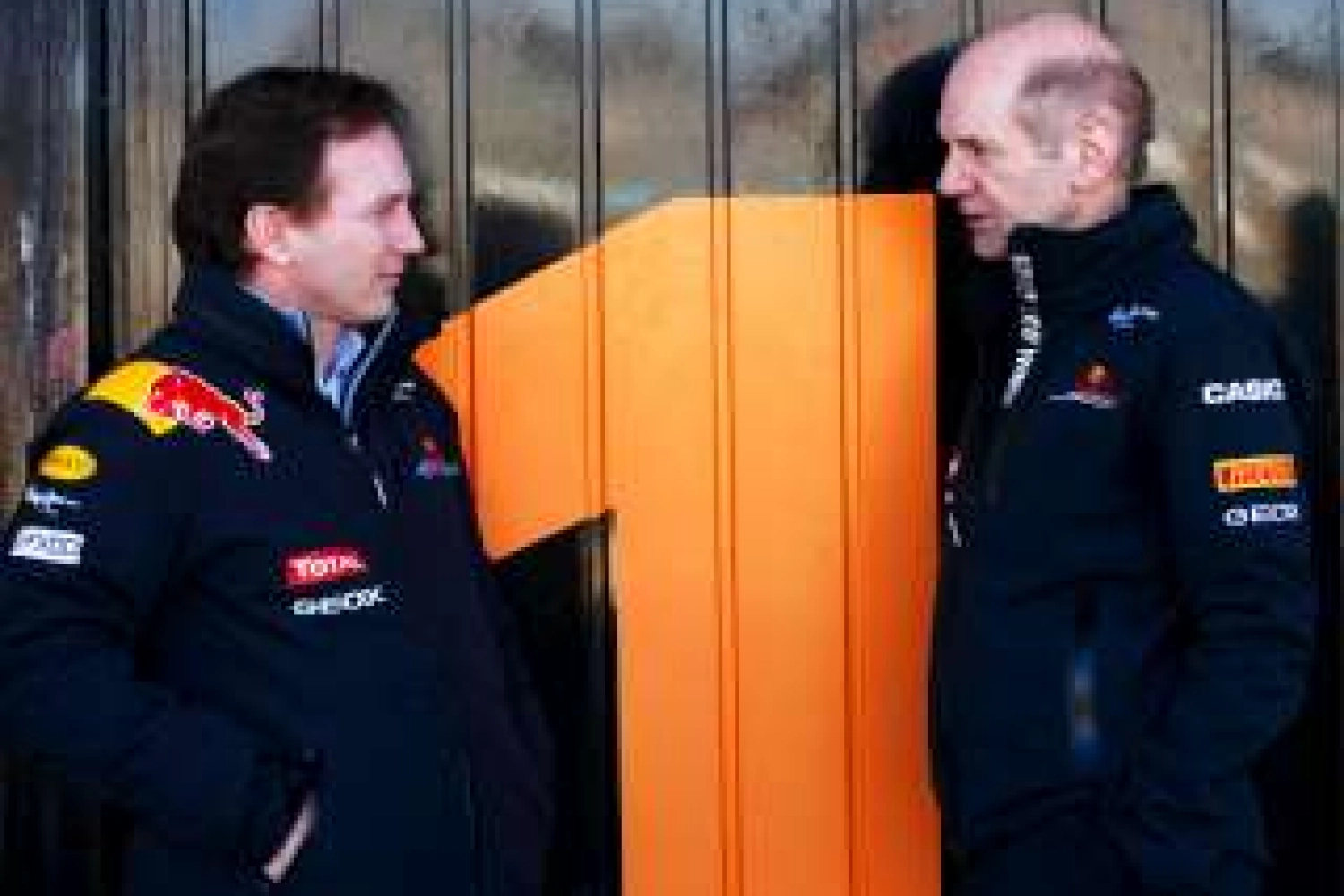
On the sidelines of the Canadian Grand Prix, Red Bull announced that it has reached an agreement with Adrian Newey, its technical director, regarding a step back for the British engineer for the upcoming seasons. The mastermind behind the world-champion Red Bull cars – RB6, RB7, RB8, and RB9 – has expressed a desire to invest in other projects, as creativity in Formula 1 is increasingly being constrained by regulations.
For our British colleagues at Autosport, the mastermind of the Milton Keynes team commented on the trend initiated from this season, which aims to prioritize work around the power unit – the famous power unit and its hybrid technology: “The current regulations are engine-oriented,” he explains, before continuing: “At some point, probably in the coming years, it’s going to stabilize.”
However, he believes that engine freeze poses a risk, especially if a manufacturer has a clear advantage: « There is a serious danger with the freeze that will gradually take place over the next 18 months, because it is uncertain, if an engine manufacturer emerges with an advantage, what will happen at that point. Will this advantage be maintained for a longer time; in that case, do we have to give up? »
The regulations in F1 impose an engine freeze to prevent an arms race around power units. If, before each season, the engines are frozen, which prohibits any significant development during the year on the material aspect (except for issues of reliability and/or cost), the off-seasons can allow manufacturers to review their work, as envisaged by Renault for 2015.
Despite everything, at each off-season, the list of potentially replaceable parts by engine manufacturers will shorten. Thus, Appendix 4 of the Technical Regulations for F1 lists 66 parts in total, of which 61 will be modifiable in 2015, 51 in 2016 and 2017, 43 in 2018, and then only 3 in 2019 and 2020.
Adrian Newey concludes by saying that the regulations should be reviewed: « It does not seem to be a particularly satisfying situation at the moment. The rules need to be fundamentally rethought, in my opinion. »