Brundle doubts active suspensions
Martin Brundle expressed his doubts about active suspensions as a possible area for cost reduction in the future.

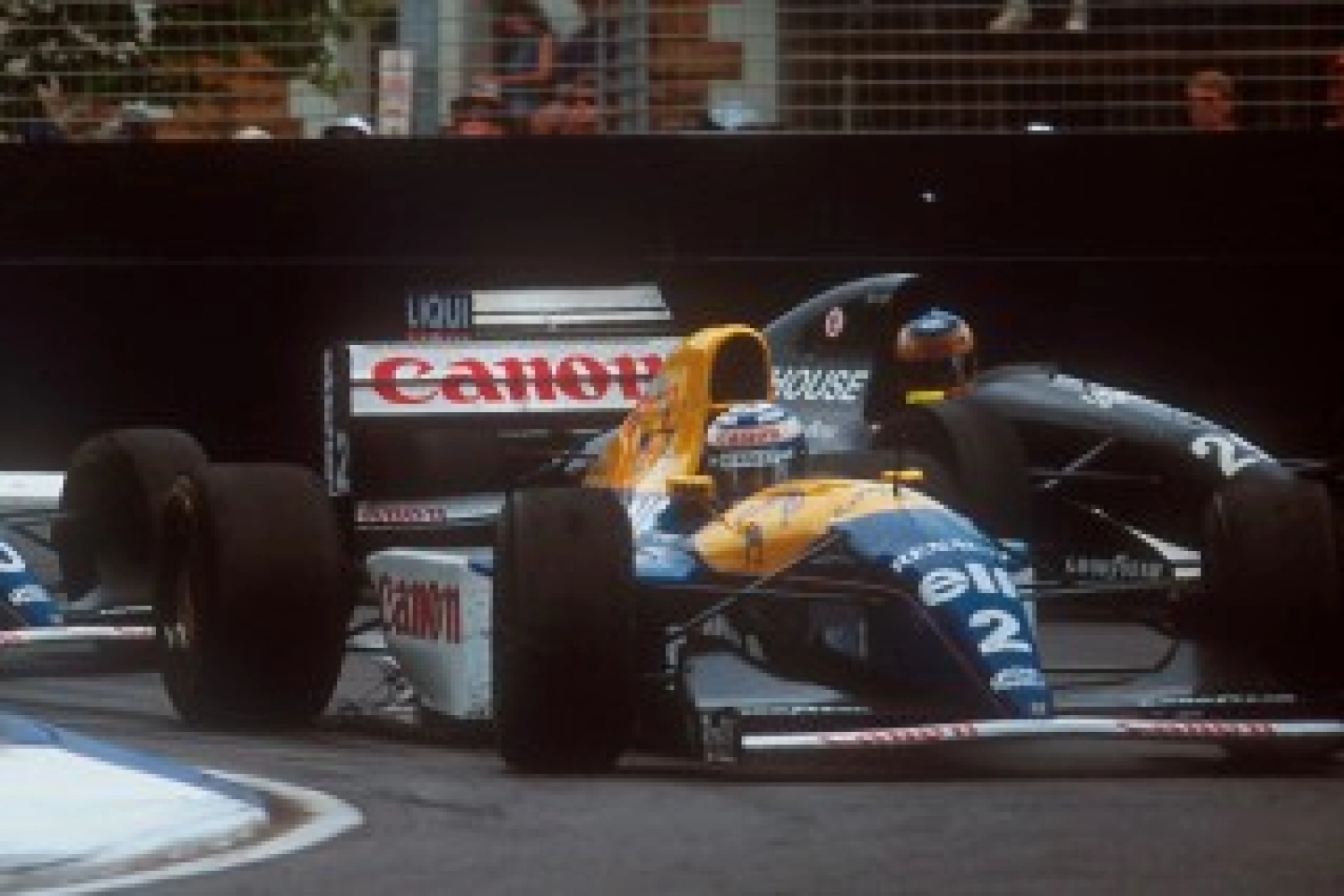
Among the possible measures considered for cost reduction in F1, the teams suggested a few days ago a possible return to active suspensions and a switch to 18-inch wheels on the single-seaters. Nonetheless, some observers are questioning the interest of such a change in the cost-cutting policy.
This is particularly the case for Martin Brundle, a consultant for Sky Sports and former driver for Tyrrell, McLaren, and Jordan, who is a bit concerned about these potential developments: « This concept and the 18-inch rims mean that you start over with your suspension as well as with the aero, because a large part of the suspension arm is in the tire sidewall with the 13-inch rims. »
He fears single-seaters too embedded in the trajectory: « If you switch to 18 inches, you must put a lot more flexibility in your suspension. It’s a dream for aerodynamicists. My concern is that we will return to cars that look like Scalextric cars [the small electric circuits made of rails, ed]: glued to the road. »
From a technical standpoint, he believes that active suspensions would be an advancement: “It’s the best of all [systems] – control of dampers, handling control, bumps, aero – the car just runs at a perfect angle,” he told our British colleagues at Autosport.
He wonders, however, if they would really be the source of savings: « How on earth that would save money, I don’t know because you would have to start all over again. I would have thought you would have to completely redesign your car, given this immense advantage. »
On the side of Paddy Lowe, executive technical director of Mercedes, there is no doubt about the cost reduction: « I think, in a certain way, it would be simpler than what we currently have. If you look at the complexity of damper systems, inertia, complex kinematics, it would certainly not be more expensive. »
Martin Brundle doesn’t back down, however: Paddy obviously knows a million times better than me about this kind of thing, but I would have thought it just opens up a whole new avenue of development and opportunities. There are advantages for the spectacle, but not in the expenses: The cars could follow each other more easily by having more downforce from the underbody than from higher surfaces. But I see that as being extremely expensive.
Remarks that could be corroborated by those of Paddy Lowe, whose statements suggest an open door to a technological war in the field of active suspensions: « I think a single system would be a very bad idea. The interest should be in developing the technology and pushing it forward. » *Autosport* explains that discussions around this issue would focus on establishing a standard system.