Hungary: Figures and Technical Data
Overview of the technical constraints the Hungaroring circuit imposes on the chassis, engine, and tires of Formula 1 cars.

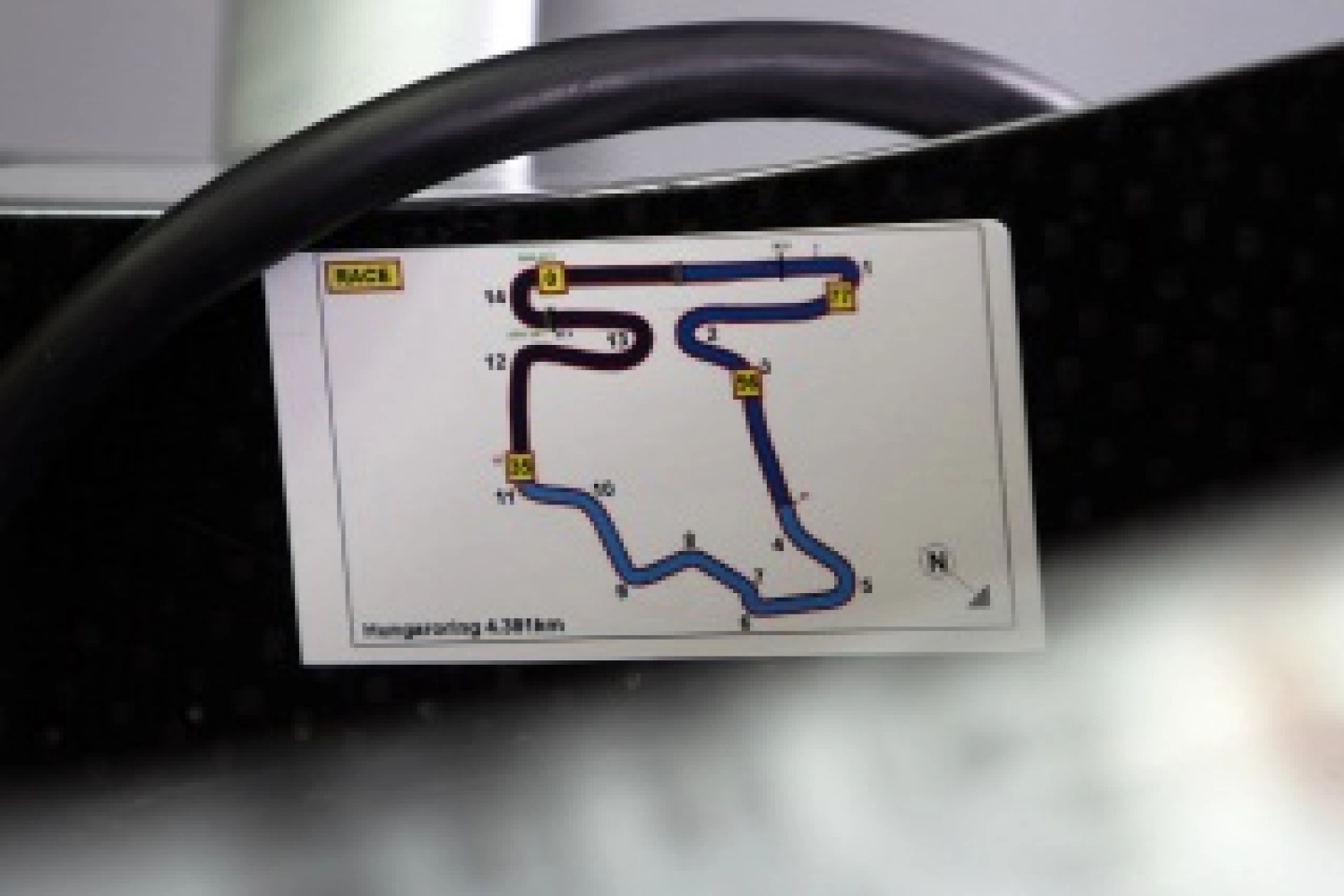
Formula 1 is heading to Hungary this weekend at the Hungaroring circuit, nicknamed the “Hungarian Turnstile.” The circuit, located near Budapest, has been on the world championship calendar since 1986 and will host its 28th Hungarian Grand Prix this Sunday.
The track is very technical, with many turns, which forces the teams to use a lot of downforce, almost as much as in Monaco. It’s also a circuit where overtaking is difficult, so a good grid position is important.
Michael Schumacher is the most successful driver in Hungary, with 4 victories to his name, ahead of Ayrton Senna with 3 victories, which is equaled by Lewis Hamilton. On the teams’ side, McLaren has achieved the most success in Hungary with 11 victories, followed by Williams (7) and Ferrari (5).
The Hungarian track has been the scene of important F1 moments, such as the first victory of a car equipped with a KERS in 2009 following Lewis Hamilton’s win. It was also at the Hungaroring that Damon Hill secured his first F1 victory in 1993 at the wheel of his Williams, becoming the first son of a world champion to win a Grand Prix.
Few Hungarian drivers have taken part in their national Grand Prix, with the first and so far the only one being Zsolt Baumgartner in 2003 driving a Jordan. He had replaced Ralph Firman, who had an accident in practice sessions. The Hungarian qualified in 19th position (out of 20 drivers). He then had to retire after 34 laps due to an issue with his Ford engine.
Overtaking is not an easy task in Hungary, and the FIA has therefore decided to implement two DRS zones for this Grand Prix with a single detection point, which is located before the corner preceding the straight. The first DRS zone is on this straight and the second follows the first corner. On the FIA side, this weekend we will find Alan McNish as the driver steward. As for the weather, it is expected to be warm and sunny all weekend, with air temperatures reaching up to 36°C on Sunday or possibly higher.
The Hungaroring from a chassis perspective
Tom McCullough, Track Engineering Manager of the Sauber F1 Team:
« The Hungaroring is a real challenge for drivers and engineers, as it is one of the most technical circuits on the calendar. The track layout results in a high percentage of time spent in corners. This means the level of downforce required is similar to that of Monaco. There are many long corners that are smooth, with the majority taken at low and medium speed. Qualifying position is important because overtaking is always difficult even with the use of KERS and DRS. »
The Hungaroring from the engine side
Rémi Taffin, Track Operations Director of Renault Sport F1:
This winding 4.381 km circuit is often compared to a karting track, with one slow corner following another. This nature results in an extremely low average speed, with only 182 km/h. It is the slowest track of the season after Monaco. In fact, with only 55% of the lap spent at full throttle, the demands of this permanent track are very similar to those of an urban circuit.
The power delivered by the engine is therefore not a major issue. The V8 is only used at its maximum revs in two places: the start/finish straight and the 790-meter straight that connects turns 3 and 4. We generally use engines for their third race weekend and work on low-end torque response and ease of driving.
With so many acceleration/braking phases, the fuel consumption per kilometer is high, and the amount of fuel carried at the start is quite heavy. This is mitigated by the ambient temperature, generally around 30°C, or even 35°C.
While reducing fuel consumption, the high temperatures put the cooling system to the test. Heat dissipation is a key point, especially considering that the engine has little time to breathe between corners. Unfortunately, the significant downforce required by this track does not allow us to add air intakes to the bodywork. Therefore, we have meticulously prepared for this event on the test benches in Viry, working particularly on low revs with a high ambient temperature.
Traditionally, the Hungaroring has always favored the RS27 engine, which performs well on winding circuits requiring great ease of handling. We will seek to take advantage of this benefit before the summer break.
The Hungaroring from the tire perspective
The tires available for the drivers at the Hungaroring are as follows:
- Soft (yellow sidewalls) ;
- Medium (white sidewalls) ;
- Intermediate (green sidewalls) ;
- Rain (blue sidewalls).
Opinion of Paul Hembery, director of Pirelli Motorsport:
Hungary marks the first event of our latest P Zero tire specification, consisting of an alliance between the 2012 structures and the 2013 compounds. These tires were tested by the teams at Silverstone during the Young Driver Tests, offering an opportunity for the cars to adapt their setups in the best possible way according to the new tires. They are now competing for the first time on the Hungaroring, where qualifying is particularly important. The work done during free practice will therefore be very important. Overtaking on this circuit is never an easy task, and teams will use the best strategies to maximize their chances of gaining positions on the track.
The selection of soft and medium tires should help them with this, based on the data gathered by all teams with varying fuel loads in free practice. Temperatures can be very high in Hungary, and this is a factor that influences wear and degradation levels. Traction and braking are two critical aspects of tire performance in Hungary, with teams using settings aimed at improving these key areas. With relatively low levels of lateral energy, tire performance rather than durability will be the limiting factor, and this will form the basis of the strategy choices. Teams will try to use the tires within their optimal operating window for as long as possible. The design of our latest tires should allow them to achieve this.
Jean Alesi’s opinion, Pirelli ambassador:
The Hungaroring is a circuit where it is difficult to overtake, although they have slightly extended the straight line a few years ago to provide more overtaking opportunities, which helps a little. This means that qualifications can also be very important. There is tire degradation, but it comes more from traction and braking than from high-energy corners: it is essential to ensure that the tires do not wear out at the end of the stints in particular.
Despite having stood on the podium, it has never been a particularly exciting circuit for me to drive on. But it is very important in the history and culture of Formula 1: the first time I raced there, Hungary was still on the other side of the Iron Curtain, and the Grand Prix was one of those events that brought about change in so many countries in that region, which was still communist at the time. It was an incredibly exciting historical period, and the race was a symbol of the liberation that was coming. Those days are now long gone, but the fans are still as passionate as ever, and that’s why it’s always a pleasure to return.
The Hungaroring in numbers
| Length of Hungaroring circuit | 4.381 km |
| Number of turns | 14 (8 right and 6 left) |
| Average speed | 182 km/h |
| Top speed | 303 km/h |
| % of a lap at full throttle | 47 |
| Fuel consumption | 1.9 liters per lap; 62 l/100km |
| Lap record | 1:19.071 (Michael Schumacher, Ferrari, 2004) |
The 2012 Hungarian Grand Prix
Pole position.
Lewis Hamilton (McLaren) in 1:20.953
Podium:
1 – Lewis Hamilton (McLaren)
2 – Kimi Räikkönen (Lotus)
3 – Romain Grosjean (Lotus)
Fastest lap in the race:
Sebastian Vettel (Red Bull) in 1:24.136
[From the press releases published by the FIA, Pirelli, Renault Sport F1, and Sauber F1]
From our special correspondent at the Hungaroring