India: Figures and Technical Data
A brief overview of the technical constraints imposed by the Buddh circuit on the chassis, engine, and tires of Formula One cars.

India has been attempting to break into Formula 1 for several years. First, the arrival of the first Indian driver in Formula 1, Narain Karthikeyan, who after several years of absence returned to drive an HRT. Then, the acquisition of a Formula 1 team, Spyker, which became Sahara Force India today. And finally, the latest step, the organization of a Formula 1 Grand Prix starting just last year.
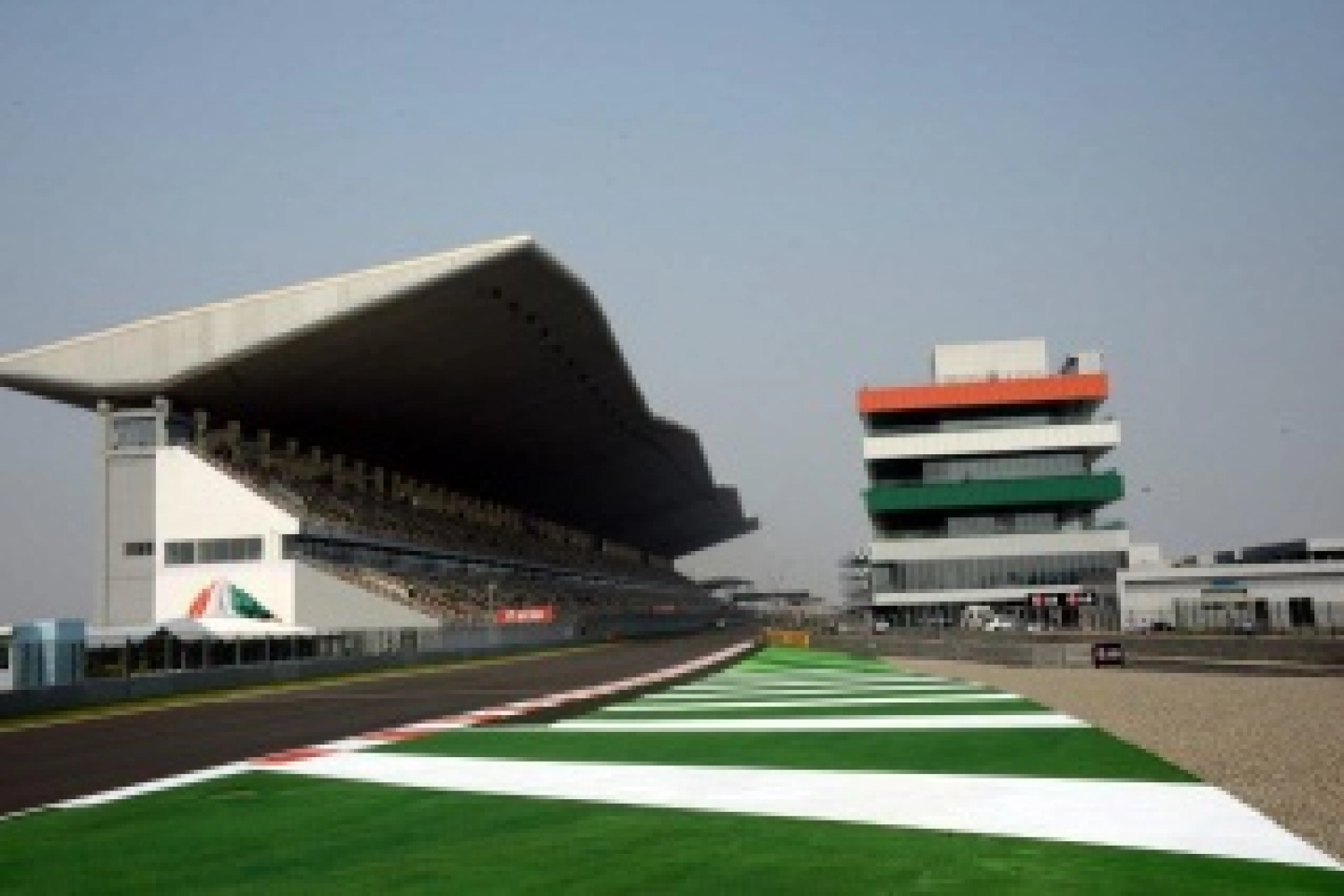
Formula 1 is therefore only making its second visit to the Buddh International Circuit, located in Greater Noida, about 50 kilometers from the Indian capital, New Delhi. The track, designed by German Hermann Tilke, offers a variety of corners and is popular with the majority of drivers.
Last year, dust was a significant nuisance for the performance of the race cars, but the circuit officials decided to take action this year by purchasing machines specifically to clean the track.
On the side of the sporting commissioners, the FIA has decided to call upon Alan Jones, the 1980 world champion, to replace the usual decision-makers during incidents.
Buddh side DRS
Unlike the recent Grand Prix, the Indian Grand Prix will feature two distinct DRS zones. The first will be located on the main straight, with detection occurring at turn 15. The second will be on the longest straight of the circuit, between turns 3 and 4. The detection for this second zone will take place just before turn number 3. These two zones are the same as those already defined in 2011, though it is worth noting that the second one has been slightly extended (by 80 meters).
Buddh chassis side
Giampaolo Dall’Ara, Head of Track Engineering at Sauber F1 Team:
The circuit installed at Greater Noida has similar characteristics to that of South Korea. There is a first sector with long straights and slow corners, followed by mainly fast corners in the second sector, and a short third sector with some slow corners. Perhaps the main difference is that the circuit in India has some elevation changes, whereas the one in Korea is flat, and in India, there are also some bumps.
The temperatures are expected to be high, but the tires are the hardest – we will have the hard and soft tires, and I expect the hard tire to be a challenge on this type of track. An interesting aspect compared to most other races this year is the fact that there will be two DRS zones with two detection zones, which should normally allow for overtaking.
Buddh engine side
Rémi Taffin, Head of Track Operations at Renault Sport F1:
The Buddh International Circuit is an interesting track that features a variety of different corners at different speeds. Like in Korea, the first part consists of long straights connected by low-speed corners. We are working to provide good top speed and acceleration while maintaining good rear stability under braking. The circuit is also quite slippery due to the presence of dust. Anything that can improve grip will have an impact on the lap time.
There are several long corners, like the combination of turns 10 and 11. It will be necessary to deliver good torque with an average engine rotational speed. In addition to top speed, the engine must be flexible to respond to the demands of slow or moderately slow corners. But with the data set we have, we can optimally tune the engine before the first trials.
This season, with the championship being very tight, we will need to offer the best possible engine. Every little detail will matter. No pressure!
Buddh tire side
The opinion of Paul Hembery, director of Pirelli Motorsport:
There was a great atmosphere and a very warm welcome at the first Indian Grand Prix last year. So, we are looking forward to returning. This year, we know a little more about the track and have made slightly less conservative choices with the hard and soft tires, which offer the perfect compromise between performance and durability.
The track is one of the most challenging in the second half of the season for the tires. It will also be the last appearance of the hard/soft combination this year, already used in Barcelona, Great Britain, and Japan. This gives an idea of the demands of this track. The Buddh Circuit was specifically designed to encourage overtaking, which is also one of the core philosophies in the design of our tires. We should therefore witness an exciting and crucial race at this stage of the championship!
Opinion of Jaime Alguersuari, Pirelli test driver:
I think the layout of the Buddh circuit is one of the best in F1 and one of the most challenging for the tires. I have good memories there personally: last year, I finished 8th after strong qualifying. It features an interesting combination of low, medium, and high-speed corners, as well as long straights. Many of the corners are quite uncommon: for example, there’s a chicane right at the end of the lap, taken in fifth gear, which doesn’t happen very often!
The biggest challenge for tires in India is the fact that the corners are so wide: they undergo significant lateral loads if not managed properly. Hard and soft tires are a very good choice for here: the hard is perfect for the race, and I think a one-stop strategy is possible if the tires are taken care of properly.
Buddh in figures
1: Only one team and one driver have already won in India, as the Grand Prix has been held only once before, last year. Sebastian Vettel claimed victory.
55: This is the percentage of the Buddh circuit lap that corresponds to a straight line.
62: This is the percentage of the Indian track lap completed at full throttle by the drivers.
250: This is the fastest cornering speed experienced by F1 drivers at the Buddh Circuit, at turn number 12.
320: It is, in kilometers/hour, the maximum speed the drivers are expected to reach, according to McLaren, on the Indian circuit this weekend.
600: This is, in meters, the length of the pit lane of the Buddh International Circuit, the longest of the season, according to Pirelli. During a pit stop, a driver will have to cover more distance, which will cost them more time.
[From the press releases published by FIA, Lotus F1, McLaren, Pirelli, Renault Sport F1, and Sauber F1]