Japan – Racing: Summary of Strategies
casinoenligne.uk.com offers you the opportunity to discover, in graphic form, the strategies used by each during the 2012 Japanese Grand Prix.

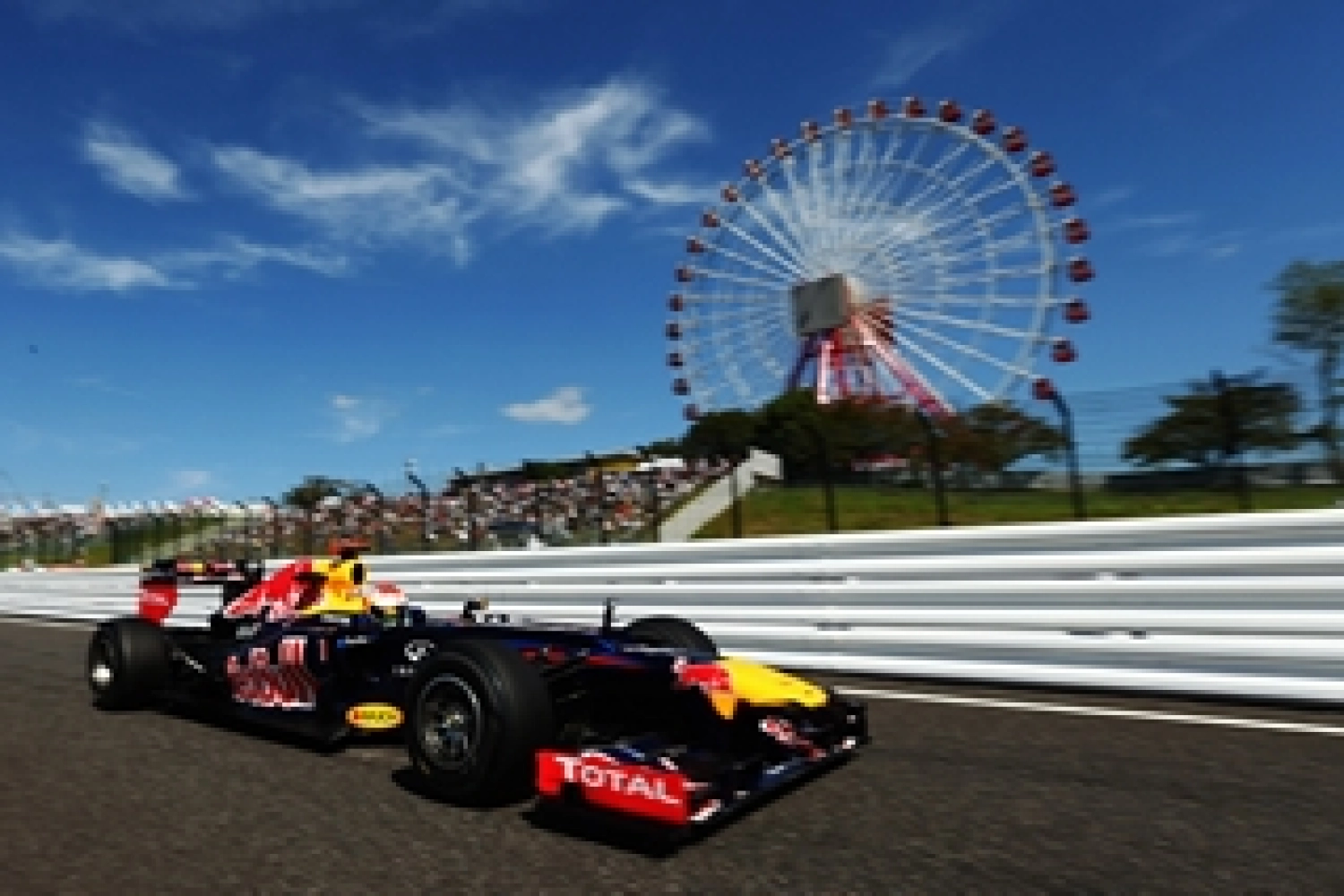
Sebastian Vettel returned to within four points of the championship lead by winning the Japanese race with a two-stop strategy. The reigning World Champion, who secured his second world title at Suzuka last year, started from pole position on the P Zero Yellow soft tire. He completed two stints on this compound before switching to the P Zero Silver hard compound, also designated for the Japanese Grand Prix. It was with the hard compound that Vettel set the fastest lap of the race on the penultimate lap.
The only drivers to have started the race with the hardest compound were Jean-Eric Vergne (Toro Rosso), Charles Pic (Marussia), and Michael Schumacher (Mercedes), starting from 19th, 21st, and 23rd place, respectively. An incident on the first lap required the safety car to come out and led Mark Webber to switch to hard tires. He rejoined the track in 19th place and made his second stop on the 26th lap, after climbing back into the points in ninth place.
The first leaders to pit were Jenson Button (McLaren) and Kimi Räikkönen, both switching to hard tires on the 13th lap. Kamui Kobayashi’s Sauber made a spectacular start to climb to second place in his home race. In front, Vettel made his stop for hard tires on the 17th lap and emerged in the lead thanks to his team’s quick action. The last driver to switch to hard tires during the first series of stops was Timo Glock (Marussia), who managed 20 laps with a full fuel load.
Vettel’s last stop for hard tires took place on lap 37. Once again, the German emerged in the lead, ahead of Felipe Massa’s Ferrari, which pitted one lap earlier. Massa gained 8 positions between the start and the finish, after starting 10th on the grid. However, the record for positions gained on track goes to Schumacher, who climbed 12 places to finish 11th. His strategy: using soft tires with a low fuel load towards the end of the race.
Pastor Maldonado (Williams) also chose a different strategy (similar to that of the Toro Rosso of Daniel Ricciardo and the HRT of Pedro de la Rosa), completing the first two stints on soft tires before a final 20-lap stint on hard tires. He thus scores points for the eighth position after starting 12th.
Although Japan is often characterized by weather changes, the race took place with track temperatures of around 30°C at the start, thus putting even more demand on the tires on what is already a very challenging circuit due to the flowing nature of its many fast corners.
Paul Hembery, Director of Pirelli Motorsport: « At the start of the year, we witnessed the most tightly contested start to a F1 season in history, with seven different winners in as many races. It now seems we are headed for an equally tight finish, after a Japanese Grand Prix where Sebastian Vettel adopted a two-stop strategy executed with precision, to win the race and revive the championship in his favor. Last year, a three-stop strategy was the preferred option for the drivers, but this year, we saw only two stops for the majority. This highlights the performance and durability of our P Zero tires on one of the most challenging circuits of the year in terms of energy loads, even though the compounds are generally softer this year, and the Japanese weather conditions were warmer than in 2011. We witnessed a great battle in the final laps between Kobayashi and Button for third place, based on tire strategy, with Button trying to get the best out of his fresher hard tire set. We wish to congratulate Kamui on the first podium of his career, which couldn’t come at a better place than at home, as well as Felipe on his first podium of the season after a great race.
[From the official press release published by Pirelli]

To get a better understanding of this graph, you can use the lap-by-lap analysis by the FIA by clicking here.
Summary of Pit Stops at the 2012 Japanese Grand Prix:
| Pos. | Drivers | Ecuries | Arrêts | Meilleur arrêt | Arrêt Moyen | Total |
|---|---|---|---|---|---|---|
| 1 | Lewis Hamilton | McLaren | 2 | 19.794 | 20.471 | 40.942 |
| 2 | Jenson Button | McLaren | 2 | 20.233 | 20.666 | 41.332 |
| 3 | Sebastian Vettel | Red Bull | 2 | 20.346 | 20.427 | 40.854 |
| 4 | Michael Schumacher | Mercedes | 2 | 20.379 | 20.511 | 41.022 |
| 5 | Timo Glock | Marussia | 2 | 20.662 | 21.091 | 42.182 |
| 6 | Mark Webber | Red Bull | 2 | 20.691 | 26.577 | 53.153 |
| 7 | Kamui Kobayashi | Sauber | 2 | 20.762 | 20.773 | 41.545 |
| 8 | Felipe Massa | Ferrari | 2 | 20.778 | 20.857 | 41.714 |
| 9 | Kimi Räikkönen | Lotus | 2 | 20.901 | 21.062 | 42.123 |
| 10 | Nico Hülkenberg | Force India | 2 | 21.007 | 21.348 | 42.695 |
| 11 | Paul di Resta | Force India | 2 | 21.063 | 21.204 | 42.407 |
| 12 | Pastor Maldonado | Williams | 2 | 21.118 | 21.240 | 42.479 |
| 13 | Romain Grosjean | Lotus | 2 | 21.143 | 26.736 | 53.472 |
| 14 | Sergio Perez | Sauber | 1 | 21.273 | 21.273 | 21.273 |
| 15 | Charles Pic | Marussia | 2 | 21.343 | 31.924 | 1:03.848 |
| 16 | Vitaly Petrov | Caterham | 2 | 21.367 | 21.368 | 42.735 |
| 17 | Jean-Eric Vergne | Toro Rosso | 2 | 21.431 | 21.980 | 43.959 |
| 18 | Daniel Ricciardo | Toro Rosso | 2 | 21.516 | 21.730 | 43.460 |
| 19 | Bruno Senna | Williams | 3 | 21.520 | 23.385 | 1:10.156 |
| 20 | Pedro de la Rosa | HRT | 2 | 22.487 | 24.387 | 48.774 |
| 21 | Heikki Kovalainen | Caterham | 2 | 22.678 | 22.747 | 45.494 |
| 22 | Narain Karthikeyan | HRT | 1 | 23.227 | 23.227 | 23.227 |