Japan: Figures and Technical Data
A brief overview of the technical constraints imposed by the Suzuka circuit on the chassis, engine, and tires of Formula One cars.

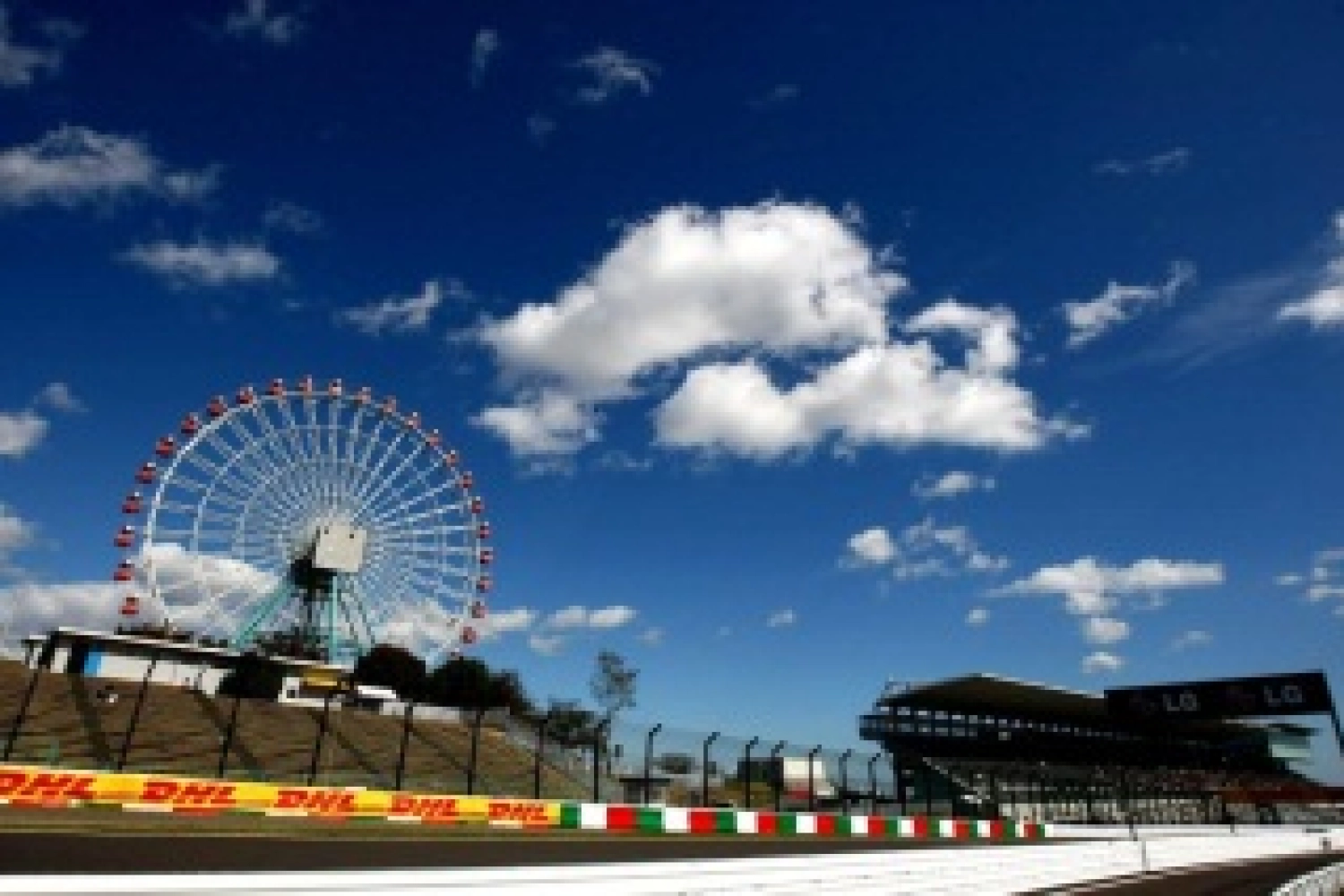
The Suzuka circuit is a track that all drivers embrace with great pleasure because it has retained the charm of an old-school circuit and probably also because it is a track that has written some of the most beautiful chapters in the history of Formula 1, playing a decisive role in the awarding of several world championships.
One of the challenges of the Suzuka circuit is to properly set up the car, especially for the sequence of corners in the first sector. It’s also important to keep an eye on the wind, which can change direction between Friday’s first practice sessions and Sunday’s Grand Prix, potentially impacting the top speed of the cars.
Regarding the tires, the track shouldn’t pose too many degradation problems, especially since the drivers will have both hard and soft compounds. However, the drivers and their engineers will need to adapt to track conditions, as the grip on Suzuka’s asphalt changes significantly between Friday and Sunday, so it will be important to properly adjust the car settings from the start of the weekend to the race.
Regarding the weather, the Japanese Grand Prix has often been rainy in recent years, but this year, it is expected to be sunny. Good weather is anticipated in Suzuka after the passage of Typhoon Jelawat in recent days.
On the side of the race stewards, it’s Derek Warwick who will be the 4th steward this weekend at Suzuka. It should also be noted that the FIA has decided to shorten the DRS zone by 20 meters, this zone being located on the main straight. Detection will occur before the chicane leading onto this famous straight.
Suzuka on the chassis side
Giampaolo Dall’Ara, Track Engineering Manager at Sauber F1 Team:
Suzuka is one of the most fascinating circuits of the season. There is a very technical first sector with high-speed corners, and then you have the second sector with the hairpin and Degner corners which are tricky, and important for stability. Spoon Curve is also very special. It’s a corner taken at medium and high speed, leading onto a long straight with 130R, which is now taken flat but remains a challenge. Then there is the slow chicane towards the end of the lap where you need good traction. Overall, it’s a very complex and technical layout. It requires a well-balanced car and is a constant challenge for the drivers.
We will have hard and soft tires, which should be suitable for this circuit. Given the abrasive surface and fast corners in the first sector, which put a heavy load on the tires, we should not have trouble getting them up to temperature.
Suzuka engine side
Rémi Taffin, Head of Track Operations at Renault Sport F1:
Suzuka is a difficult circuit for teams dealing with chassis and engines. The importance of power is not more crucial than in Canada or Valencia, but the variety of corners over the 5.807 kilometers requires careful preparation. The first half of the track, between the main straight and Spoon, is very rhythmic. The second half, from the exit of Spoon, is taken 90% at full throttle. It’s a challenge at this time of the year as we string races together. But we are eager to be there, especially at this critical point in the championship.
Suzuka on the tire side
Paul Hembery’s opinion, director of Pirelli Motorsport:
Suzuka is clearly one of the highlights of the season for us, not only from a technical perspective but also because of the unique atmosphere. The fans are among the most enthusiastic and knowledgeable in the world, and we are always assured of receiving an extremely warm welcome. But it’s the layout that delivers a technical challenge: the Suzuka circuit is a classic “driver’s track,” similar to Spa or Monza, with some of the year’s most fantastic corners and very little room for error. Despite the impression given by the name, the tires are actually softer. Despite the increased demands this places on the compound’s structure, they are able to withstand the immense forces they are subjected to lap after lap.
With a significant gap between the two compounds, we hope to offer even more performance and excitement to what is already a classic. This should also open the door to many strategic opportunities, which could be the basis of a memorable victory or great comebacks from the back of the grid, as we’ve already seen this year. Last year, the drivers’ title was decided in Japan, but this year has been so tight that we are still waiting to see the titles awarded, and this is great news for all the fans.
Lucas di Grassi’s opinion, Pirelli test driver:
Suzuka is really pleasant from a driving perspective. We always have good races there, but it’s not easy on the tires because there are heavy demands. The first part of the lap, for example, is just a series of corners one after the other and the tires are constantly working without a real chance to cool down.
There are a lot of combined forces when the cars turn and accelerate, and this puts significant energy on the tire. As a result, there is never an issue with temperature build-up, but you need to be careful with a car loaded with fuel. It is good to have the hard tire in Japan this year: I have tested this 2012 hard compound extensively, and it is a truly flexible product, offering a lot of performance as well as durability. It is a big step forward compared to the 2011 compound. The soft tire should be the perfect choice for qualifying, but I expect to see the hard tire come into play during the race.
Suzuka in numbers
1:31.540: As in Singapore two weeks ago, it is Kimi Räikkönen who holds the lap record at the Suzuka circuit. He set this best time during the 2005 Japanese Grand Prix driving his McLaren MP4-20.
4: It’s in G, the highest force that drivers must face during a lap of the Suzuka circuit.
6: It is the number of victories won by Michael Schumacher in Japan. The German driver is far ahead of Berger, Senna, Damon Hill, Hakkinen, Alonso, and Vettel, who have each won twice.
16: This is the second longest section at Suzuka where drivers are flat out – a total of 1230m.
66: This is the percentage of the lap spent flat out by F1 drivers in Japan.
310: This is the top speed in km/h reached by F1 single-seaters on the Suzuka circuit according to McLaren.
5,807: This is in meters the length of the Suzuka circuit, the third longest track of the season after Spa-Francorchamps (7,004 m) and Silverstone (5,901 m).
[i][From press releases issued by FIA, McLaren, Pirelli, Renault Sport F1 and Sauber F1][/i]