Brawn, Whitmarsh and Hill discuss Hamilton’s move to Mercedes
While Martin Whitmarsh logically believes that Lewis Hamilton is making a mistake by leaving McLaren to join Mercedes in 2013, Damon Hill understands that the Briton needed a change of scenery. For his part, Ross Brawn states that it was the 2008 World Champion who made the first move and assures that he did not ask for any special treatment.

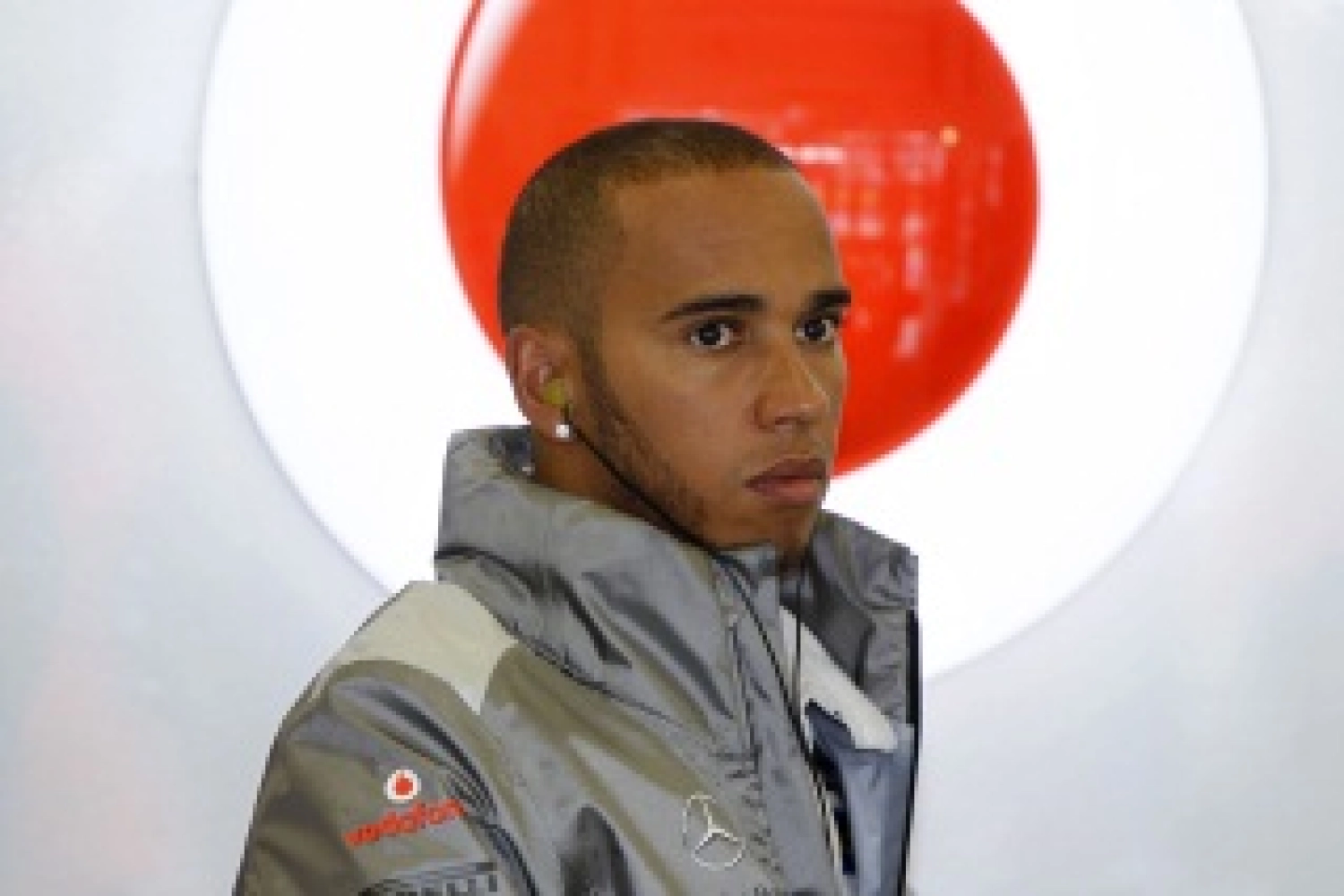
While Lewis Hamilton’s departure to new horizons from 2013 is now a done deal, some are wondering if the Briton has made a mistake by leaving the prestigious McLaren team to join Mercedes, which, so far, has yet to achieve the expected results. Martin Whitmarsh, director of the McLaren team, thinks it’s a mistake for someone like Lewis Hamilton, who wants to win, because he has faith and confidence in his team: Whether you look at the last four races, the last four years, or forty years, we are a fantastic team. It must have been a very big decision for Lewis. However, there were certain disruptions and some demons got into his head. I would not advise anyone to leave McLaren if they want to win, but I have to respect Lewis’s decision and I wish him the best.
For his part, Damon Hill understands his compatriot’s desire to get a change of scenery by leaving McLaren: « Lewis was like a bird in a cage at McLaren. Every moment of his life was managed. I can’t blame him for wanting to go elsewhere. Lewis needed to leave McLaren to spread his wings, » the Briton analyzes in the pages of the Daily Mail.
The 1996 World Champion notably takes the example of McLaren keeping the trophies won by its drivers, a point that Lewis Hamilton had regretted on numerous occasions: « I will never understand the logic of the team keeping the driver’s trophy. It’s not the trophy but the principle that’s in question. After winning a championship and overcoming many obstacles, there comes a time when you think: “This is my life!” You can feel the frustration of just becoming a mere performer. You don’t want to be on probation your entire career. »
At Mercedes, Ross Brawn, the director of the German team, confirms that it was Lewis Hamilton who approached Mercedes and not the other way around: “Lewis’s entourage expressed interest and wanted to know what our plans were, and that’s where it started,” he tells BBC Sport. “Everyone knew Lewis’s contract was coming to an end this year, so things really developed from that point. As soon as we could explain to him what we were trying to do here, what our ambitions were, and what we were putting in place, I think that’s the kind of thing Lewis needed at this stage of his career.”
Martin Whitmarsh also thinks that McLaren did everything to keep the 2008 World Champion in their ranks, but in vain: I know that we made a very big financial offer, bigger than what any Formula One driver can boast of today. We worked for him to stay, but we were realistic about the fact that there was always a risk he might not stay. He called me two days ago [Wednesday, editor’s note], from Asia, and I think I was the first person he told. We had a long and warm conversation. He called me again the next day and we had another long conversation. In the end, for both parties, a decision must be made and move forward.
On his side, Ross Brawn has denied any demand from the Stevenage native to benefit from number one status while some believe that the equality maintained between drivers at McLaren was one of the reasons that pushed Lewis Hamilton to want to leave: « To be clear, Lewis never mentioned it during the discussions we had. He wanted to be sure there would be equal treatment but never asked to have number one status. We would not have been willing to grant that to a driver because it tends to suggest that we’re not paying as much attention to the other driver as we should. »
However, Damon Hill acknowledges that Lewis Hamilton took a risk, even if he thinks one must look at the long term: « Of course, Lewis took a risk. Mercedes doesn’t have the same statistics as McLaren, but as a Formula One driver, you have to look at what will happen in the years to come. It will be interesting to see how far Mercedes will go. »
But for the Briton, the example of Lewis Hamilton mostly shows that, with the possible exception of Ferrari, Formula One is primarily a drivers’ sport in the eyes of the public: « There is a huge gap between the philosophy of a team and that of a driver. Drivers just want to race, but they don’t see Formula One as a marketing tool or a development product. For a team, the driver is just an executor. [But] drivers have the right to choose their career, they don’t belong to a team. »