Singapore – Racing: Summary of Strategies
casinoenligne.uk.com invites you to discover, in graphical form, the strategies employed by each during the 2012 Singapore Grand Prix.

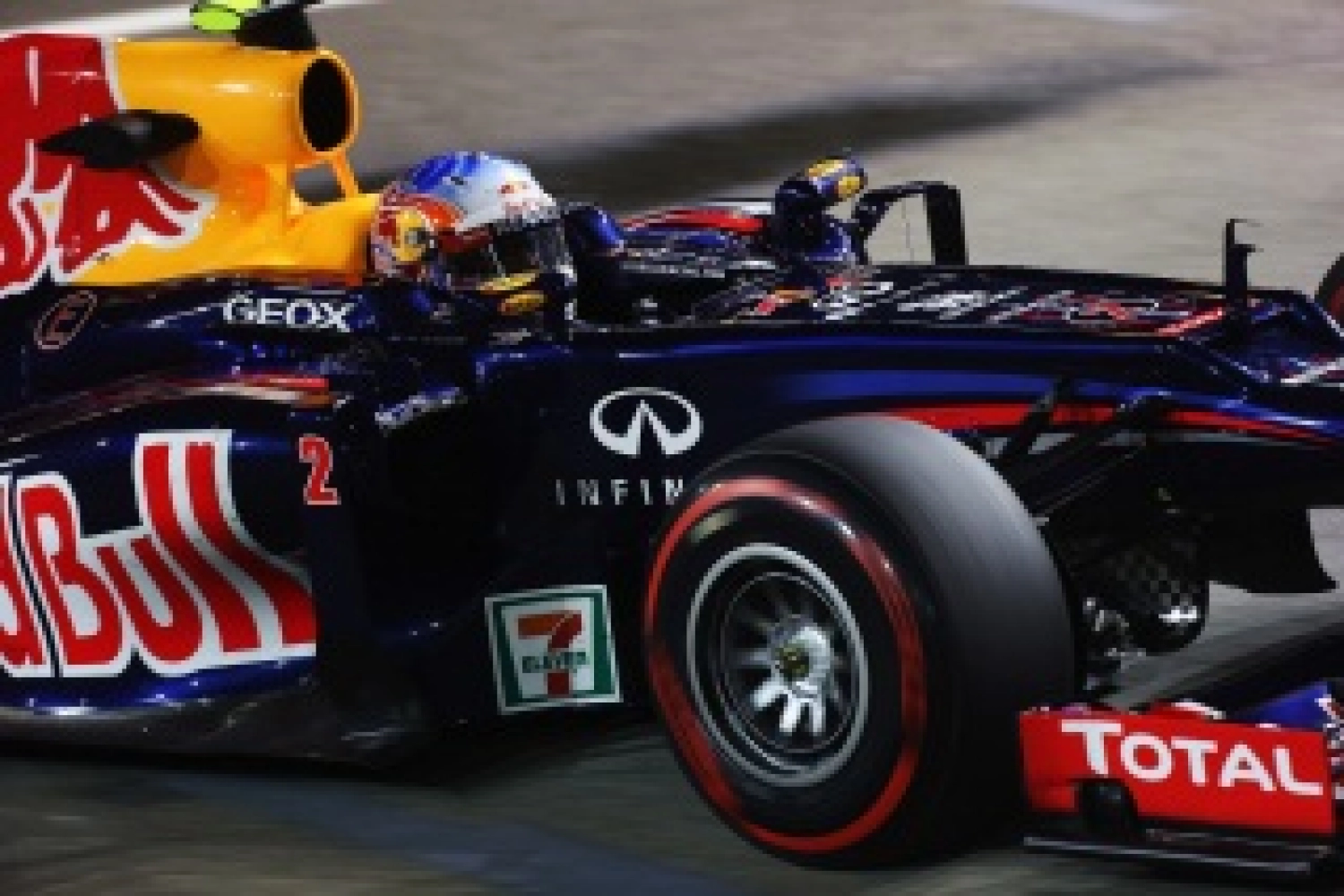
After an intense duel from start to checkered flag, and after two safety car interventions, Sebastian Vettel secured his second victory of the season in Singapore thanks to a two-stop strategy. Vettel, who started third on the grid on Super Softs, later completed two stints on Softs, designated as the hardest tires supplied by Pirelli this weekend. Vettel won with a 9-second lead over Jenson Button’s McLaren, which followed the same strategy but pitted four laps later than Vettel during his first stop. The race was the longest of the year, exceeding the two-hour limit before completing the 61 laps.
The top 10 started the race on Super Softs, with Nico Hülkenberg’s Force India and Serio Perez’s Sauber being the two best-positioned cars on the grid to start on soft tires (11th and 14th). Following an incident in the first lap that dropped him to last place, Felipe Massa switched to soft tires during his forced first lap pit stop. His teammate Fernando Alonso maintains his championship lead with a third-place finish, having started fifth on the grid. The Spaniard’s 81st podium finish allows him to surpass Ayrton Senna and take third place in the all-time podium standings, behind Schumacher (155) and Alain Prost (106).
The first driver to stop was Mark Webber (Red Bull), on the 8th lap, to switch to the Softs. Vettel followed suit two laps later. Button stopped on the 14th lap, while Hülkenberg and Perez chose the 18th lap to put on the Softs in view of a two-stop strategy ending on Super Softs. Massa also finished the race on Super Softs, after a long stint of 26 laps on Softs, which resulted in a climb to eighth place at the finish.
All the leaders headed for the pits when the first safety car came on the track, on the 33rd lap. Vettel switched to Softs, staying ahead of Button, who was also on Softs. The second set of soft tires was sufficient for the last 45 minutes of the race (26 laps).
A second safety car came onto the track on the 40th lap, allowing Perez to make his second pit stop without losing time or position on the track. He finished 11th after starting on Soft tires. Hülkenberg also pitted during the second safety car intervention, but his chances of taking advantage of his strategy were ruined when he was forced into an additional stop following an on-track accident, bringing him back to the pits.
Paul Hembery, Pirelli Motorsport Director: « The safety car’s entries on the track played a crucial role. If it had entered within the first 10 laps, everyone would have automatically switched to two stops. However, that did not happen, and Red Bull was set for three stops; a strategy copied by everyone else, although McLaren could have managed it with two stops.
The safety car making its appearance mid-race, most teams were able to switch to two stops. The rear tires work particularly hard here, as a lot of traction is required coming out of slow corners. With a significant performance difference of about 1.5 seconds per lap between the two compounds – the largest of the year – and a crossover point of performance at around 10 laps, driving style played a significant role in tire management (particularly at the start of the race with heavy fuel loads).
No safety car came out in the first half of the race, and teams had to maintain a flexible strategic approach to keep options open. The strategy was then dictated by its appearance, and drivers who had to pit a second time had to manage their tires until the finish, although helped by the slower pace.
Once again, we witnessed a very tough, spectacular, and unpredictable race in Singapore, where tire strategy made the difference. Congratulations to Paul di Resta for achieving his best result in Formula 1 and to Marussia for their best finish with Timo Glock’s 12th place.
[From the official statement released by Pirelli]

Summary of Pit Stops at the 2012 Singapore Grand Prix:
| Pos. | Drivers | Ecuries | Arrêts | Meilleur arrêt | Arrêt Moyen | Total |
|---|---|---|---|---|---|---|
| 1 | Sebastian Vettel | Red Bull | 2 | 29.117 | 30.127 | 1:00.254 |
| 2 | Lewis Hamilton | McLaren | 1 | 29.124 | 29.124 | 29.124 |
| 3 | Fernando Alonso | Ferrari | 2 | 29.190 | 29.374 | 58.747 |
| 4 | Mark Webber | Red Bull | 3 | 29.304 | 29.328 | 1:27.985 |
| 5 | Kimi Räikkönen | Lotus | 2 | 29.370 | 29.520 | 59.039 |
| 6 | Felipe Massa | Ferrari | 3 | 29.403 | 30.272 | 1:30.816 |
| 7 | Nico Rosberg | Mercedes | 2 | 29.546 | 29.617 | 59.233 |
| 8 | Jenson Button | McLaren | 2 | 29.662 | 29.841 | 59.681 |
| 9 | Daniel Ricciardo | Toro Rosso | 2 | 29.789 | 30.391 | 1:00.781 |
| 10 | Jean-Eric Vergne | Toro Rosso | 2 | 29.898 | 30.199 | 1:00.397 |
| 11 | Paul di Resta | Force India | 2 | 30.029 | 30.528 | 1:01.055 |
| 12 | Sergio Perez | Sauber | 2 | 30.043 | 30.130 | 1:00.260 |
| 13 | Heikki Kovalainen | Caterham | 3 | 30.099 | 30.257 | 1:30.771 |
| 14 | Pastor Maldonado | Williams | 3 | 30.234 | 30.585 | 1:31.755 |
| 15 | Bruno Senna | Williams | 3 | 30.317 | 30.610 | 1:31.829 |
| 16 | Michael Schumacher | Mercedes | 2 | 30.338 | 30.609 | 1:01.217 |
| 17 | Vitaly Petrov | Caterham | 4 | 30.341 | 34.512 | 2:18.048 |
| 18 | Nico Hülkenberg | Force India | 3 | 30.363 | 31.859 | 1:35.577 |
| 19 | Charles Pic | Marussia | 2 | 30.647 | 30.741 | 1:01.481 |
| 20 | Kamui Kobayashi | Sauber | 3 | 30.693 | 32.560 | 1:37.681 |
| 21 | Timo Glock | Marussia | 2 | 30.977 | 31.496 | 1:02.992 |
| 22 | Romain Grosjean | Lotus | 2 | 31.753 | 31.917 | 1:03.833 |
| 23 | Narain Karthikeyan | HRT | 1 | 32.436 | 32.436 | 32.436 |
| 24 | Pedro de la Rosa | HRT | 3 | 32.625 | 36.589 | 1:49.768 |