« Vettel should learn to be a good loser »
After his retirement in Valencia, the venue of the 2012 European Grand Prix, Sebastian Vettel expressed his frustration both on the track and by criticizing the race management for introducing the safety car after the collision between Kovalainen and Vergne.

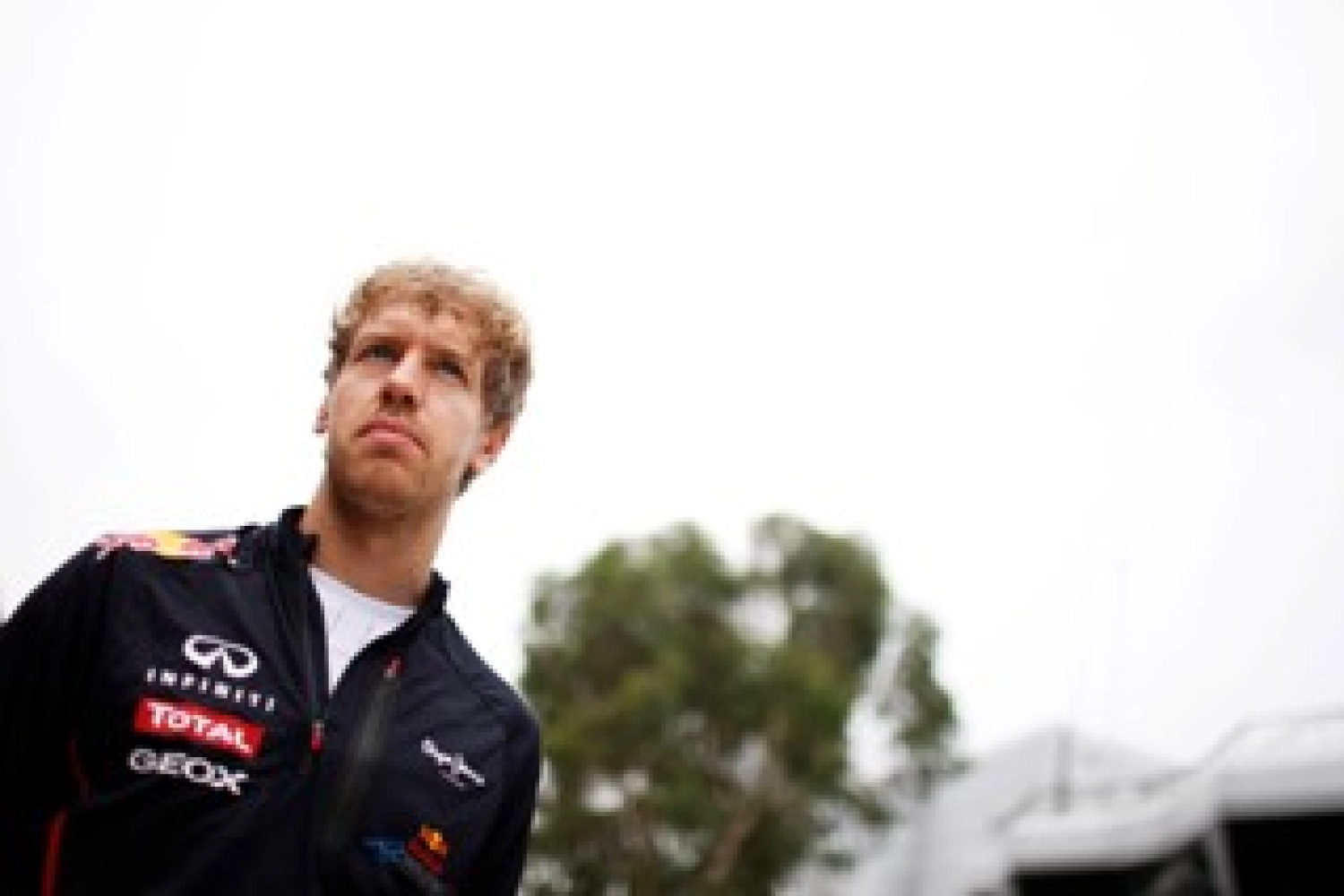
Sebastian Vettel doesn’t like losing and anyone who has followed Formula One for the past few years has been able to see this on multiple occasions. The German himself admitted it last April, after the Malaysian Grand Prix where he had already expressed his mood with gestures and words against Narain Karthikeyan: « It’s true, I can only be a sore loser. Why should I lie? If I could handle defeat well, I wouldn’t be in Formula One. »
Last weekend, the native of Heppenheim once again tasted the bitterness of defeat just as an imperial victory was within his grasp. Indeed, before the deployment of the safety car following the collision between Jean-Eric Vergne and Heikki Kovalainen, the German had a commanding lead of twenty seconds over his closest rival, Romain Grosjean. At the restart, while Fernando Alonso outmaneuvered the Frenchman at the first braking point, the reigning double world champion resumed his solo lead before falling victim to an alternator overheating in his RB8.
Once he set foot on the ground and after practicing the Olympic event of glove throwing at the fences of the Valencia street circuit, as well as at one of the cameras, the German criticized the race director’s decision for deploying the safety car, expressing doubts about the real intentions of the race direction on the Sky Germany channel: “I think we could have avoided the safety car period. I think the reason is clear. I don’t believe there was any danger. There were debris on the track before that and it was acceptable. I think in a way, the safety car was meant to clip our wings.” This reasoning was supported by Helmut Marko, who explained after the race that “Vettel was too far ahead and they bunched up the pack.”
For Hans-Joachim Stuck, president of the German Motor Sport Association (DMSB), son of the driver Hans Stuck and himself formerly a Grand Prix driver, Sebastian Vettel should learn to be a good loser: It was clear that there was debris on the track, posing a risk of punctures for the other cars. For this reason, the safety car was justified, the German told *Yahoo Eurosport Germany*.
Vettel also indicated on Sky Germany that he saw a cause-and-effect link between the intervention of the safety car and his retirement: « It’s not exactly clear. It might be the combination of the safety car, behind which you have to drive slowly, and a similar problem that affected Mark on Friday. » A hypothesis not shared by Hans-Joachim Stuck: « I don’t think that driving slowly behind the car can cause a breakdown, otherwise all cars would be affected. If the Red Bull overheated due to the design, then it was poorly designed. »
Renault has in any case confirmed that Vettel was not the only one to have been affected by an alternator problem, as Romain Grosjean also fell victim to it. However, the French engine manufacturer specifies that the causes of the failure were different between Red Bull and Lotus, with the double world champion’s alternator having suffered from overheating while the reigning GP2 champion’s had simply stopped working. The exact causes of the alternator malfunction in each of the two teams remain to be determined.