Front pull rod suspension: Ferrari’s failed gamble
Ferrari revived a concept over 10 years old this season with the F2012, featuring pull-rod front suspensions. But it must be acknowledged that the choice made by the Italian team is not the best possible.

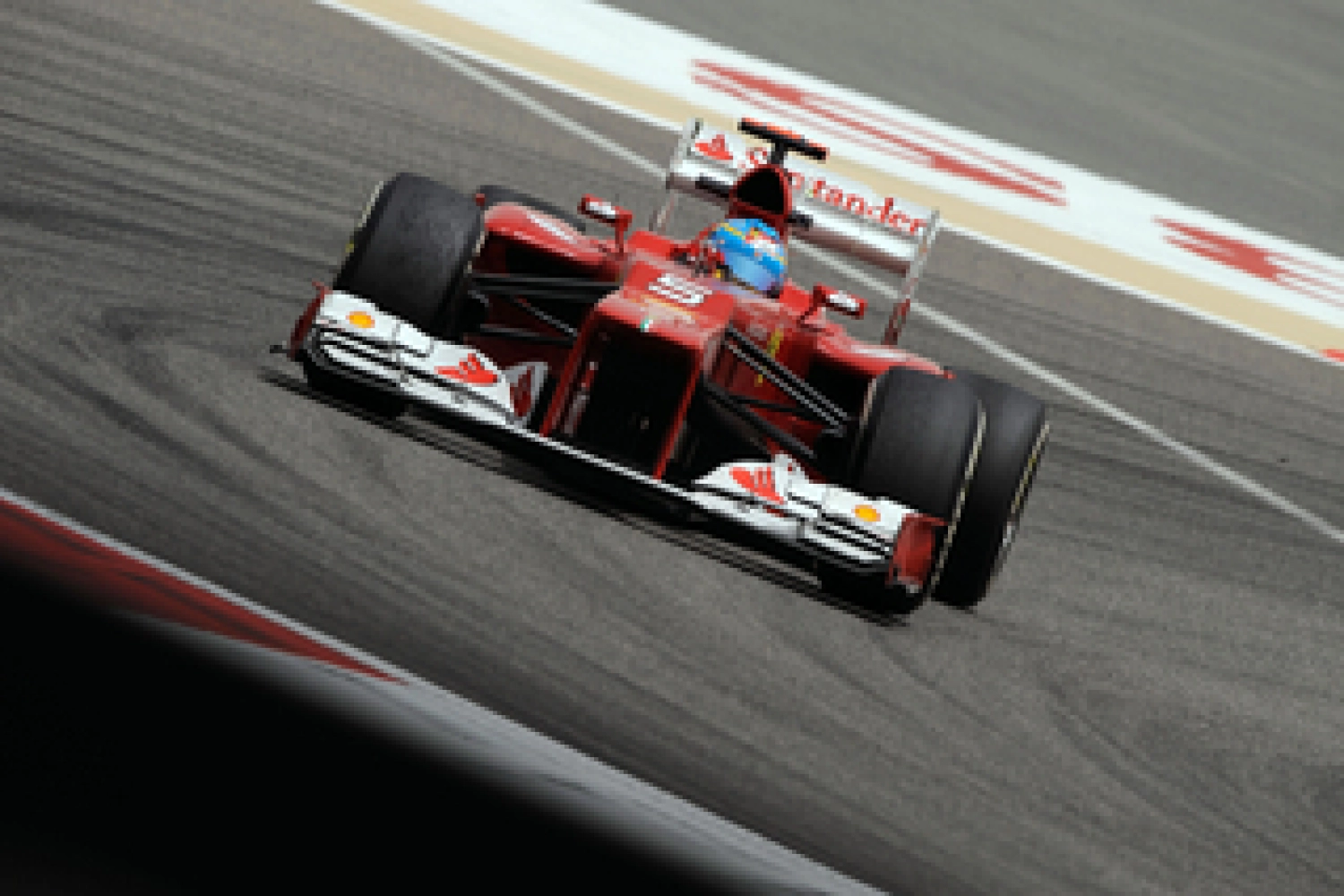
Ferrari Scuderia’s officials repeatedly stated at the end of 2011 that they had decided to adopt an aggressive approach for their 2012 car. This desire for innovation was notably reflected in the return of a concept that hadn’t been used in F1 for over 10 years: pull-rod front suspensions. Before the F2012, one had to go back to 2001 and the Minardi team to see the last F1 car equipped with such a system.
The team from Maranello is the only one to have attempted this gamble this season, a gamble seemingly lost, even though it is difficult to say that all the issues with the F2012 are due to this technical choice. The objective linked to this choice was notably to lower the center of gravity to improve the car’s aerodynamics – if you wish to know more about the subject, you can re-read the article dedicated to the return of pull-rod suspensions in F1 published two months ago.
Despite this choice, the F2012 does not seem to be sufficiently effective from an aerodynamic standpoint. Ferrari hopes to change things, as evidenced by the recent recruitment of Ben Agathangelou, an aerodynamicist by training who has notably worked with the Jaguar, HRT, or Marussia teams in recent years.
To address the various problems of the F2012, Ferrari could bring a ‘B’ version of the F2012 to Mugello or Barcelona according to several observers, and one of the major changes of this new single-seater could be the return to pushrod suspensions at the front – which would implicitly mean that Ferrari acknowledges having made a mistake in this area.
However, other F1 observers believe that the prancing horse brand will not make modifications in this regard, as the gain could be minimal compared to the workload. Moreover, it would entail significant changes, which would require the new single-seater to undergo FIA crash tests again.
Even if Ferrari arrives with a new car in the coming days or weeks, the rest of the season will be complicated for the Italian team, which will start with almost a three-month delay compared to the competition regarding the knowledge of their car.