Pirelli: Degradation, Key to the Strategy in Bahrain
While the Italian manufacturer discovers the Bahraini track, the degradation and effects of the heat seem to be in line with what was expected, hinting at a challenging race where managing tire wear will be essential.

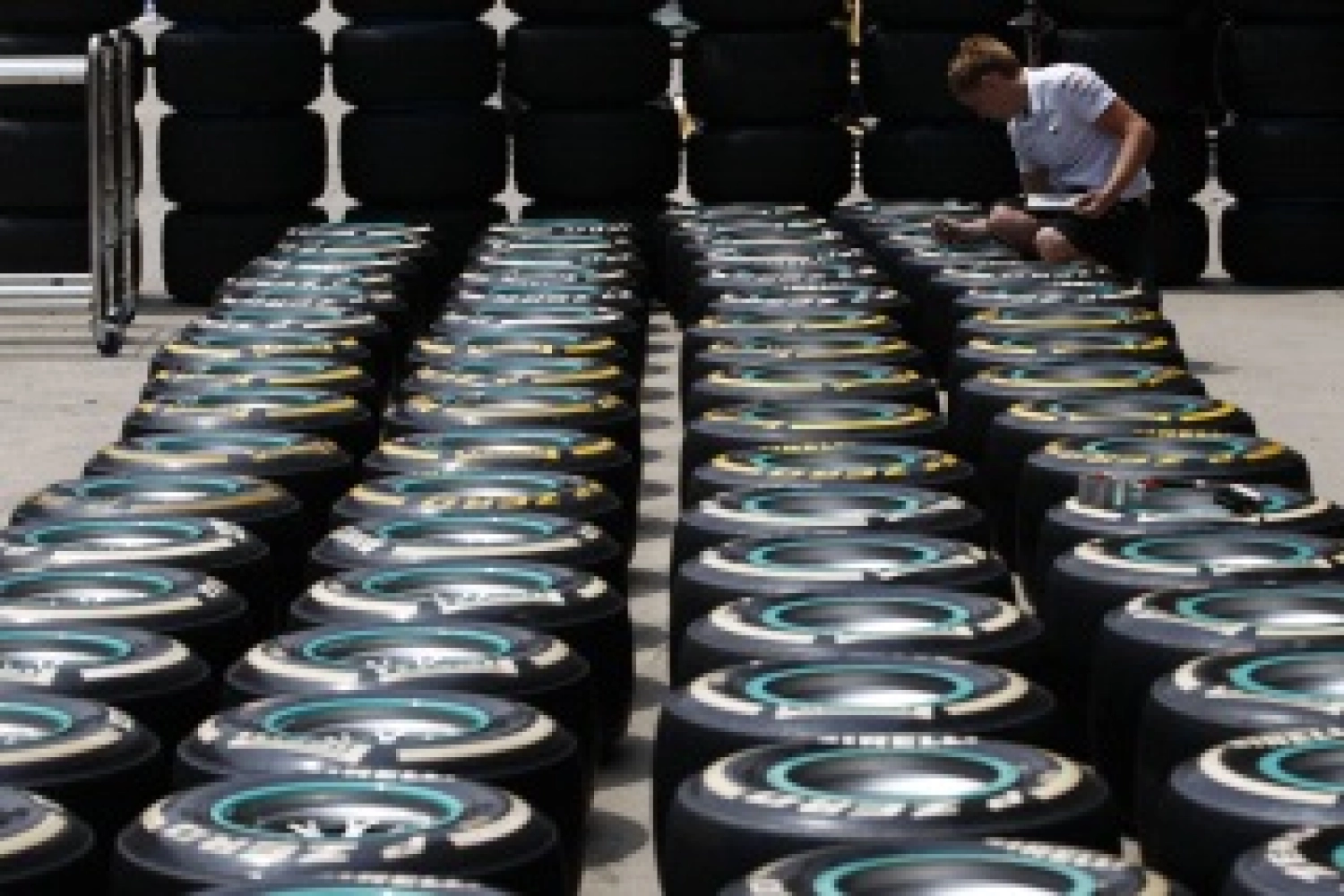
Mercedes driver Nico Rosberg picked up where he left off after his pole position and first victory in China last week, setting the fastest time of the day during free practice in Bahrain. Rosberg recorded the quickest lap in 1m32.816s on P Zero Yellow soft tires in the second session, under high temperatures. The P Zero White medium tires have also been nominated for the Bahrain Grand Prix.
The layout of Sakhir has returned to its original configuration, last used in 2009, after a longer loop was used in 2010 between turns 4 and 5. The circuit is thus smoother and faster, with 15 turns instead of 23, putting emphasis on traction and, in particular, on the front left tire.
One of the main characteristics in Bahrain is the sand that arrives on the track from the surrounding desert, which was particularly important during the first morning practice session. Although many teams expected more sand, the effect of this dust made the cars slide and contributed to increasing the thermal degradation of the tires, thereby slowing down lap times. McLaren driver Lewis Hamilton set the fastest time at 1’33.572s halfway through the 90-minute session, on Pirelli P Zero White medium tires. Force India was the only team to use the P Zero Yellow soft tires in the morning, propelling Paul di Resta to third place, and Nico Hülkenberg to sixth place.
The temperatures gradually rose during the day, with the second free practice session in the afternoon starting at 31°C in the air and 40°C on the track. The session continued and saw the track temperatures drop before reaching a new peak when Rosberg set his best time. These are the same conditions that are expected for both qualifying and the race, which means the teams used both compounds in the second session to gather as much data as possible.
Williams driver Pastor Maldonado was the first to switch to soft P Zero Yellow tires after 20 minutes, gradually followed by other competitors. Half an hour before the end of the session, many teams focused on long runs with heavy fuel loads, with some splitting the work between two cars to evaluate both the soft and medium tires in order to cover all possibilities.
Rosberg once again demonstrated his ability to make the most of the P Zero tires at the peak of their performance window, setting a best time almost half a second faster than Mark Webber’s Red Bull.
Paul Hembery, Director of Pirelli Motorsport: The sand on the track – a well-known phenomenon here after our last tests conducted in Bahrain – limited productive running time in the morning, but the afternoon session was much busier; with teams choosing to run on both compounds to make up for the time lost earlier. Teams will have to closely examine the effects of track temperature on performance and monitor degradation, which will be part of the strategy in qualifying and the race. From what we can see so far, the gap between the two compounds is about 0.6 seconds per lap and the degradation is in line with our expectations. However, we still have a lot of data to analyze tonight before we can accurately predict the length of stints with each tire, as this is the first time we’re in race conditions here.
Total number of trains used:
– Tendres: 55
– Medium: 25
– Intermédiaires: 0
– Pluie: 0
Greatest number of laps completed by a train:
– Tendres: 15
– Medium: 16
– Intermédiaires: 0
– Pluie: 0
The Pirelli fact of the day:
Hot races and fast circuits seem to push the P Zero tires to the limit, but in reality, the tires are subjected to much greater loads in laboratory tests. In these tests, the tires undergo acceleration up to 450 km/h and endure a vertical pressure of 1000 kg, while being heated to 150°C and launched on vibrators at 260 km/h! These energy loads are thus four times greater than those that can actually be expected, and the tires endure these loads up to 20 times longer than on a normal track.