Bahrain: The Pilots’ Perspective
Composed of straight lines, slow and technical corners, and high-speed sections, the Sakhir circuit presents multiple challenges to drivers and offers numerous overtaking opportunities.

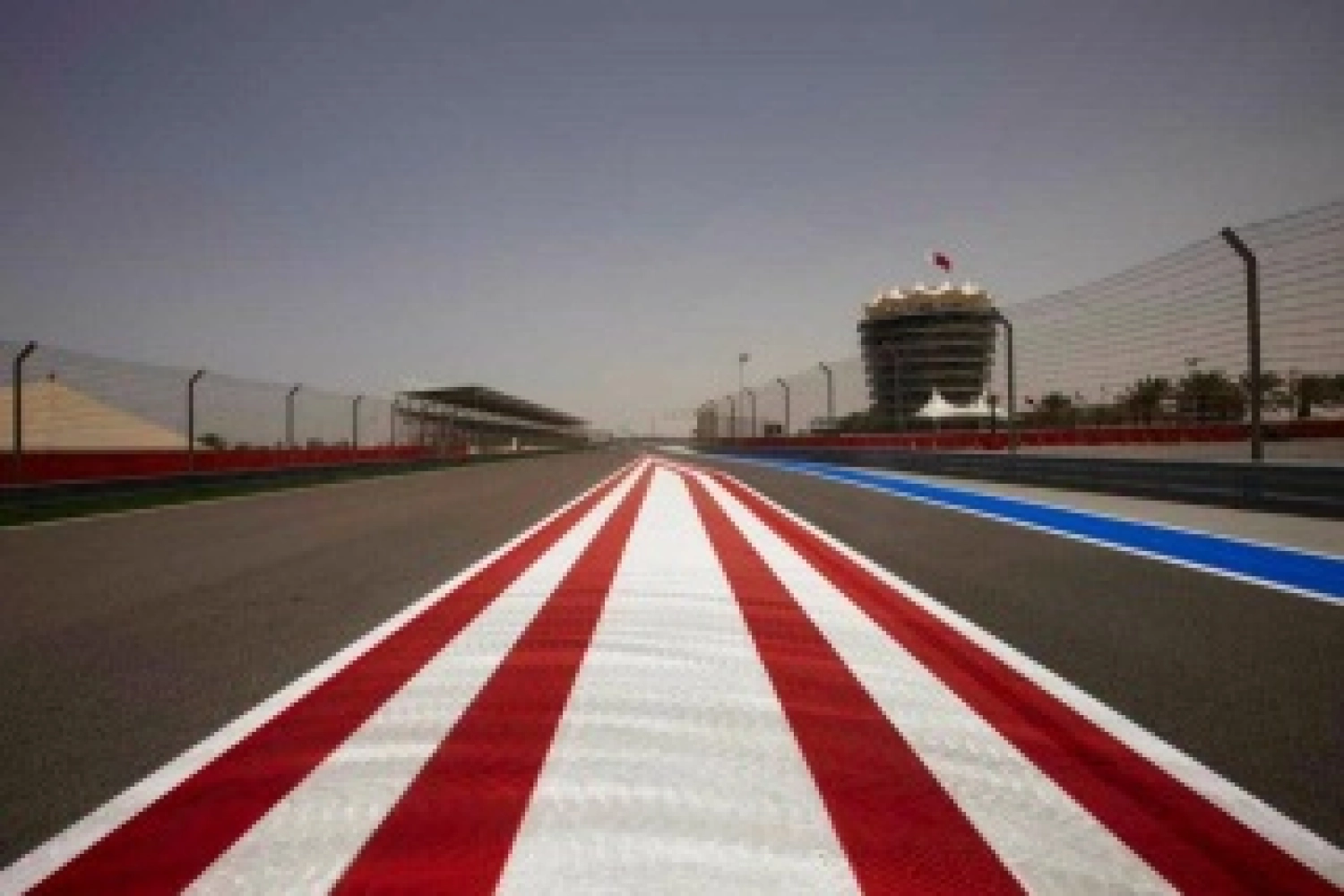
Emerging from the imagination of the now essential Hermann Tilke, the Sakhir circuit, which is 5.411 kilometers long, strikes a good balance between tricky, technical, low-speed corners and high-speed changes – notably the two sections behind the pits, which are very satisfying when you can take them correctly, judges Jenson Button, winner in Bahrain in 2009 for Brawn Grand Prix.
If Kimi Räikkönen finds it fun and always enjoyable to race there, Felipe Massa, a double winner in Bahrain, ranks the Sakhir circuit among his favorites. For his part, Nico Hülkenberg appreciates the track, which offers a nice rhythm and some technical corners, like turns 9 and 10, with the German also believing that the circuit provides good overtaking opportunities, as confirmed by Lewis Hamilton: Turn 1 is a chance to brake late, and it also gives you an opportunity to overtake a driver by forcing them to defend on the inside, putting them in a bad position for the exit and giving you the chance to pass on the inside of turn 2. There’s also turn 4 at the end of the straight.
For the first time, drivers will have DRS in Bahrain, as the event was canceled in 2011, the year of the introduction of the now-famous drag reduction system. Bahrain is a circuit that represents a challenge with several straights followed by heavy braking, so the car must be set up differently than on most other circuits. Cars with a strong DRS effect should have an advantage, so it will be interesting to see the team hierarchy, Bruno Senna believes.
Jenson Button also reminds us that after using the longer version in 2010, Formula One will return to the original track layout: « I think it suits Formula 1 better – it’s very positive that we’re returning this year. It makes the approach to turns 5, 6, and 7 – the quick direction changes – more challenging because you arrive much faster. »
For Nico Hülkenberg, who made his F1 debut on the Bahraini circuit, the secret to a good lap is not to be too aggressive on the brakes because you need to maintain good mid-corner speed and quickly get back on the accelerator to have speed on the straights, while for Vitaly Petrov, the Sakhir circuit is one where you need to have a really well-balanced car and make sure to hit the apex of the corners to achieve good lap times: This is particularly true in the last sector: you can gain or lose a lot of time there, adds the Russian.
Heikki Kovalainen, on the other hand, believes that the circuit does not really offer any challenging corners: “You can push hard for most of the lap, especially on the curbs which are quite gentle on the cars.”
Despite this, Sebastian Vettel indicates that the track demands a lot from the driver because the constant change in turns means you don’t have time to settle in during a lap. The German driver also highlights one of the particularities of the Bahraini circuit, located in the middle of the desert, forcing drivers to deal with the sand: It moves with the wind, so it can suddenly appear in new places each lap – so you never really know where the track is slippery.
Heikki Kovalainen expects the level of grip to improve dramatically over the weekend: We’ll see lap times constantly decrease, which means we’ll have to be on the track all the time during qualifying to make the most of it.
Nico Rosberg, recent winner in Shanghai, who began his career by setting the fastest lap in Bahrain, points out that the temperatures and track conditions in Bahrain will be very different from those in Shanghai. With temperatures sometimes exceeding 35°C, they delight Kamui Kobayashi as they remind him of summer, but they will mostly pose a new test for the drivers and the machines, especially the brakes and tires already heavily stressed on this circuit.
On the French side, Romain Grosjean is the only driver to have tested the Pirelli tires on the Bahrain circuit, and while he believes Sakhir is a good circuit, he acknowledges that it mostly depends on the car: “With a good single-seater you enjoy the track, with a bad one, you don’t! [At Sakhir], there are big braking zones, which I appreciate, some interesting changes of direction like the double left in the middle of the lap… I think the E20 will be pleasant to drive.” Meanwhile, Charles Pic is excited to drive for the first time on a circuit he knows well, having raced there in GP2 in the past: “I know that the track is very hard on the brakes, given its layout with long straights and low cornering speeds. Tire wear can also be high because of this and given that the track is very abrasive.”
But naturally, this eighth edition of the Bahrain Grand Prix takes place in unprecedented conditions, as the country was one of the stages of the “Arab Spring” in 2011: « Above all, I must say that I have always enjoyed coming here, even on days when we had long private testing sessions. The people have always been very welcoming, cordial, and I hope the Grand Prix will be a unifying factor » wishes Felipe Massa.
Chronological milestones:
2004: For the inaugural race, Michael Schumacher (Ferrari) clinches pole position and victory, setting the track lap record that still stands to this day.
2005: Fernando Alonso offers Renault its 20th victory as a constructor and its 100th as an engine supplier, while Pedro de la Rosa (McLaren) records what remains to date as his only fastest lap in a race.
2006: The Grand Prix kicks off the world championship, marking the debuts of Toro Rosso in Formula One as well as Nico Rosberg (Williams), who immediately claims the fastest lap in the race, at just 20 years, 8 months, and 13 days old, setting a record for precocity that still stands. For his part, Michael Schumacher equals Ayrton Senna’s record of 65 pole positions, which he will later raise to 68.
2007: While Felipe Massa (Ferrari) secures his third career victory and achieves his first hat trick, Lewis Hamilton (McLaren) becomes the first driver in history to reach the podium in his first three career races.
2008: Robert Kubica secured his very first pole position, also the first for the BMW-Sauber team. In the race, Felipe Massa claimed victory for the 6th time in his career, the first without starting from pole.
2009: Before Jenson Button (Brawn GP) claimed his fourth Formula One victory, the Toyota team monopolized for the first time in its history the front row of a Grand Prix, before Jarno Trulli, driving the TF109, set the fastest lap in a race for the first time in his career.
**2010:** Once again, the Bahrain Grand Prix opens the world championship and sees the arrival of Lotus Racing, HRT, and Virgin Racing. While Bruno Senna (HRT), Vitaly Petrov (Renault), and Nico Hülkenberg (Williams) make their debuts on this occasion, Fernando Alonso claims his first victory in his first race with Ferrari, just as Kimi Räikkönen had done two years earlier. It is also the 250th Grand Prix, and the first start since his retirement in 2006, for Michael Schumacher (Mercedes).