Bahrain: Figures and Technical Data
Overview of the technical constraints imposed by the Sakhir circuit on the chassis, engine, and tires of Formula One cars.

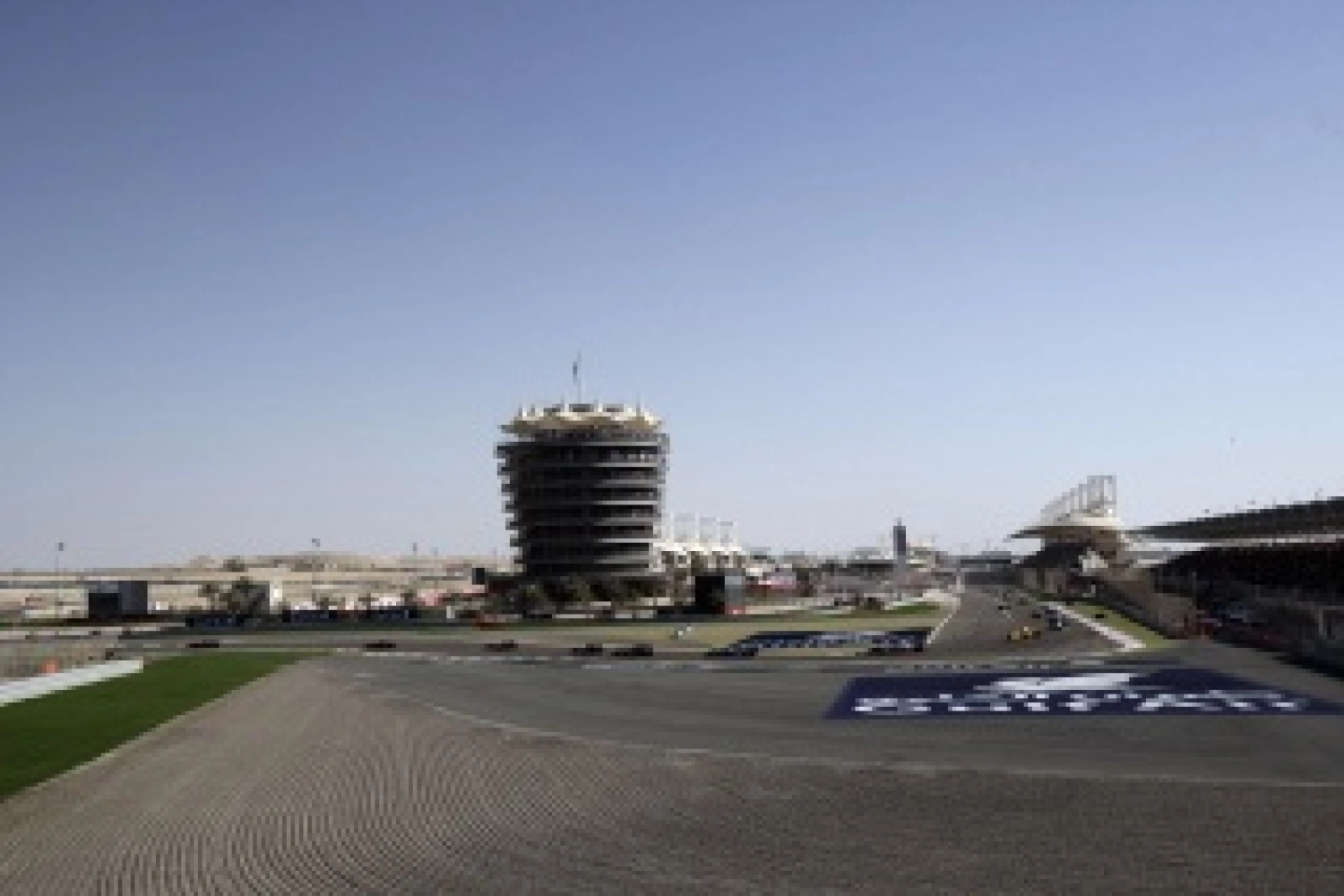
For the return of F1 to Bahrain this year, the drivers will race on the circuit used from 2004 to 2009 and not on the track used for Endurance where the 2010 Grand Prix was held. This circuit is faster than the 2010 one – with a lap record of 1:30.252, set by Michael Schumacher in 2004, compared to 1:58.287 for the other configuration, the best lap set by Fernando Alonso.
This 2012 edition will be rich in new features, with the grand debut of the DRS at the Sakhir circuit. The FIA has decided to implement only one DRS zone, as in China. It will be located on the start-finish straight.
The other novelty will be the debut of Pirelli tires in the race in Bahrain. But Pirelli will not be venturing into the unknown because even though the Pirelli P Zero F1 tires have never been used in a race in Bahrain, the Italian manufacturer conducted two testing sessions in December 2010 and January 2011, during its return to F1.
The layout used for the 2012 Grand Prix features 15 turns and numerous straight lines, so the brakes will be put to the test given the temperatures and the braking done by the drivers at the end of each straight. To take advantage of the straight lines, aerodynamics will be an important factor.
Two other factors that may be important are the wind and the sand. Due to its location in the middle of a desert, the circuit is sometimes subject to sandstorms, and this can disrupt the grip of the track, especially when there is wind. Since the circuit is exposed to the wind because of its isolated position, this can also have an impact, particularly on the top speed of the cars.
Note that, as was the case last weekend in China, Emanuele Pirro will be the fourth FIA race steward. He will be working alongside Gary Connelly and Silvia Bellot.
Bahrain on the chassis side
Giampaolo Dall’Ara’s opinion, the head of track engineers for the Sauber team
The track is a series of long straights with low-speed corners, so it’s very demanding on the brakes. Good traction is also crucial on this circuit. We didn’t use maximum downforce back when we were running without DRS. Having good top speed can make the difference there. Another peculiar feature concerns the surface. Although it is smooth, it is quite abrasive, especially with the rear tires, due to the combination of high temperatures and sand surrounding the circuit.
Normally, the ambient temperature fluctuates between 35 and 40°C, which means we need to use all cooling options. This applies to the brakes as well, although in this area it’s due to the fact that drivers have to brake very hard.
The opinion of Mark Gillan, the engineer in charge of operations within the Williams team
« One of the main challenges posed by this circuit is the heat, with an ambient temperature generally around 35°C and over 40°C on the track. These conditions force teams to open up the bodywork to cool the engine, which can affect aerodynamic efficiency. »
Bahrain on the motor side
Rémi Taffin, Head of Track Operations at Renault Sport F1:
This circuit is complicated for the drivers because of the heat and the layout itself. In some corners that follow the straights, they have to handle very high lateral accelerations. The winding section requires very precise settings and there are ultimately not many opportunities to relax during a lap. For the engine, however, it is not too complicated. With 50 to 60% full load – in race or qualifying – this circuit is average in terms of demands. It is the atmospheric conditions, like the lack of humidity in the air or the sand covering the track, that complicate things for us.
That said, Friday could be one of the most intense days of the year. We have seen in the first Grand Prix that Fridays require more work than before. Last year, blown exhausts improved drivability. Now, we almost have to tune the engines for each corner and spend more time on the torque levels expected by the driver. Moreover, the new regulations have restricted the number of parameters we can work with. We need to be more ‘clever’ to exploit the possibilities available to us. This will be even more challenging on a track we haven’t used for three years.
All drivers powered by Renault will use the same engines as in China, except for Vitaly Petrov, who will use his engine from Malaysia. We are confident in facing this challenge and we hope to provide the best performances for our partners.
Bahrain tire side
Paul Hembery’s opinion, director of Pirelli Motorsport:
There are a number of technical challenges we anticipate for Bahrain, with the temperature easily exceeding 30°C causing the tires to perform differently. We have collected data from this track during past tests conducted here, but the tires and the cars have changed so much since then that it’s almost like starting from a blank slate. However, we expect greater degradation than usual, which should test the teams in terms of strategy.
The circuit being rarely used, we expect to see significant track evolution throughout the weekend. The risk of having sand on the track can also be an issue, as it takes time to clear and can cause graining. Therefore, tire management will once again be crucial in Bahrain, particularly with rear traction, which can be key to good qualifying and race pace.
Opinion of Lucas di Grassi, Pirelli test driver:
Bahrain is a quite unpredictable circuit in terms of track evolution. Sand is a very important factor. When sand settles on the track, it decreases grip and the cars slide more as a result, also increasing tire wear.
Bahrain in Figures
**4:** Only four drivers have their names on the winners’ list over the 7 editions held: Fernando Alonso won the Bahrain Grand Prix three times, Felipe Massa twice, and Michael Schumacher and Jenson Button each once.
5: This is the number of G-forces that the tires undergo during braking in the first corner, as the cars slow down from 315 km/h to 65 km/h in just 130 meters.
50: It’s the percentage of the Sakhir circuit lap spent at full throttle. This figure can even reach 60% during a qualifying lap.
250: The fastest speed reached in a corner by drivers in Bahrain, at Turn 12.
315: This is the maximum speed in km/h estimated by Pirelli.
1090: The length in meters of the pit straight where drivers can activate the DRS.
[From the press releases published by FIA, Lotus F1, McLaren, Pirelli, Renault Sport F1, Sauber, and Williams F1]