A more powerful Renault engine in 2012
The ban on blown diffusers will have a beneficial effect on Renault engines. In fact, they gain an estimated additional power of between 10 and 20 horsepower.

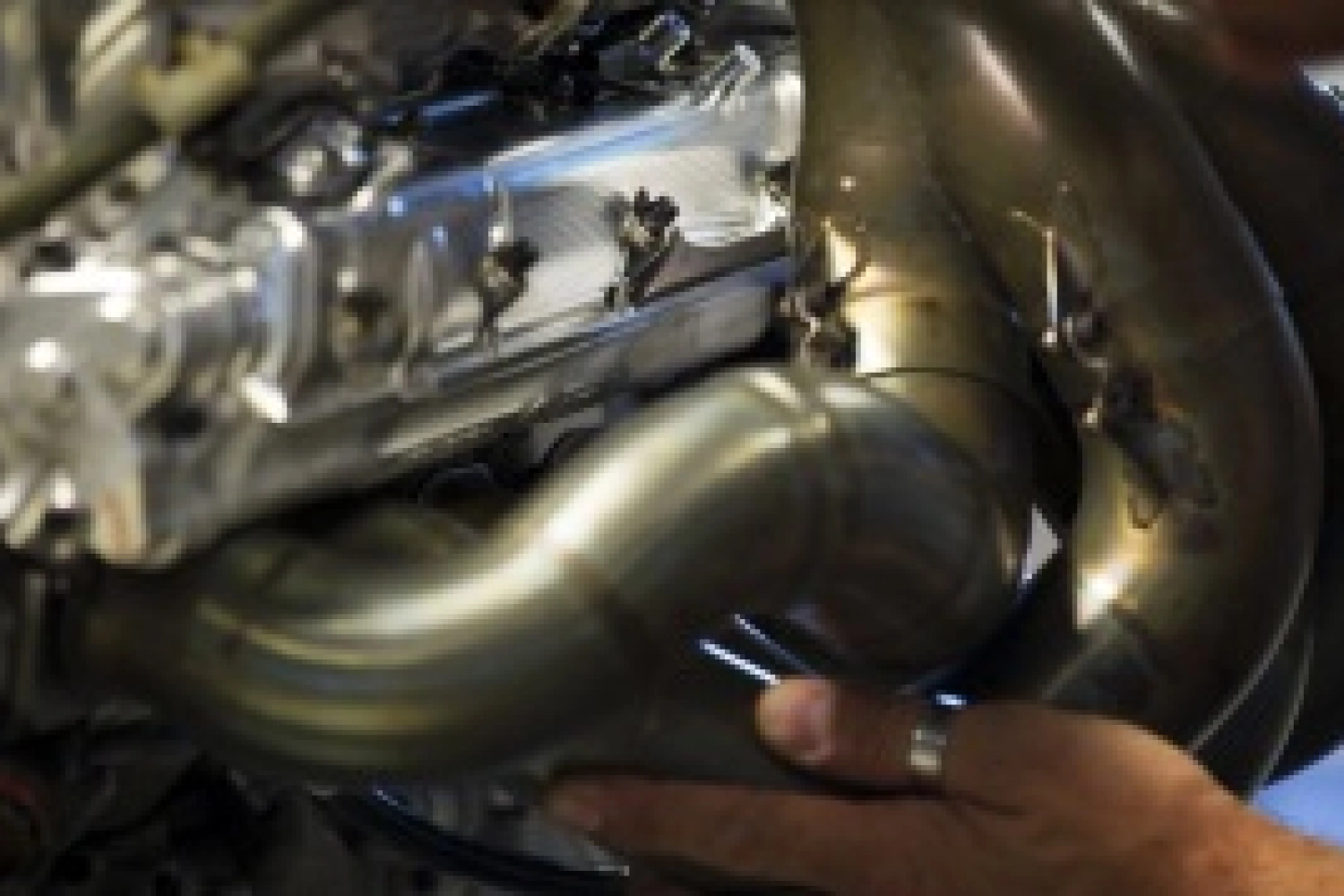
Renault will supply engines to four teams in 2012: Red Bull Racing, Lotus F1 Team, Caterham F1, and Williams F1, which represents a third of the grid. The engineers therefore had to design an engine capable of adapting to four differently designed single-seaters.
Another challenge for 2012 was adapting to the regulatory change, with the ban on blown diffusers – the engine’s exhaust gases were directed to the diffuser even when the driver was not accelerating.
One of the major technical challenges was adapting the engine to the new regulations concerning exhausts, which must now exit at the rear. This ends the exhaust gases blowing into the diffuser, and we’re almost back to the 2010 specifications. But it’s not just a step back, as the cars and engine mapping regulations have evolved in the meantime. We had to rethink our way of integrating the engine into the car as a whole… and with four different exhaust designs, disclosed Rob White, one of the leaders of Renault Sport F1, on the RSF1 site.
The ban on blowing is a good thing according to Rob White, as it should allow the V8 engine’s power to increase from 10 to 20 horsepower.
This new regulation will allow us to benefit from an increase in power, around 10 to 20 horsepower compared to 2011. The top speed should logically be higher. We should return to the power levels of 2009, before the emergence of blown exhaust solutions.
Everyone at Renault Sport F1 has worked hard during the off-season to further improve the performance and reliability of the Renault engines. With only 8 engines per driver and 20 Grand Prix to compete in 2012, the engines will have to cover more kilometers than in previous seasons.
«In addition to these changes, we have introduced minor developments aimed at improving reliability. The off-season allowed us to optimize certain parts to ensure consistent performance, regardless of engine mileage. We should be able to provide V8s with theoretically unlimited lifespan. On average, each engine could be used for three weekends. With 20 races on the calendar, we will have the advantage of some flexibility.»
While continuing to develop its V8 in compliance with regulations, Renault Sport F1 is also thinking about the future, particularly 2014, which will see the arrival of new engine units in F1: 1.6L V6 Turbos.
«In parallel, we have already made good progress on the design of the engine that meets the 2014 regulations. Some parts have already been tested and the complete engine will run on a test bench in 2013, » added Rob White.