PURE talks about its engine and evaluates its competitors
In an interview with GPUpdate.com, Craig Pollock assures that the PURE engine will run for the first time in 2012. He also confirms that Mercedes is currently the most advanced manufacturer in developing the V6 Turbo for its introduction in 2014, and does not rule out the possibility of supplying McLaren from that date. The former BAR boss also mentions the possibility of taking over the Peugeot Sport premises in Vélizy-Villacoublay.

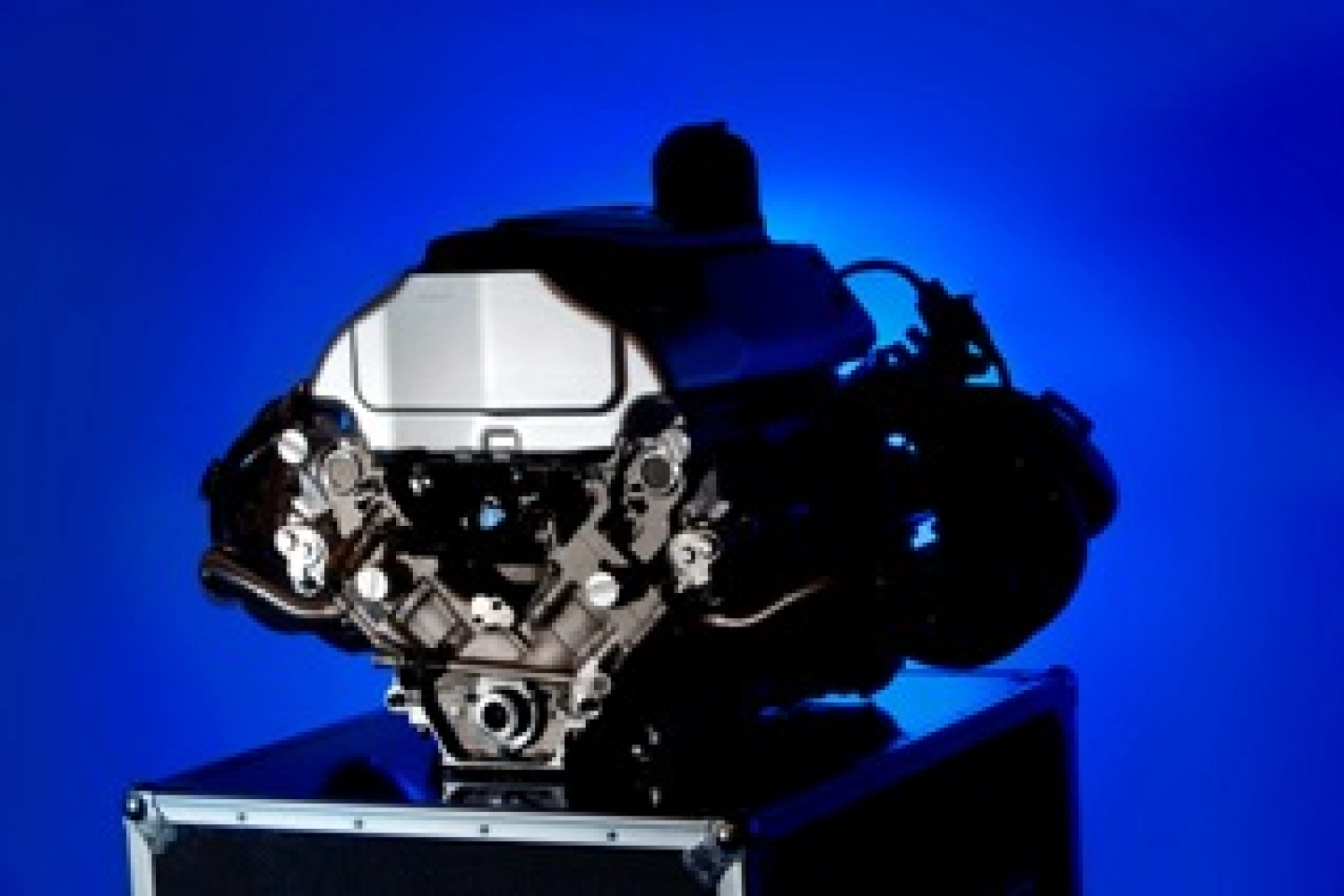
As the introduction of a new engine in Formula One approaches, starting in 2014, the year 2012 should see engine manufacturers conduct their first tests with the 1.6-liter V6 Turbo. While the Mercedes, Renault, and Ferrari engines are expected to roar soon, it could be, according to Craig Pollock in a long interview with GPUpdate.com, the PURE project that is the most advanced: “When you design and build a Formula One engine, you have to go through different stages,” confides the former BAR boss. “The first two stages involve the overall design first, then every detail of the engine. Next, in the third stage, you place orders with suppliers, then essentially move on to building the components. At the moment, we are at that stage, and we have already confirmed that we will be on the test bench by June or early July, which is very good.”
Among the manufacturers already present in Formula One, Mercedes seems to be the most advanced in its project, as confirmed by the CEO of PURE: « We believe that Mercedes is already on the test bench; we don’t know if it’s a complete unit, like us, but we hope it’s with a single-cylinder engine and not the race engine. We are quite sure that Renault will not conduct bench tests before September. Obviously, we are well-informed about Ferrari thanks to Gilles Simon’s contacts [Editor’s note: head of the engine department at Scuderia until 2009]. We think they are still figuring out which direction they need to go, so they’re not yet at the detailed design stage: they are behind, perhaps even more so than Renault. These are the pieces of information we have. Everyone uses the same suppliers for certain engine elements, so, when certain parts have not been ordered by a certain date, you can assess each one’s delay. »
Regarding Cosworth, who will only supply Marussia and HRT in 2012, Craig Pollock is more pessimistic: « It will be very, very, very difficult for them to be ready on time […]. Even with what they have today, they are in a situation where they have to start from scratch. They are a year behind […] and will probably not have their engine on the test bench before the end of next year, so they will have to go directly from the bench to the track. »
But for now, although it seems ahead of its forecast schedule, PURE exists only as a project and has not yet signed any supply contracts with any team. Craig Pollock, however, remains confident and sees, behind the cessation of Peugeot’s endurance program, the announcement of better days for smaller structures: « I don’t think Peugeot’s withdrawal will help, because it will allow them to realize that with very large manufacturers, a board decision or a management meeting can lead to a negative decision, and it can happen at a moment’s notice […]. So, no one knows who will still be around in the future, except for Ferrari which, I think, will always be there in the long term, but no one can guarantee anything about the others. »
The former manager of Jacques Villeneuve believes that not being involved in Formula One at the moment is an advantage: « We don’t have to work on the V8 for another two years, so we are only working on the 2014 project, […] and so I think it allows us to… I wouldn’t say to have an advantage, but to stay focused. […] I assured, as soon as the regulation change was announced, that our PURE engine could be mounted on a Formula One as early as 2013. It was mainly the major manufacturers, especially Ferrari and Mercedes, who said they wanted a postponement to 2014 to have more time. »
If he believes that PURE will have to equip at least two teams – « and two good ones if possible » – Craig Pollock does not rule out any possibility regarding the supply of his engines, not even the one mentioned by some, leading to McLaren: « For now, there is not a single team – except Mercedes and Ferrari – that is not a potential client for PURE. Even if Renault seems to have a contract with Red Bull beyond 2014, I think everything remains open. […] During a meeting of engine manufacturers with the FIA in Barcelona in 2011, Norbert Haug stated that if Mercedes had to, they would supply their engine to an additional team but that team would have to pay the price. The message clearly indicated that McLaren will have to pay full price for the supply of its engines. In 2012, the supply is still free, and in 2013, they will still be supplied by Mercedes because, fundamentally, they will have no other choice. But in 2014, it will be harder. »
In the meantime, PURE must face the necessity of finding more space to carry out the next phase of its project: “Our current facilities, which are close to Paris, are becoming too small for us. We have been between 22 and 50 engineers,” explains Craig Pollock to GPUpdate.com. “Now, we are looking for our own design and development offices, and the final decision depends on tax requirements and which government or canton will help us the most to move forward. For the moment, we are looking in three directions: France, Switzerland, and Germany. We have already decided to base part of our activities near Cologne, using Toyota’s Formula One test benches, because they are the best, there is no doubt about that. On the other hand, there has been the announcement of Peugeot’s withdrawal, and we were sufficiently informed to know that this could happen. They have facilities, offices, and test benches near Paris that are certainly not up to standard for a Formula One engine but it wouldn’t be too difficult to upgrade them. This could potentially be the most economical situation for us.”
Craig Pollock, however, dismisses the idea of building his own facilities: « Before we can have our own testing bench and run it properly, it will realistically take a year and a half, maybe even two years, and we can’t take that risk. »