Whiting defends the DRS that annoys Lauda
Introduced in 2011, the DRS still sparks debate within the paddock, particularly regarding its effectiveness.

The 2011 season was one of all records: those of Sebastian Vettel, of course, but also the record for the number of pit stops – due to the low longevity of Pirelli tires – and the record for the number of overtakes in races. Regarding the latter, the analysis of overtakes carried out over the first eighteen races of the season shows that 45% of these maneuvers were influenced by the DRS, a movable rear wing system that can be activated when a driver is within one second of the car ahead, allowing a gain of 12 to 20 km/h in top speed.
What is great about the DRS is that at least it saves us from discussing aerodynamic modifications to improve overtaking. We have found an authoritative solution that is more economical, easy, and effective, and what’s more, it can be modified between each race, states Paddy Lowe, McLaren’s technical director and member of the working group behind the drag reduction system, as said in the language of Molière, on BBC Sport.
However, enthusiasts often lament the artificiality of overtaking that DRS induces, and Niki Lauda indicates in the Salzburger Nachrichten that DRS bores him: Watching overtaking happen with the push of a button is fundamentally the wrong direction for F1. The driver in front is completely defenseless: I think, from a sporting perspective, it’s not good.
The Austrian also believes that the philosophy adopted by Pirelli for its tires has done more for the spectacle and suspense of the races than DRS: « There are enough overtakes thanks to the tires, which often have to be pushed to their limits by the drivers. And they challenge the engineers with the task of preserving the tires. »
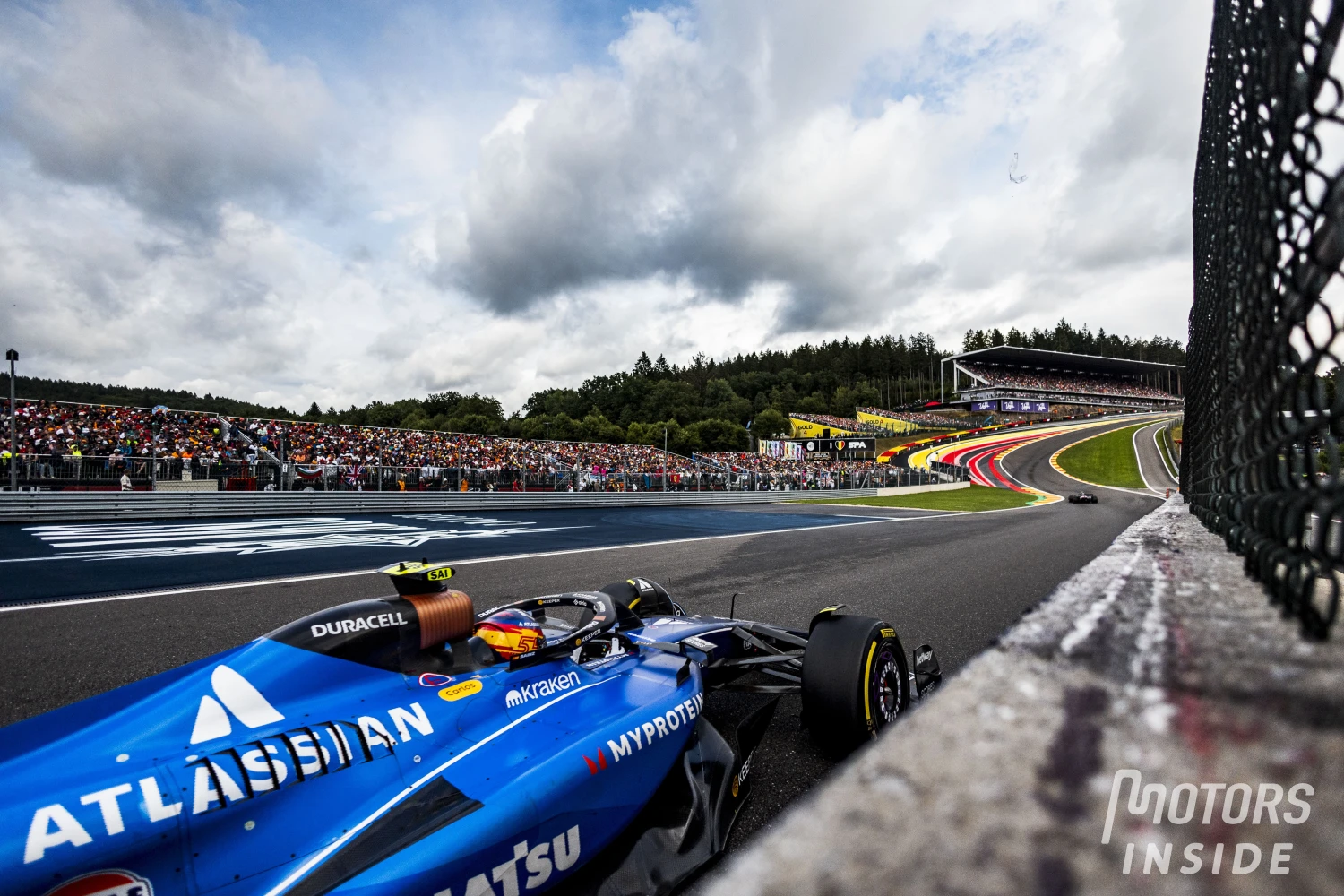
Indeed, while in some circuits the DRS has proved ineffective – or almost – in others, such as in Turkey or Belgium, it has sometimes been too effective: « In hindsight, after the race, it wasn’t too difficult to overtake and almost impossible to defend your position because other drivers were coming much faster » explained Fernando Alonso, after the Belgian Grand Prix, before adding: « It’s certainly something we need to try to discuss and improve for the future. »
Charlie Whiting, F1 technical director and race director, admitted to BBC Sport that, in the case of Spa, appearances were disappointing, with overtaking facilitated by the speed advantage of the car behind when both drivers were vying for position coming out of the corner before the DRS zone.
« [The example of Spa] clearly shows that when the speed differential between two cars at the entrance of the DRS zone is small, overtaking is not easy. But if a car negotiates Eau Rouge flat out, sometimes there is a differential of 18 km/h: in this case, there will be an overtake, with or without DRS. However, the one-second gap required for DRS activation is not always enough: you need to be four tenths behind the driver to be alongside him at the braking point. »
Charlie Whiting further insists that the « DRS does not diminish the value of an overtaking maneuver on tracks where it is traditionally easy to overtake; it just means that the DRS offers even more possibilities. »
The subject is also a matter of debate among drivers, even though everyone agrees on the system’s improvability: « It’s something I love. It’s extraordinary: for twenty years I heard there weren’t enough overtakes in F1, and now people are saying there are too many. For some, it makes things too easy, but I think it’s a good thing » stated Rubens Barrichello a few weeks ago, before admitting that he thought « the FIA can improve the system for next season. »
Mark Webber questioned the benefit of allowing unlimited use of the system during practice and qualifying only to restrict its use in the race, citing in particular the risks drivers take by sometimes activating the DRS too early to save time: « Bruno Senna had an accident in Suzuka, I had one on Friday in Hungary, and one of Sebastian Vettel’s crashes during practice was also caused by this. »
The Australian also hopes that the experience gained this season will help perfect the fluctuating efficiency of the DRS while preserving the art of overtaking: « Some people like to see cars constantly passing each other. NASCAR races are based on that, but for those who have a more purist view of F1—like me—overtaking should have more meaning. They’ve done a good job so far, and I’m sure the teams and the FIA will find a better balance on certain tracks, [in 2012]. »
One thing is certain, indeed, after a year spent experimenting with the system, the FIA will have to learn lessons from it, and BBC Sport is already mentioning the possibility of a second DRS zone on the Melbourne circuit for the inaugural race, as well as a longer DRS zone on the Valencia circuit, where, although already very long, it proved to be relatively ineffective.