Is Vettel really stronger than Mansell?
Although he broke Nigel Mansell's record of pole positions in a single season, it took Sebastian Vettel 19 Grand Prix—compared to 16—to achieve it. What is the true value of the German's record? The editors of casinoenligne.uk.com try to outline an answer.

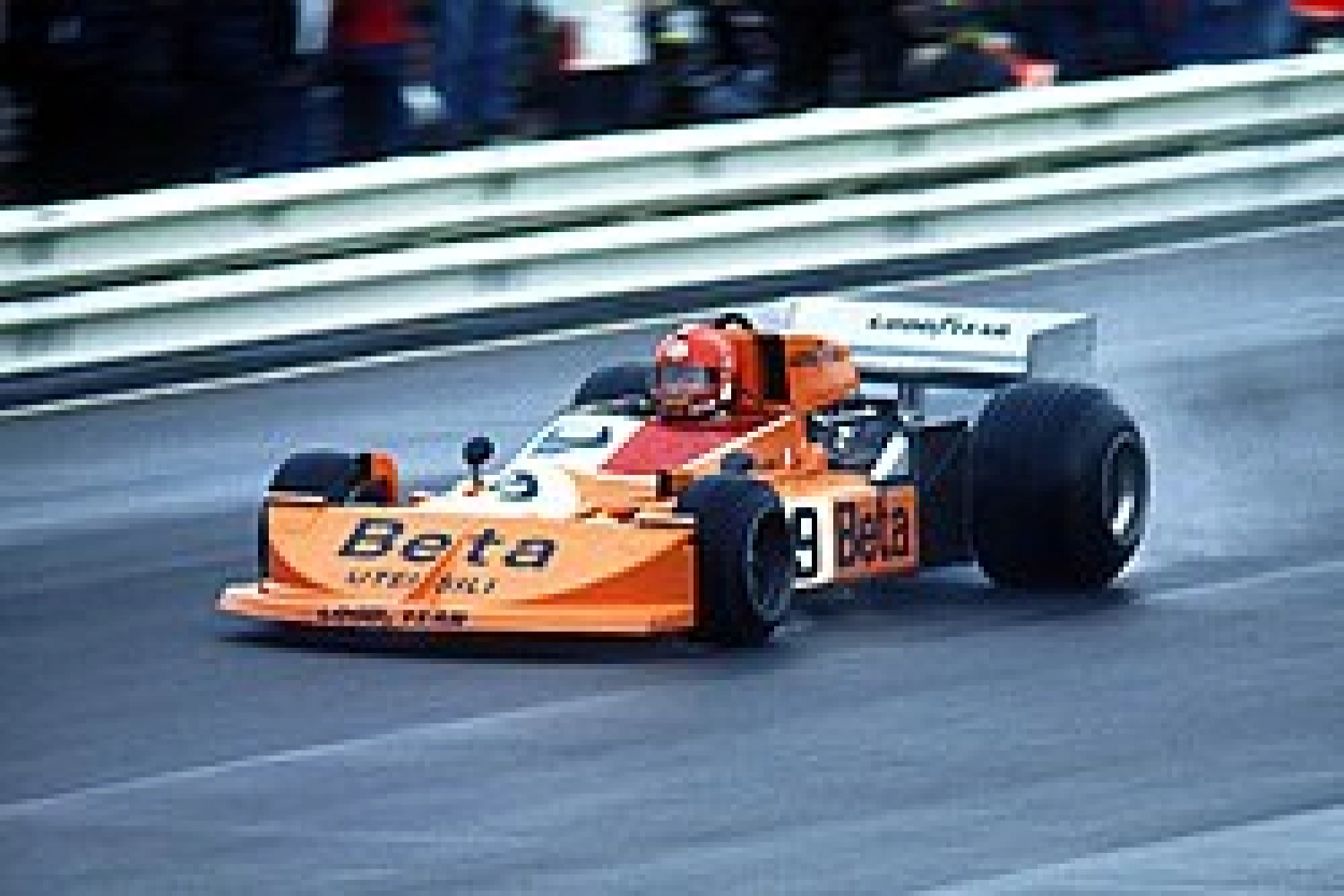
November 26, 2011, will remain in the history of Formula One as the day when Sebastian Vettel, achieving his fifteenth pole position in a single season, broke the long-held record of Nigel Mansell. Mansell, by securing his 14th pole position at the 1992 Australian Grand Prix, had himself erased the previous record of 13 held by Ayrton Senna in 1988 and 1989. However, while the Englishman achieved this feat in as many Grand Prix as the Brazilian, Sebastian Vettel benefited from three additional races on the calendar to break Nigel Mansell’s record. Thus, considering only the Poles/Grand Prix ratio, the German ranks only 5th among the best performers in the history of the discipline, with a success rate of 78.95%, behind Ayrton Senna and Alain Prost, both with a success rate of 81.25%, and of course Nigel Mansell, the comfortable leader with a ratio of 87.50%.
But the question arises – as often with statistics – of understanding what meaning to give to these figures and therefore to Sebastian Vettel’s record. The exercise of comparing different eras is always futile and unfair to both drivers, but starting with the wild assumption that such a comparison is credible, to what extent can we claim that Sebastian Vettel’s record is significant?
If there is one common point between Nigel Mansell’s 1992 season and Sebastian Vettel’s 2011 season, it is the almost outrageous domination they imposed on the discipline. Nigel Mansell thus put an end to Ayrton Senna’s hegemony, the reigning double world champion, by being crowned as early as August, with 5 Grand Prix remaining in the season, whereas Sebastian Vettel, facing no less than 4 world champions, renewed his lease at the Japanese Grand Prix, with 4 Grand Prix remaining in the championship. While it has often been attributed that Sebastian Vettel’s dominance in qualifying was due to his car, designed by Adrian Newey, who was also behind the FW14B available to Nigel Mansell in 1992, the figures tend to show that, despite everything, the 2011 qualifying sessions were tighter than those of 1992.
Thus, considering only pole positions achieved during a qualifying session held on a dry track, the average gap separating Sebastian Vettel in pole position from the first non-Red Bull driver is 0.344 seconds, while the average gap separating Nigel Mansell in pole position from the first non-Williams driver was 1.230 seconds (without considering the Belgian and Japanese Grand Prix qualifications where rain led to the starting grid being based on times set on Friday). The largest gap created by Sebastian Vettel is thus only 778 milliseconds over Lewis Hamilton in Melbourne, whereas Mansell inflicted 2.741 seconds on the great Ayrton Senna during the 1992 British Grand Prix qualifying, where he also relegated his teammate, the experienced Riccardo Patrese, to 1.919 seconds behind. Conversely, while the gap between Vettel and his pursuers in qualifying decreased over the season, reaching just 9 milliseconds ahead of Jenson Button in Japan, Mansell’s gap remained almost consistently beyond one second.
To this could be added the ten front-row lockouts in qualifying by Williams (a ratio of 63% of front-row starts for the two FW14B) whereas this season, Red Bull has only managed to lock out the front row 7 times, a ratio of 37% of the Grand Prix contested in 2011.
Apart from the proven technical superiority of the Williams FW14B, equipped with active suspension, and that of the RB7, which is equally recognized today, the difference in the qualifying format between the two eras can undoubtedly partly explain this gap. Indeed, in 1992, drivers had a one-hour session with an unlimited number of laps, whereas today drivers must participate in three qualifying sessions of 20, 15, and 10 minutes, with the traffic issues that can arise, as seen in Brazil. Beyond the tire and technical differences – notably the DRS and its potential impact on the balance of the car – that differentiate the two eras, it should be noted that the current qualifying format is more intense, and drivers sometimes have only one lap to qualify, as imposed by the strategy which plays a bigger role in today’s qualifications. Added to this is the availability of a spare car, which potentially allowed, in Nigel Mansell’s era, to return to the track despite an accident, which is no longer the case today.
The difference in qualification formats does not allow for a serious comparison between the performance of the two drivers who, each in their own time, excelled under the conditions imposed on them. However, the current qualification format – more intense and leaving less room for error – highlights a quality often attributed to Sebastian Vettel: his maturity. Indeed, it’s worth noting that, although he’s driving the best car on the grid at the moment, the German is only in his fourth full season and specifically his 81st Grand Prix, whereas Nigel Mansell set his own record during his 181st Grand Prix, at the end of his eleventh full season in Formula One after having been with experienced teams like Lotus, Ferrari, and thus Williams. Sebastian Vettel is 24 years old, whereas Nigel Mansell was 39 at the time, to which one could respond that precisely, Sebastian Vettel has the advantage and vigor of youth, which the Lion may have naturally lost over the years.
This is why it is futile to try to compare the performance of two different drivers from two equally different eras. Records are made to be broken, and if there was a lesson to be learned from the record of most pole positions in a single season achieved by Sebastian Vettel, it’s that just like Nigel Mansell’s, it would be a mistake to believe it is untouchable.
Finally, the Red Bull driver’s record can only be seen as an illustration of his dominance in 2011 and, perhaps, as a preview of potential records to come, particularly the one for the most career pole positions, long held by Jim Clark before being beaten by Ayrton Senna, who was in turn beaten by Michael Schumacher, who no longer had much to chase in terms of records. What is perhaps more indicative of Sebastian Vettel’s effectiveness in this endeavor than the number of pole positions in a single season is that he is on par with these champions, each of whom had their records broken without being forgotten. Indeed, after securing his thirtieth pole in Brazil, the German is already in sixth place for the most career pole positions, behind Michael Schumacher (68), Ayrton Senna (65), Jim Clark (33), Alain Prost (33), and Nigel Mansell – him again – (32).
It should be noted, however, that the Red Bull driver is only at his 81st Grand Prix. Having contested only 72, Jim Clark remains one of the undisputed masters of pole position, while of the other drivers who precede Sebastian Vettel in terms of career pole positions, only the great Ayrton Senna had more pole positions after 81 Grand Prix, with 32 achievements, having only missed pole three times in the 1988 season. All the others, whether Nigel Mansell (3), Alain Prost (13), or even Michael Schumacher (14), were outpaced by the German driver, who still has many years left to challenge the record, knowing that today’s truth might not be tomorrow’s, as evidenced by the number of pole positions achieved by the Kaiser after his 81st start.
Thus, perhaps even more than his record as the youngest double world champion, his number of pole positions and the record he set at Interlagos truly mark the native of Heppenheim in the history of Formula One, alongside the greatest names in the discipline, including Nigel Mansell. Christian Horner stated on Saturday evening after the qualifying session: « He shared the record with Nigel for two weeks and now has some illustrious names behind him, so it’s a great performance. »