India GP: Strategy Summary
After each Grand Prix, casinoenligne.uk.com offers you a graphic analysis of the different strategies used during the race, notably by the contenders for victory at the Indian Grand Prix.

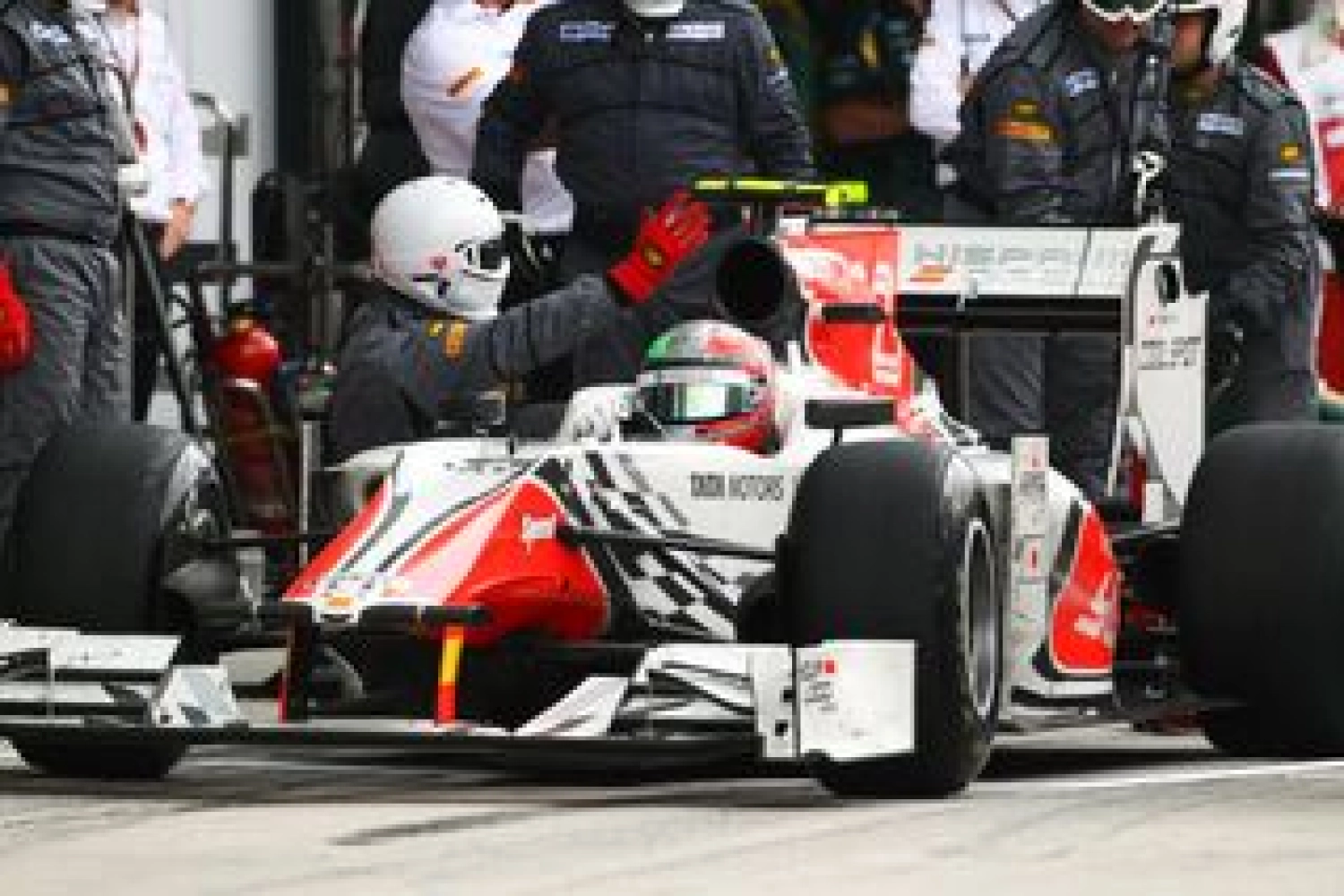
By winning his eleventh Grand Prix of the year, Sebastian Vettel is still in the running to equal the record for the number of victories in a season, thirteen, held by Michael Schumacher since 2004.
The new Buddh circuit on the outskirts of New Delhi evolved considerably over the weekend, with lap times improving as the track cleaned up and rubbered in. Yellow sidewall soft tires and silver sidewall hard tires were chosen for this race, with the soft tire being nearly two seconds faster than the hard tire.
This gave rise to interesting strategies as drivers tried to limit their stints on hard tires. Paul di Resta, Vitaly Petrov, and Sergio Perez were the only drivers to start on the hardest tires, but they quickly switched to soft tires in less than five laps.
Vettel led from start to finish, using a two-stop strategy to secure victory ahead of Jenson Button, who gained two places from his starting grid position right from the start. The top six drivers all used a two-stop strategy ahead of Lewis Hamilton, who was the best-placed driver with a three-stop strategy, finishing seventh after a collision with Felipe Massa.
After dropping out of the Top 10 following his accident with Hamilton, Felipe Massa was the first top driver to switch to hard tires on lap 31, but the Ferrari driver couldn’t finish the race after breaking his suspension. His teammate, Fernando Alonso, was able to finish on the podium thanks to his strategy, stopping two laps after Mark Webber to put on hard tires on lap 37. The two men were separated by less than two seconds at the finish.
Vettel, who secured pole position on Saturday, switched to hard tires for his final stint with only 13 laps remaining. The German also set the fastest lap of the race on the last lap, with the hard tires, and won with an 8.433-second lead over Button.
Bruno Senna completed the longest stint on soft tires during the race – 34 laps – while Rubens Barrichello set the longest stint on hard tires: the Brazilian did as many laps as his young compatriot.
The eye of Paul Hembery: « Without knowing exactly what the circuit would be like, we decided to bring the hard tires to India, which was a deliberately conservative choice. This led to interesting strategies, with some drivers using the hard tires at the start of the race and others only at the very end.
The key element during the final phase of the race for the top two was understanding when the new hard tires would be faster than their used soft tires.
It was a difficult race, but we saw good performance from both of our compounds as well as excellent performances with Sebastian Vettel setting the fastest lap of the race on the silver-walled hard tires. We also gathered a lot of information that will be useful when it comes to choosing our tires for next year.
[From the official Pirelli press release]

In order to get a better reading of this chart, you can use the lap-by-lap synthesis from FIA by clicking here.