Newey: “A huge challenge to stay at the top” in 2012
The Red Bull engineer turns to 2012 where he expects to face new challenges and reflects on his journey within the Austrian team, sharing some ingredients of the recipe that makes him and Red Bull successful.

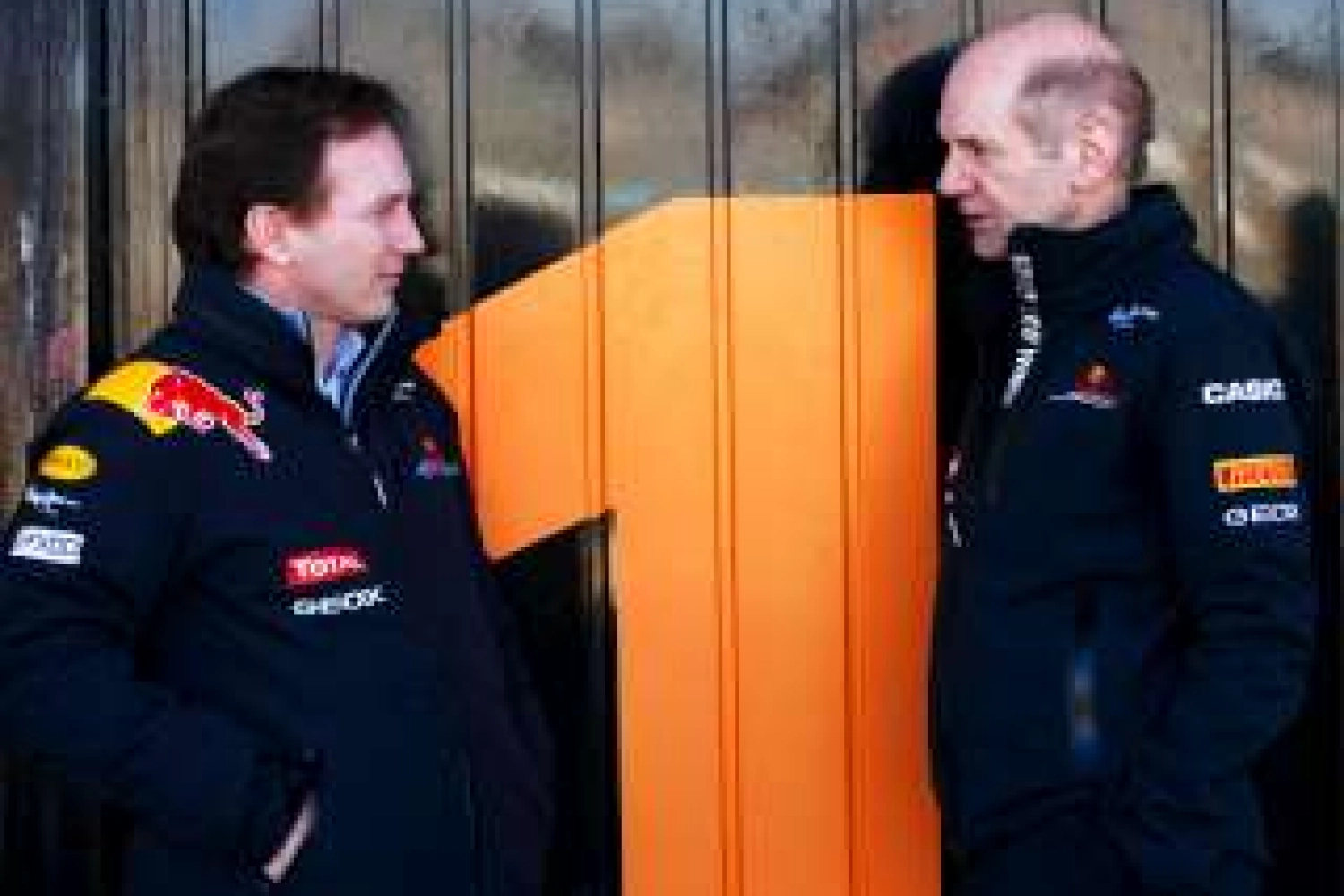
On the occasion of the Korean Grand Prix, Red Bull secured its second consecutive constructors’ title, thanks to a more confident than ever Sebastian Vettel and a formidable RB7, designed by the talented Adrian Newey. The possibility of seeing the Red Bull/Vettel/Newey partnership dominate Formula One, reminiscent of Scuderia Ferrari and its dream team in the early 2000s, has sparked and continues to spark many discussions and sometimes even concern.
Now assured of the two titles and only finishing the season for the glory of records still within reach for Vettel and Red Bull, Adrian Newey can finally turn his focus to the 2012 project that will challenge his genius with new obstacles: The ban on blown diffusers is a big change. It has a fundamental impact on the car’s aerodynamics. It’s a huge challenge to stay at the top. The RB7 was more or less designed from the beginning with this exhaust position. Everyone, perhaps except for Ferrari – although – copied what we did. Whether they gained as much advantage as we did, having designed the car around it, remains difficult to know can be read in the columns of the Telegraph.
In any case, the Briton – who was not in Korea to receive the just reward for his work, but rather at the Milton Keynes factory working on the RB8 – has always known how to innovate and find new solutions, to the point of promising an astonishing RB8 for which Helmut Marko assured he would have as much time as necessary to develop it. It must be said that Adrian Newey has built a solid reputation, and after winning numerous times with Williams and McLaren, he has established himself as one of the references in the very History of Formula One. Thus, his decision to leave McLaren, where he nevertheless had valuable guarantees, to join the young Red Bull team in 2006, surprised many who saw it as a sin of pride if not the swan song: « Joining Red Bull has been a great adventure. People thought I had lost my mind this time and that I was too ambitious, but the atmosphere was such. Obviously, I came with the aspiration and hope that we could win races and maybe even championships. That’s why you are in Formula One. However, it’s one thing to hope that it happens, and it’s quite another to actually achieve it. That’s what was so special last year. We also had a good year in 2009 but not enough to be champions. I think there were a few people who thought it would just be a mirage and we would disappear, but thanks to everyone’s hard work, dedication, and energy, we managed to confirm it » Newey says in an interview published on the official site of the Austrian team.
The British engineer also discussed his work, his approach to designing a Formula One car, and more specifically, his ability to adapt to new regulations: « First of all, it depends on whether you need to adapt to new rules or not. We had major changes at the beginning of 2009, which required starting from scratch, renewing our approach, and trying to think about what the regulations imply and the best solutions to respond to them. We try to avoid preconceived notions and work from basic principles. That’s how the RB5 was born. The two following cars were evolutions of it. Fortunately, it was a sound car that we were able to develop. There have been significant regulatory changes since then, but they were changes that we were able to integrate into the 2009 concept. It’s 95% perspiration and 5% inspiration. It’s just about evolving the car in the Darwinian sense of the word: looking at it, criticizing it, determining what could be improved, and then trying to make it a little better. »
Considering his car as perfectible is undoubtedly one of Adrian Newey’s strengths, who admits that his ideas sometimes come from a certain form of frustration, from the feeling that there is a better possible solution: « Personally, I often think I’m stuck, in which case I stop and do something else. I can leave it aside for a day, a week, a month, but the brain is an incredible thing. These problems sink into the unconscious and then, while you’re doing something mundane, like taking a shower or something like that, the idea pops up and you have to rush to work on it and make some sketches on the drawing board. Only then comes the decision. There’s no point in having these ideas if they don’t make the car faster. We see so many people coming up with ideas they’re naturally proud of but won’t abandon even when it becomes obvious it’s not the right solution. There must be a combination between the artistic fiber and the laws of physics that must work in synergy to ensure that we don’t stick with an idea that turns out to be useless. »
Because the final verdict comes from the track, when the car makes its debut during winter testing: « There is nervousness when the car takes its first laps. Obviously, you have the wind tunnel data, you have done your research, so you know, in principle, how it will perform. However, you don’t know if it will be enough compared to the competition because you don’t know what they have done over the winter. But, more immediately, when the car takes its first laps, there is always that worry about whether it behaves as in the wind tunnel or if there is a problem. Take the example of last year’s car, the RB6, when it ran for the first time on a wet track in Jerez. At first, the car didn’t behave well at all, we had some issues with it, and I thought the season might be long, but now we have the research tools for that, if we use them wisely, we can fix the small problems and continue. »
Then enters into consideration the driver, and on this occasion, Adrian Newey highlights the quality of feedback provided by Mark Webber and Sebastian Vettel. He also praises, as he has done in the past, the dedication and maturity of the double German world champion: « Above all, Sebastian completely lies about his age. He has experience and maturity that are quite stunning. But he also works hard at it and stays very grounded; he is very dedicated to understanding his car and his own driving. He spends a lot of time in the evenings studying it. I feel that every time he drives the car, he learns something new. He’s a little sponge, it’s refreshing for everyone. »
All that remains is to wait for the next winter tests to know the verdict of the track and find out if Team Red Bull will be able to maintain its technical hegemony and lead Sebastian Vettel to new heights, or allow Mark Webber to inscribe his name in gold letters in the history of the discipline.