Pirelli: 2012 Objectives!
casinoenligne.uk.com and Paul Hembery draw the first lessons from 2011 and look towards 2012... and 2013.

As the final stretch of the Formula One World Championship approaches, held outside Europe, and with Sebastian Vettel’s title now seeming like a mere formality, some are already sketching out an initial assessment of this season and looking towards 2012.
After the Italian Grand Prix, held on its home turf, Pirelli does not escape the norm, and Paul Hembery, director of Pirelli Motorsport, agreed to participate in the review exercise for casinoenligne.uk.com, reflecting on the challenges faced and lessons learned by the Italian manufacturer during its first season in the top category since 1991: The challenge always evolves in Formula One. Initially, the biggest challenge was certainly time: we went from announcing the agreement in June 2010 to testing our first prototypes on the track in just two months; then, only four months later, all the teams tried our tires for the first time after the Abu Dhabi Grand Prix. Then, of course, we had only three months after those tests to prepare for our first Grand Prix, in Australia. However, thanks to the extraordinary effort of everyone involved, we did it.
Since then, it has become clear that with the help of the Italian manufacturer and DRS—which, according to Mercedes, is directly responsible for 29% of overtakes in the first 9 races—our Sunday afternoons have become a bit more exciting than in the past. A single figure would suffice to measure the combined effect of these two new F1 ingredients: 854, the record for overtakes, currently ongoing, since 1982 according to statistics from the site Cliptheapex.com, which precisely start the year Keke Rosberg was crowned. Moreover, the record for overtakes on a dry track, previously held by the Long Beach race in 1983—still according to this same source—has been broken 4 times this year, reaching new heights with 126 overtakes during the Turkish Grand Prix. But if we had to choose just one race this season to illustrate the performance Pirelli wishes to offer to teams and spectators, which one would it be?
When we started discussing the supply agreement for this year, we asked the teams what exactly they expected from the tires and they replied: Canada, talking about the Grand Prix held there last year, explains Paul Hembery. We had a Canadian Grand Prix that was even more spectacular this year, so – despite the rain interruption in the middle – Canada was once again a fantastic race, precisely because the tires were so crucial to the result. We had a winner who made his way from the back of the field using the right strategy.
But also, many people told me after the Chinese Grand Prix that it was one of the best races they had ever seen, and it was held entirely in dry conditions. So it’s hard to single one out, and perhaps the best race of the season is still to come…
Indeed, Paul Hembery seems determined to continue in this direction, to learn from this season, whose assessment – both sporting and economic – is generally positive: « The challenge now, I think, is to keep our product fresh and exciting. The Formula One teams reach such a level that, no matter what measures you introduce, they will adapt to them in very little time. So we need to continually reinvent ourselves to help promote the most exciting races possible. This is undoubtedly something we’ve learned, but there are plenty of others: we have learned a lot in every area, as one might expect after our first season in Formula One in 20 years, and we continue to learn. »
The latest Fans Forum organized by FOTA at the Pirelli headquarters in Milan, ahead of the Italian Grand Prix, was an opportunity for Paul Hembery to outline what the manufacturer might offer in the future: « I do not expect major surprises next year. We are studying new compounds that could improve lap times by one second and two-tenths, but that’s too much. We hope for a maximum improvement of six to eight-tenths per lap, and to achieve that, we have designed a new rear tire. There will also be a new rain tire [note: while the current medium tire will become the hard tire, leaving room for a possible new medium tire], so the changes for next year will not really be visible from the outside. We are also considering changing tire colors to improve visibility. »
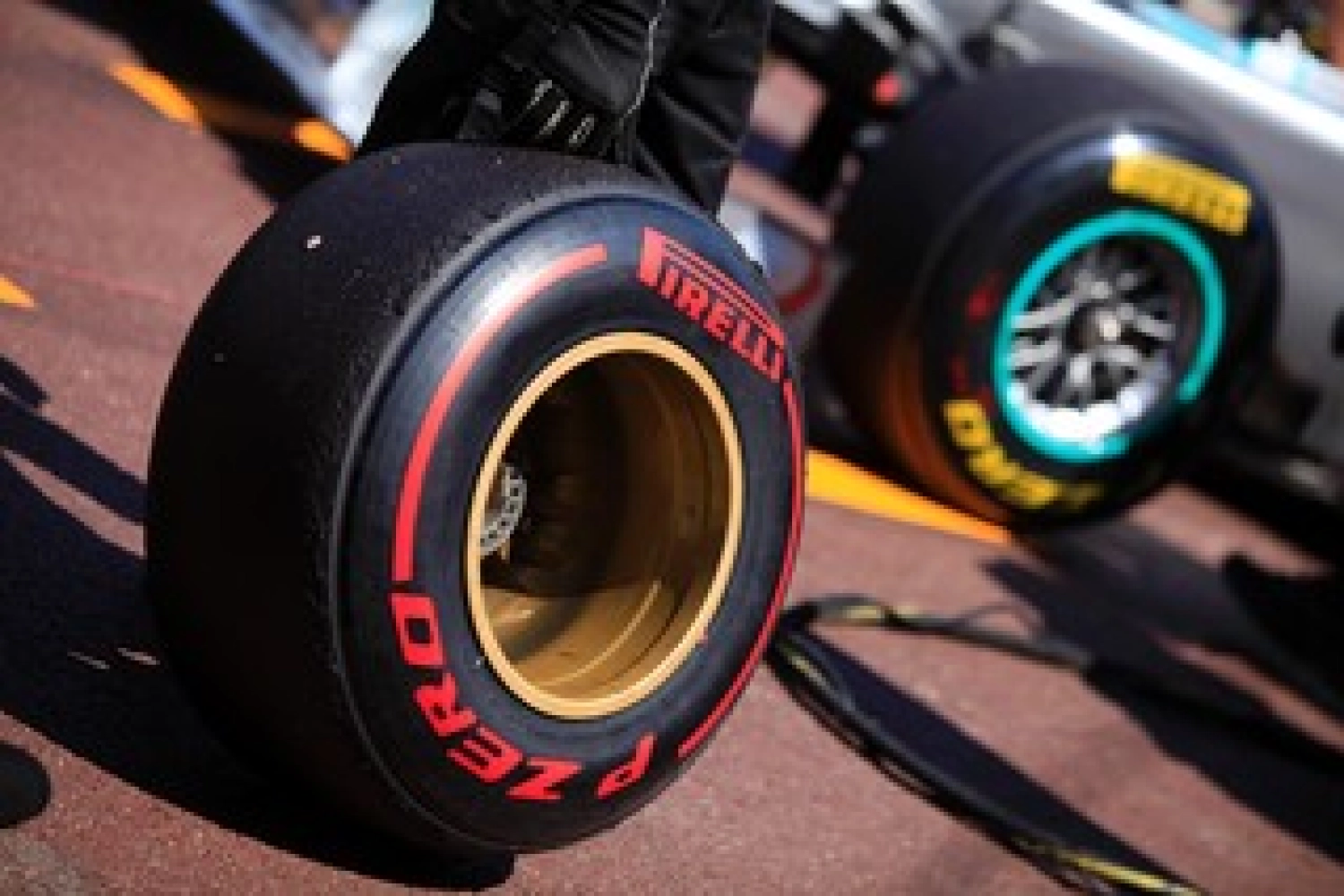
Indeed, on this last point, it is worth recalling that, as exciting as they are again, the F1 races have seemed, to many observers, unreadable. Pirelli has indeed allowed Formula One to reconnect with a strategy that had fallen into disuse in recent years, with Bridgestone tires capable of lasting the entire distance of a Grand Prix and, since 2010, the end of refueling. To allow spectators and viewers to understand the exact data of the race, Bridgestone had decided to mark its tires so that everyone could know who was doing what, but Pirelli wanted to go further by adopting a specific color code for each of its compounds. However, the choice of colors was not the most successful – silver and white to distinguish medium tires from hard tires – and Pirelli is therefore considering the possibility of changing the colors to make the differences in tires even more obvious. On-site, in Monza, our correspondent discussed with Pirelli the possibility of indicating in real-time to viewers, by displaying on the screen, the tires used by each driver. An idea that seems, however, not to be feasible, as the information transmission delays mean there would be a lag of one to two laps between the moment the driver changes tires and the update of the display on the screen. Pirelli therefore prefers to work on visibility directly on its tires, which will meet the demands of the viewers and those of the spectators present on site.
During the FOTA Forum, Paul Hembery also reaffirmed his intention to revise the tire allocation for drivers in order to avoid the conservative management that some teams practice during qualifying and the race, and thus to combat waste and the unnecessary transport of unused tires: « We are partners with all the teams, but we are not entirely free to do as we wish. We have made some proposals, such as qualifying tires and better use of the tire allocation than what we currently do. These discussions are geared towards 2013, and we might allow the teams to choose the compounds, something we have done in the past in WRC. But these are just considerations, and to be honest, we are happy with what we have achieved so far, so we shouldn’t exaggerate the problems. […] We received a memo from the drivers [Ed: the day before the forum] asking us to review tire allocation because at the end of each race, they are left with unused sets, usually the hardest of the two compounds. The drivers want us to find a way to use them, whether in qualifying or elsewhere during the rest of the weekend. This is something we want to resolve for 2012. »
Finally, 2012 should only follow in the continuity of /f1/current-events/11372-Pirelli-views-its-involvement-in-f1-positively.html, but as Paul Hembery has told us, Pirelli does not intend to rest on its laurels. The manufacturer is particularly aware that, facing teams often resistant to changes, patience is necessary, and thus it aims for 2013, which teams may get a preview of during the Mugello tests scheduled during the 2012 season. During the FOTA Forum, Paul Hembery outlined the idea of offering a tailor-made service to teams that could choose, before each race, the tires they wish to use: « In terms of logistics, we need to know in advance which tires to bring. We race a lot outside Europe, for which we have to plan transportation a few months ahead. We are ready to discuss it, but it will take time to finalize. We are talking about logistics with the teams and we are also discussing it on a technical level because we cannot be too extreme with our technical decisions. »
It remains to be seen whether, in light of this first season, the Italian manufacturer wishes to extend its agreement with Formula One beyond 2013, when its contract ends: “We are here to stay unless it becomes too costly,” declared Marco Tronchetti Provera, CEO of Pirelli, a few months ago. “The return on investment must be positive; otherwise, it’s not suitable.” On the occasion of the Italian Grand Prix, Provera provided a rather positive assessment of his company’s involvement in Formula One.