Does the controversy over blown diffusers harm Formula One?
Opinions are divided in the paddock.

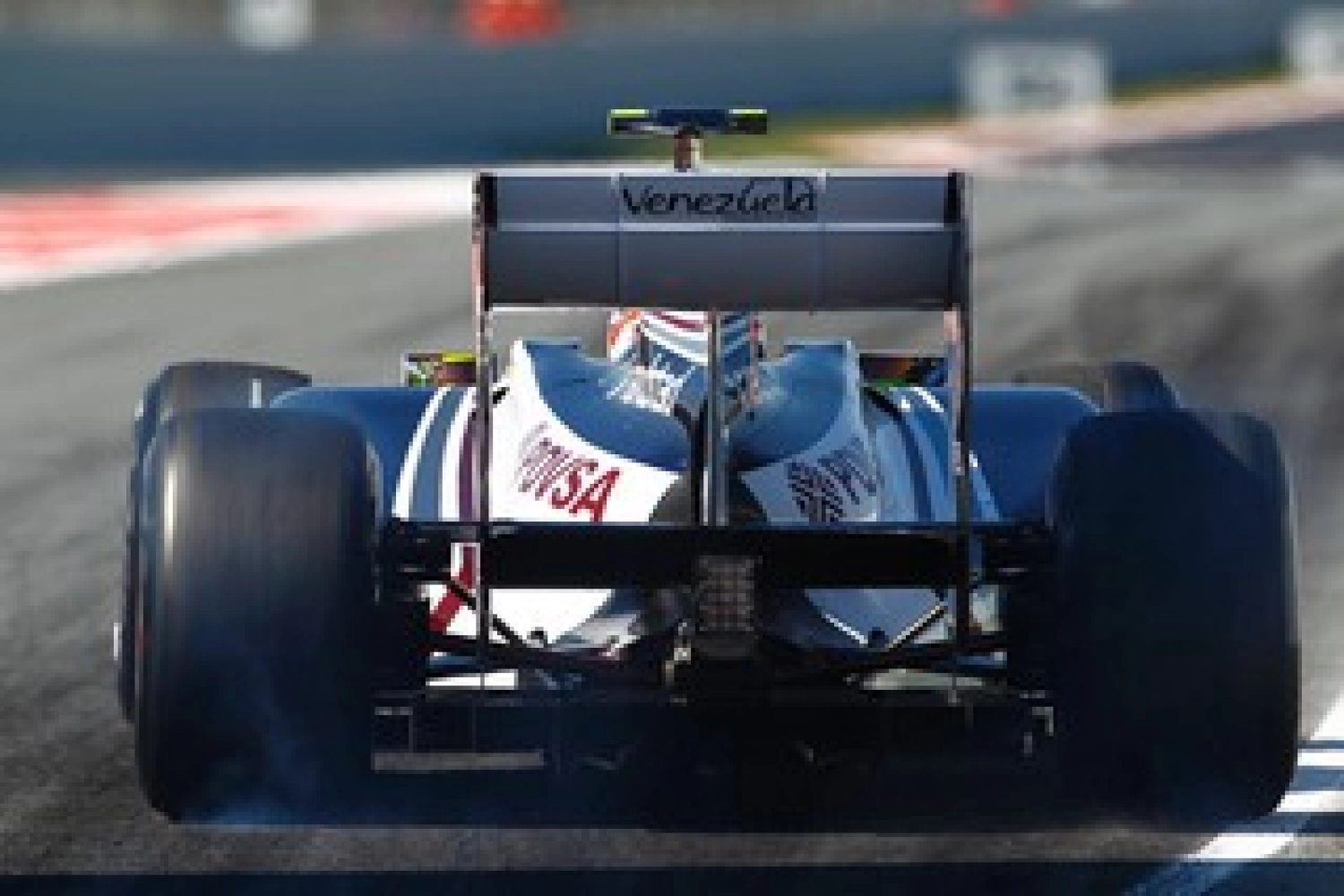
Rarely has a qualifying session been as tense in recent years as the one for the British Grand Prix, while the Formula One microcosm was plunged into controversy over the variable application of the regulations concerning diffuser blowing. An agreement was nonetheless reached on Sunday evening to return to the regulations as they were in Valencia, but many believe that this bickering has damaged the image of the championship.
« As a driver, I can’t say what is right or wrong, but the situation has become rather ridiculous » recently stated Jarno Trulli. « The problems seemed more political than technical and are undoubtedly inexplicable to the public and too complex even for us to understand. »
The Italian thus echoes Mark Webber’s statements during the press conference, after qualifying: « It’s incredibly boring, even for the fans. I think they can’t understand 0.1% of what’s happening. Even for us, it’s sometimes difficult, so let’s move on to the race. »
The Team Lotus driver condemns, however, the way the FIA acts: « During the season, it is not right to change everything and modify the rules we have been applying for years. It’s unthinkable; it creates a lot of confusion. […] Passing the blame has never worked, and the permanent revolution does nothing but create confusion. […] Let’s stop these squabbles. »
For Niki Lauda, rarely short of comments, this controversy was the greatest farce that ever happened: Why change the rules in the middle of the season? The crucial point is that no one protested, the practice was tacitly accepted by all teams. Suddenly, the FIA and Charlie Whiting had the idea to change the rules in the middle of the season. Personally, I do not understand why.
Many believe that the intentions of the Federation were nothing more than to deprive the Red Bull team of an innovation that was supposed to be the source of their dominance. If that were the case, it would have been the greatest insolence. You cannot punish someone just because they are better, commented the Austrian on N-TV.
The triple world champion thus confessed his relief on Sunday evening when an agreement was reached between all the teams. « I really hope that these absurdities stop now and that we know exactly what the rules are at the Nürburgring. »
Adam Parr, president of Williams, disputes the negative impact this controversy may have had on the image of F1: “I hate it when everyone says it’s bad for the sport. A few years ago, a very serious journalist sat in front of me to tell me, on another subject, that it was really bad things, so I asked him why he wouldn’t cover the Welsh dart championship.”
For the British, technical controversies are an integral part of Formula One and they even contribute to its charm. It’s the intensity of the competition, its brutality, and the fact that it has so many dimensions—it involves regulations, money, politics, and also a little bit of what happens on the track. That’s what makes Formula One so irresistible. No one has ever told me: “Adam, we would like to interview you, but please, don’t say anything controversial.”
Adam Parr recalls that his team, along with Brawn Grand Prix and Toyota, recently had to defend one of its innovations: « It really bothers me to sit in Paris, in front of the F1 appeals court, with certain teams claiming that our cars are dangerously too fast. An idiot wrote in his sworn statement: “this car is dangerously too fast.” This person is known for making fast cars, continues to make fast cars, and I had never heard such nonsense. Did they say: “Well, poor Williams, Toyota, and Brawn, they spent all this money developing their double-diffusers, their cars were designed around them, we should let them have it for 2009 and then we’ll change it.”? »
The FIA had then confirmed the legality of the double diffuser, even though it went against the spirit of the new regulations aimed at reducing the drag of the cars, a decision that was partly political and allowed the Federation to renew the hierarchy of the field.