British Grand Prix: Strategy Summary
After each Grand Prix, casinoenligne.uk.com offers a graphical analysis of the different strategies used during the race and reviews the strategy employed by the race winner.

On a wet track where drivers set off on intermediate tires, either new or used, strategy played a less important role than it has since the start of the season, as teams were no longer required to use both types of mandatory slick tires.
This is one of the explanatory factors for Fernando Alonso’s victory; Ferrari handled the soft tires better than the hard tires, allowing the Scuderia to do without the tires that had caused them so much trouble in Spain.
Ultimately, the main challenge was knowing when to switch from intermediate tires to slicks. Michael Schumacher’s accident, which forced the German to change his front wing and tires as early as the 9th lap, and the fastest lap set by the German driver on soft tires, encouraged other drivers to follow suit.
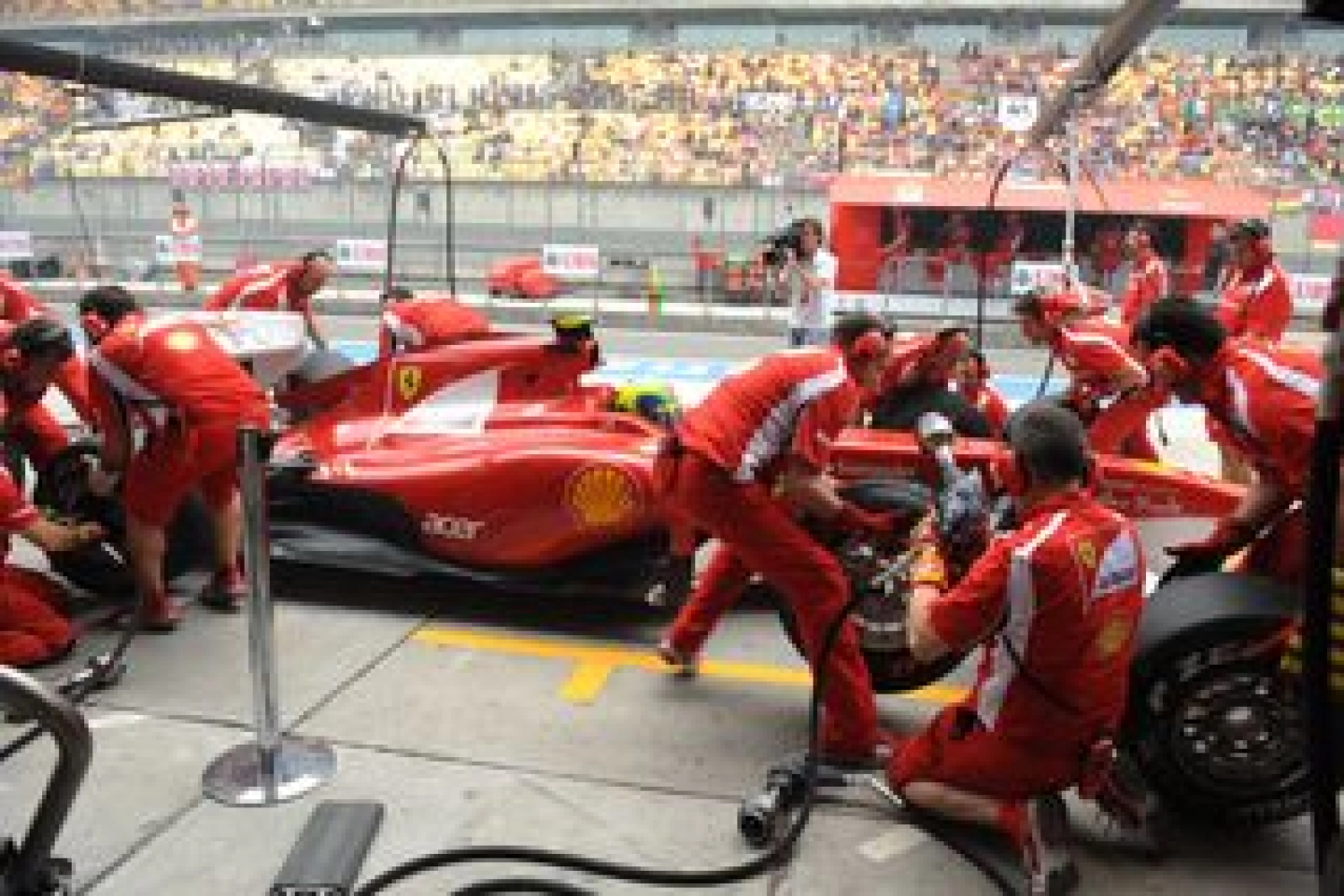
By being stuck in his pit stand for more than 10 seconds, Sebastian Vettel allowed Fernando Alonso to take the advantage in the race. From then on, unless there was a downpour, and while all the drivers – except di Resta – were running on soft tires, Fernando Alonso could simply match his strategy to that of his rivals and attack. At the front, the only one to have adapted his strategy was Vettel, who anticipated his last stop after being stuck for many laps in the slipstream of Lewis Hamilton.
If at the front – up to Felipe Massa – the three-stop strategy was favored, the other teams generally adopted a two-stop strategy, with the exception of Pastor Maldonado. It is also interesting to note that apart from the Toro Rosso, Virgin drivers, and Adrian Sutil, most of the drivers who made 3 stops preferred to use worn soft tires during the second stint before putting on the last set of new soft tires, saved during qualifications, at the end of the race.
Paul Hembery’s Eye
« At the start of the race, the blue-sided intermediate tires proved their competitiveness on a track that was wet and dry in places, over nearly 12 laps, which was a very impressive performance. We saw two and three-stop combinations per car, which matched our expectations exactly, and the podium remained open until the very last lap. »

To better understand this graph, you can use the lap-by-lap synthesis from the FIA by clicking here.