Pole position, still a decisive advantage?
Reactions were numerous after the spectacle offered by the two Red Bull Racing drivers this weekend during qualifying. Indeed, the two drivers only completed a single flying lap during Q3, setting the two fastest times and got out of their cars well before the end of the session.

Indeed, the battle for pole position has always been a very intense moment during Grand Prix weekends, with the goal of securing the first place on the grid, providing a clear advantage, especially on circuits that previously offered very few overtaking opportunities. Of course, Monaco comes to mind, which greatly favors the driver who achieves pole position, with overtaking nearly impossible unless there is a significant performance difference between the two cars. Moreover, statistics show that often, drivers have taken advantage of those eight meters of lead, but things could be quite different this year.
Indeed, the drivers and teams keep saying it over and over again, tire management is crucial this year, and strategy begins on Saturday afternoon, with the decision to use or not use new sets of tires for the timed lap. New tires tend to be at their peak efficiency for only one lap, after which they lose performance and seriously compromise the chances of maximizing potential. And with the difference between the two types of compounds used each weekend, each team has its own philosophy for approaching the qualifying sessions, especially during Q3, which determines the position of the last ten drivers competing for pole position.
As Lewis Hamilton had shown in China a few weeks earlier, it is sometimes more important to keep a set of new tires rather than aiming for pole at all costs. This trend was confirmed by both Red Bull drivers and Felipe Massa during Q3 of the Turkish Grand Prix.
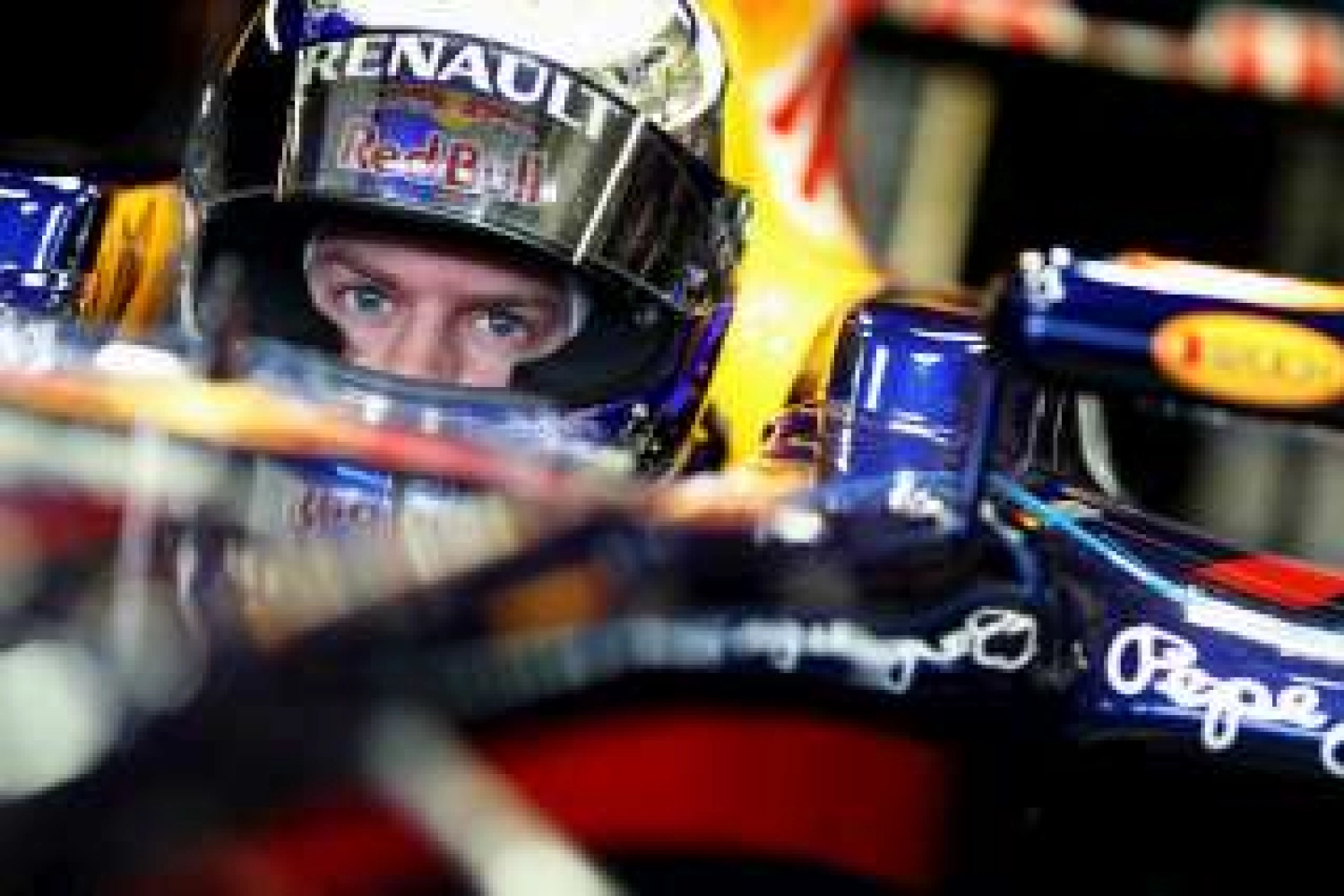
The Brazilian driver, after having missed his first timed lap, chose to start from the tenth place instead of putting on fresh tires, while the two Red Bull drivers set the two best times during their first flying lap, before leaving their car and observing the Bull hunt organized by the other drivers. Sebastian Vettel also commented on this subject, with an unprecedented situation for him: « It was a strange feeling, while other cars are on the track setting times and you are in your garage, watching. They can beat you, but you can only watch the screens, there’s nothing else to do. »
Nico Rosberg, for his part, set the third fastest time using soft but already worn tires. This strategy allowed him to keep a set of new tires that he could use during the race, just like the Red Bull drivers. It was this wise choice that allowed Mark Webber to overtake Fernando Alonso at the end of the race, who had put on already worn tires. The performance gap enabled the Australian to catch up with the Ferrari and secure Red Bull Racing’s first one-two finish of the season.
The gap between fresh and used tires being very noticeable in racing conditions, it can be important to keep tires in reserve to gain an advantage over an opponent, but it is still necessary to have a good qualifying session. Yet, this is once again due to a reason concerning tires.
Indeed, the condition of the tires is also influenced by the presence, or absence, of a car in front of the driver. The airflow that emerges behind a Formula 1 diffuser is clearly different from the airflow encountered head-on under normal circumstances, which disrupts the normal behavior of the Pirelli tires and causes them to wear out more quickly. It is therefore quite important to achieve good qualification to avoid being hindered in traffic and to keep the tires fresh for longer, which can allow for more strategic possibilities. It’s proven that securing pole position provides a significant advantage, as demonstrated by the three victories of Sebastian Vettel this season and his second place, which was solely due to a strategic issue.
But as Lewis Hamilton has shown, having a set of new tires can compensate for a slightly lower position (on the second or third row) to aim for victory as he did in China. Moreover, some drivers prefer to use race-focused settings rather than qualification settings, unlike the two Mercedes drivers this weekend, with Nico Rosberg nearly reaching the time for second place, but whose performance collapsed in the race with a full tank. Additionally, a driver who occasionally qualifies in Q3 can settle for a tenth place, allowing him to use new tires on the track to bring in points.
On the contrary, it seems that this is too great a handicap after the second row for teams aiming for victory, even with the benefit of fresh tires, which will suffer from traffic and ultimately wear out faster than slightly worn tires, while the driver won’t be able to make the most of them, hindered by opponents who are slower than him but whom he cannot overtake.
We can therefore say that finding a good balance between grid position and the use of new tires during the race is crucial. It clearly depends on the position one can aim for on the track with each type of tire, which may or may not allow taking advantage of a set of new tires on Sunday afternoon. But it is clearly not worth sacrificing a set of new tires to move from the second to the first row, or from second place to pole position. And this, Mark Webber and Sebastian Vettel understood well to secure the first one-two finish of the season in Turkey.