The DRS: Too Much Help for Overtaking?
Last year, overtaking was not prevalent during dry races in Formula 1. Especially with the double diffuser used by several teams, which complicated the task for a closely following pursuer. Hence, the FIA's idea to modify the regulations to enhance the spectacle of the premier category.

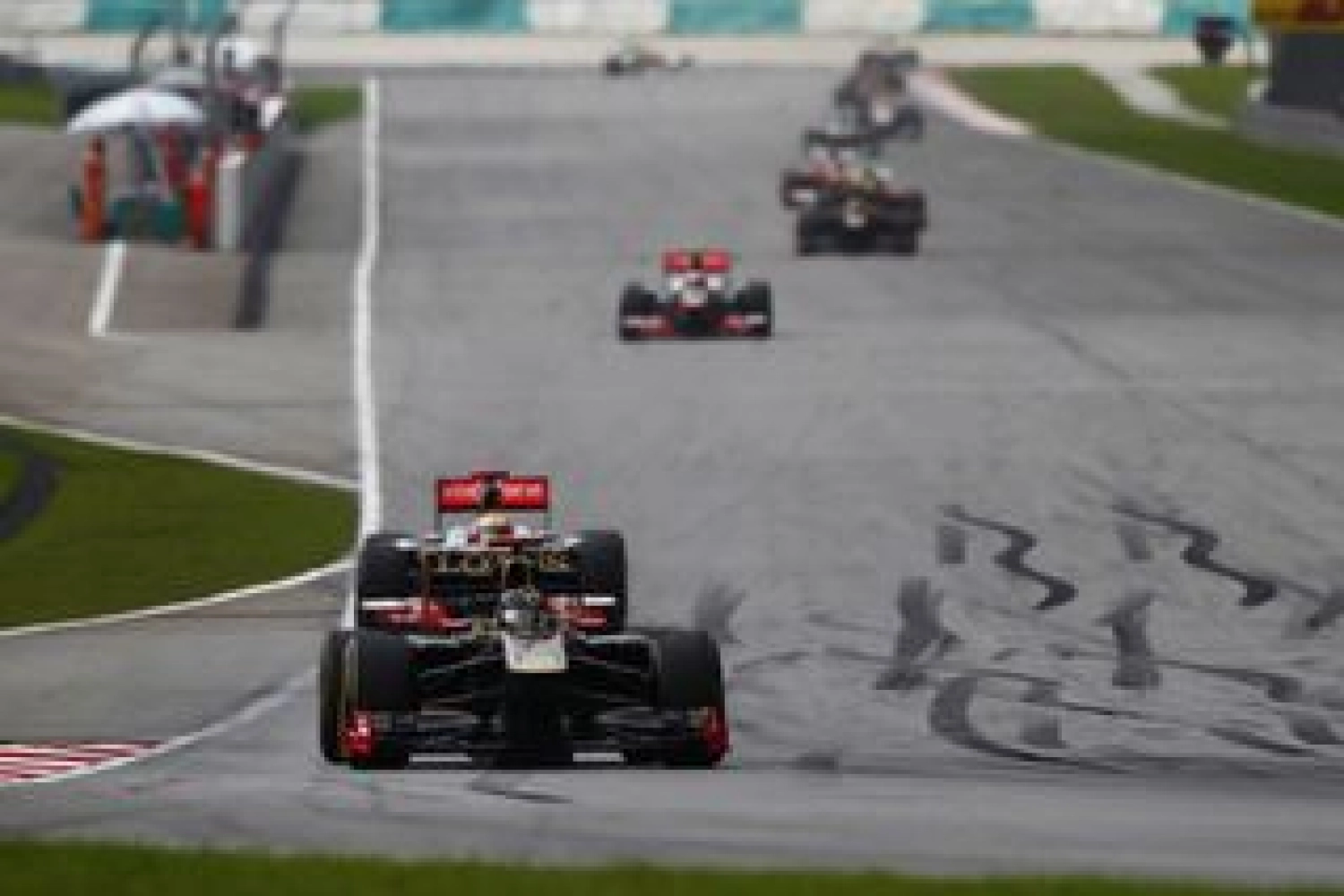
Since the beginning of the championship, overtaking has been plentiful thanks to the new components introduced this season. First, the introduction of a new tire manufacturer, Pirelli, and then KERS. And with the sole purpose of facilitating overtaking, the DRS (Drag Reduction System), which works with the rear wing.
This system, which, it is worth noting, allows gaining a few km/h on a straight line of the circuit if the driver is close enough to their target, reduces the downforce level of the single-seater and must be deactivated at the slightest braking by the driver. Drivers thus have the option to use this device from the third lap if they are within one second of the driver ahead at the start of the zone defined by the FIA. This obviously contributes to the number of overtakes in a Grand Prix but does not make them too easy, which would, of course, have caused drivers to complain.
Nevertheless, the KERS system, whose use is also limited per lap with only 6.6 seconds of activation, but is fully available to the driver, also contributes to the increase in overtaking. This is especially true since it seems to have the ability to counter the DRS system used by a pursuer if the latter no longer has charge available in their battery. Mark Webber was a victim of this in Malaysia, struggling to overtake without the support of the additional 80 horsepower provided by the KERS. Furthermore, the system also allows for attacking in certain sections to close in on opponents, facilitating a potential overtake.
However, the change that has the most influence on overtaking is undoubtedly the arrival of the tire manufacturer Pirelli in this 2011 season. Indeed, the performance differences observed between the ‘option’ and ‘prime’ tires are truly significant, allowing drivers to quickly catch up with an opponent. Moreover, the tire wear is substantial, and performance drops dramatically, creating a huge gap between fresh and worn tires, allowing you to catch up with and overtake your opponent quite easily if your tires are much fresher than theirs, as demonstrated by Lewis Hamilton in China. The English driver, then on fresh rubber, caught up like a bullet with race leader Sebastian Vettel whose tires were struggling, before overtaking him in the middle of a corner, showing much better grip than his opponent.
Moreover, the ban on double diffusers has resulted in a significant loss of downforce for the single-seaters, which has changed the dynamics during the pursuit of another single-seater.
In these conditions, with the use of KERS and Pirelli tires, both of which help with overtaking, one might wonder if the addition of the DRS system was really necessary and if it doesn’t make overtaking too artificial. On this matter, opinions are divided, even within the paddock, where viewpoints clash.
Nico Rosberg dares to speak about the best idea introduced in F1 to date, talking about the system that will undoubtedly allow for overtaking certain ‘blocker’ single-seaters on some circuits. On the contrary, Nick Heidfeld admits he is not a fan, finding these overtakes to be too artificial.
This system is also not without danger, as evidenced by several off-track excursions by a few drivers at the end of the straight, when the wing takes time to restore normal downforce levels. This had no serious consequences during the first three Grand Prix of the season, but the question will need to be addressed when races are held on tracks without run-off areas. Particularly in Monaco, a circuit where drivers are already talking about banning the use of DRS, deemed too dangerous.
Nevertheless, this system fulfills its role as a show tool by allowing some great overtakes, which was its primary objective. It remains to be seen if this will work on other circuits than Malaysia or China, or if the pattern seen in Melbourne will be repeated.