Helmut Marko: The dolphin-like behavior is responsible for Max Verstappen’s withdrawal
Reliability is a central issue at Red Bull since Max Verstappen's second retirement in just three races. According to Helmut Marko, the dolphin-ing (referring to erratic or inconsistent behavior) is largely responsible for the latest one.

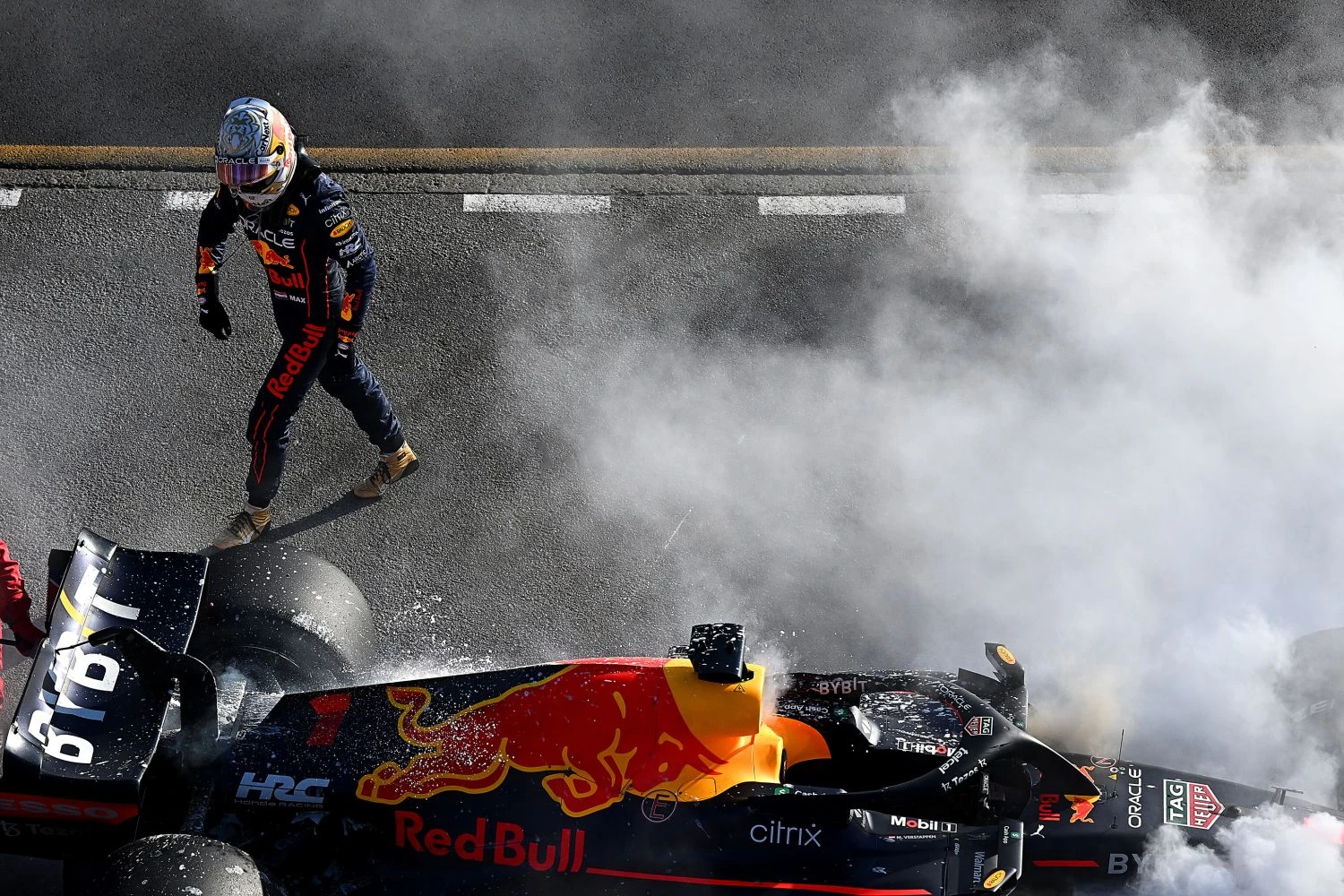
Red Bull is experiencing a chaotic start to the season and has been plagued by retirements. Although both Red Bull cars did not finish in Bahrain, they redeemed themselves in Saudi Arabia with Max Verstappen’s victory. However, problems resurfaced in Melbourne with a second unacceptable retirement for the Dutch driver.
According to Helmut Marko, special advisor to the Austrian team, the cause of this second failure is none other than the “porpoising” (a term referring to a movement similar to the bouncing motion of a dolphin). Even though the RB18 seemed to suffer much less than their rivals from Mercedes, Marko claims that the forces exerted by these bounces had a direct impact during the race.
« Everything is fine [with the engine], there are no issues,” declares Helmut Marko. « The retirement was due to a high-pressure fuel line that burned. It was probably due to cavitation. It was simulated on the test bench, but there are incredible forces at play. We have it under control, but there are still some hiccups. We believe that is the reason for the damage caused to the fuel line,” explained the Austrian.
However, Helmut Marko believes that the team has reacted very quickly and that the issue of reliability will be resolved soon. According to Honda, the problem encountered in Melbourne will be resolved before the next race, the Emilia-Romagna Grand Prix this weekend.