Leclerc, Tsunoda, Ricciardo and Verstappen face penalties for mechanical failures in Hungary
At this weekend's Hungarian Grand Prix, several drivers reached the limit authorized by the regulations in terms of components. If they install a new component after a breakdown or an accident, they will be penalized by the FIA at the next Grand Prix.

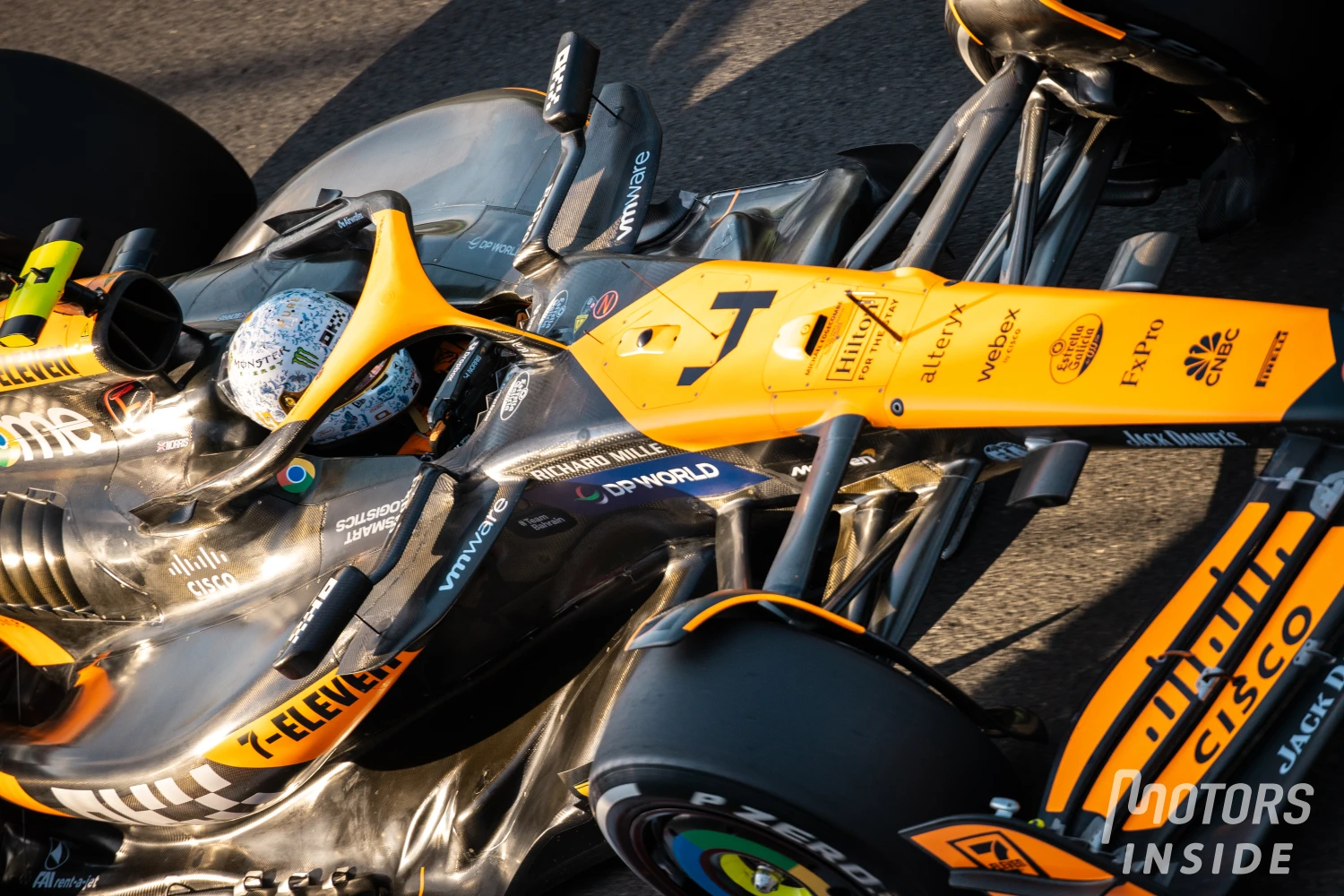
The regulation provides for a limit on the quantity of components installed per single-seater throughout the F1 season. Thus, components related to the power unit (electric and thermal engines, turbo) are limited to 4 per season. The battery can only be replaced once before a penalty (2 per season), as well as the ECU, this electronic box to manage the engine electronics.
Limits reached for the driving elements
Max Verstappen has already installed 4 elements of his power unit on his Red Bull. He has reached the allowed limit, so in the event of mechanical failure this weekend or in the coming races, he could be forced to take a penalty. Be aware that even though the driver has reached this limit, this does not mean that the previous components installed on the Red Bull are no longer usable at all. He can therefore continue to use components that were used in previous Grand Prix races.
This is also the case for Racing Bulls drivers, Yuki Tsunoda and Daniel Ricciardo. They both have 4 power units installed each (4 turbos, 4 electric motors, and 4 internal combustion engines). If they have to install a 5th one, they will therefore incur a penalty.
Charles Leclerc, on his side, also reached this quota, but only for the electric motor with heat energy recovery (MGU-H). He still has a few wildcards left for the other engine components.
Limits for batteries and ECU
4 drivers have only mounted one battery so far. The other 16 have all mounted their second battery and reached the limit. Max Verstappen, Charles Leclerc, Carlos Sainz, Oscar Piastri, Lando Norris, Esteban Ocon, Pierre Gasly, Logan Sargeant, Daniel Ricciardo, Yuki Tsunoda, Zhou Guanyu, Kevin Magnussen, and Nico Hülkenberg are at risk.
Usually, teams prefer to quickly assemble all the components they have available early in the season in order to assess any potential issues with a component and determine whether they will need to install one outside the quota to prepare their strategies. Indeed, if a driver receives a grid penalty due to, for example, interference on the track or another reason, the team could take advantage of this to use the penalty as an opportunity to replace components deemed unreliable.
Pilots have already exceeded the quotas.
Pierre Gasly installed a whole set of engine components in Great Britain and thus received a penalty, allowing him to use and vary the 5 engine components he now has for the rest of the season. As for Alex Albon and Valtteri Bottas, they have only exceeded the quotas for the battery and ECU.
State of the technical components mounted on the F1 before the Hungarian Grand Prix
Red = Limit exceeded.
Yellow = Limit reached.
(Ex = Exhaust, limited to 6).
| Drivers | Teams | V6 | Turbo | MGU-H | MGU-k | Batterie | CE | EX |
| Max Verstappen | Red Bull | 4 | 4 | 4 | 4 | 2 | 2 | 6 |
| Sergio Perez | Red Bull | 5* | 4 | 4 | 4 | 3* | 3* | 6 |
| George Russell | Mercedes | 3 | 3 | 3 | 3 | 1 | 1 | 2 |
| Lewis Hamilton | Mercedes | 3 | 3 | 3 | 3 | 1 | 1 | 3 |
| Charles Leclerc | Ferrari | 3 | 3 | 4 | 3 | 2 | 2 | 4 |
| Carlos Sainz | Ferrari | 3 | 3 | 3 | 3 | 2 | 2 | 4 |
| Oscar Piastri | McLaren | 3 | 3 | 3 | 3 | 2 | 2 | 3 |
| Lando Norris | McLaren | 3 | 3 | 3 | 3 | 2 | 2 | 3 |
| Lance Stroll | Aston Martin | 3 | 3 | 3 | 3 | 1 | 1 | 3 |
| Fernando Alonso | Aston Martin | 3 | 3 | 3 | 3 | 1 | 1 | 3 |
| Esteban Ocon | Alpine | 3 | 3 | 3 | 3 | 2 | 2 | 5 |
| Pierre Gasly | Alpine | 5* | 5* | 5* | 5* | 2 | 3* | 6 |
| Alexander Albon | Williams | 3 | 3 | 3 | 3 | 3* | 3* | 3 |
| Logan Sargeant | Williams | 3 | 3 | 3 | 3 | 2 | 2 | 3 |
| Daniel Ricciardo | Racing Bulls | 4 | 4 | 4 | 4 | 2 | 2 | 5 |
| Yuki Tsunoda | Racing Bulls | 4 | 4 | 4 | 4 | 2 | 2 | 5 |
| Valtteri Bottas | Sauber | 3 | 3 | 3 | 3 | 3* | 3* | 4 |
| Zhou Guanyu | Sauber | 3 | 3 | 3 | 3 | 2 | 2 | 3 |
| Kevin Magnussen | Haas | 3 | 3 | 3 | 3 | 2 | 2 | 4 |
| Nico Hülkenberg | Haas | 3 | 3 | 3 | 3 | 2 | 2 | 4 |