For the Renault F1 Team, 2008 is already tomorrow
True armada organized like the racing team, the ING Renault F1 Team’s testing team relentlessly validates discoveries and developments. It will play a major role in preparing the R28 this winter. 30,000, this is the number of kilometers traveled by the ING Renault F1 Team testing team in 2007, in the shadows, without the glamour […]

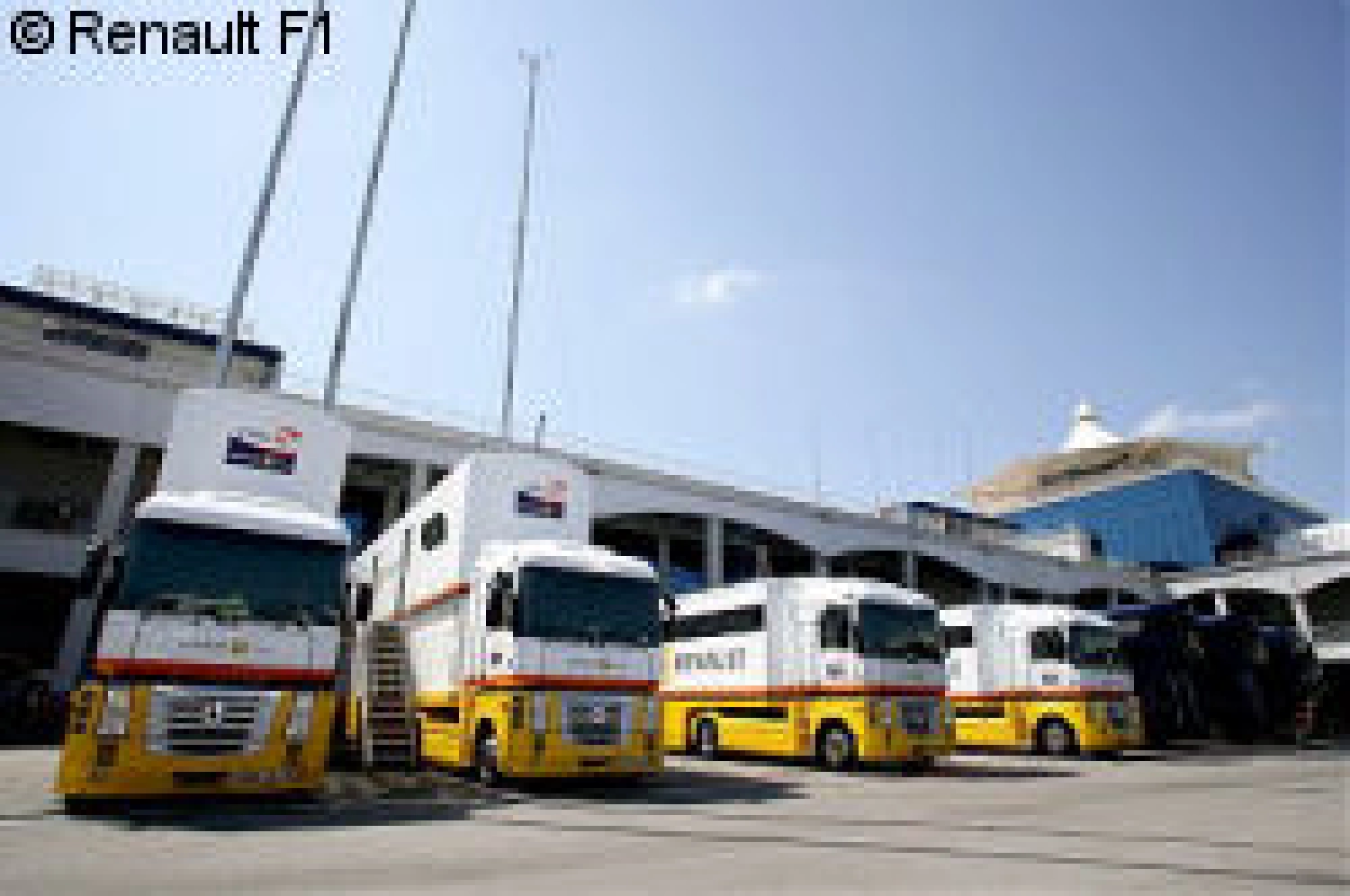
True armada organized like the racing team, the ING Renault F1 Team’s testing team relentlessly validates discoveries and developments. It will play a major role in preparing the R28 this winter.
30,000, this is the number of kilometers traveled by the ING Renault F1 Team testing team in 2007, in the shadows, without the glamour of Grand Prix weekends, without an audience, and without the adrenaline of the race. A figure revised downwards compared to previous seasons, however, due to an agreement between teams now limiting the number of days annually dedicated to testing as well as the number of cars used. In 2005 and 2006, more than 45,000 km were covered!
It is by mutual agreement between Viry and Enstone that the team establishes a precise testing program. This takes into account the needs of each component of the car and sets priorities day by day. More than 70 people can thus be dispatched for important tests. This will be the case in Barcelona next February, when the entire race team will have to perform real-scale rehearsals of the interventions needed for the proper functioning of the R28 during the first race of the season.
« In fact, the program depends on the number of parts to be validated and the schedule. During the season, the racing drivers generally work on the car’s setup in anticipation of upcoming races. The test driver, on the other hand, focuses on development », explains Christian Silk, Chief Engineer of the testing team.
The results of the tests, on the other hand, are visible in the medium to long term. Thus, a confirmed aerodynamic package in tests is sometimes used a few days later… provided that the production of parts keeps up with the pace. A significant advantage of the modern era: computers allow for the reduction of trial and error thanks to advanced simulation tools. A development that makes its way to the track stands a great chance of being adopted.
An excellent testing session results in 350 km to 400 km on the odometer daily. In terms of logistics, plan for a complete single-seater in spare parts, three to four bodyworks, two to three gearboxes, about sixty rims, three to four days. A true parallel organization. Pat Symonds, who manages it remotely, can only be proud of it:
« The attention of the spectators is focused on the race, but everything that happens there depends on our tests », he says, « The test team develops the single-seater, but it also applies new methodologies that later benefit the entire factory. Its workload is enormous, especially at the launch of a new car. Our competitiveness in Melbourne with the R28 will directly depend on our efficiency in testing this winter. »
The R27 used this week will, of course, be equipped with the standard electronic box required by the 2008 regulations.
Under its bodywork, a few technical components of the R28 are also hidden. confides Tim Densham, Chief Designer of the team.
« They must cover as many kilometers as possible to ensure reliability from the start of the championship. » For Renault, 2008 is already tomorrow.
According to a Renault F1 Team press release