The end of an era for the French Grand Prix
Home race for the Renault squad, the Magny-Cours circuit features a variety of interesting challenges for drivers and cars: three high-speed corners at the beginning of the lap, a very slow hairpin at Adelaide, and two very fast chicanes. Aerodynamic supports: Magny-Cours requires a higher level of downforce compared to the Montreal circuit, which demanded […]

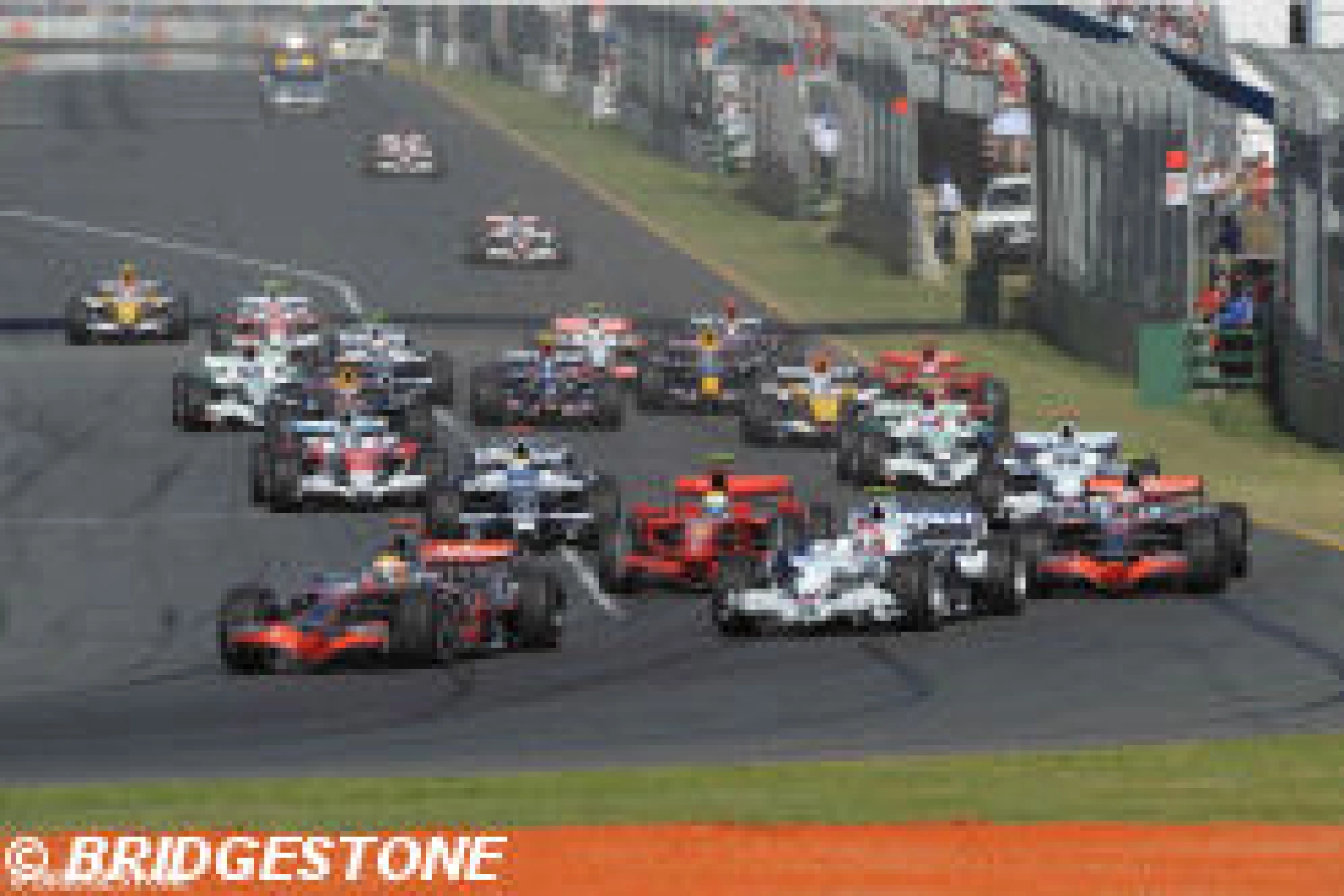
Home race for the Renault squad, the Magny-Cours circuit features a variety of interesting challenges for drivers and cars: three high-speed corners at the beginning of the lap, a very slow hairpin at Adelaide, and two very fast chicanes.
Aerodynamic supports:
Magny-Cours requires a higher level of downforce compared to the Montreal circuit, which demanded a relatively low level of downforce. Magny-Cours necessitates a medium to high configuration to ensure good speed through fast corners such as turn number 3 and the two chicanes 6/7 and 11/12. One might be tempted to reduce the level of downforce to gain top speed and thus allow the driver to overtake at the Adelaide hairpin, but this option would prove to be ineffective: the straight is preceded by turn 3, negotiated in 5th gear, and while reducing downforce might gain top speed, it would compromise this corner, affecting speed and ultimately not allowing the driver to keep up with the competitor ahead. Once again, it’s a matter of making compromises, and a higher level of aerodynamic downforce will prove more effective on the stopwatch.
Suspensions:
Few bumps disrupt the Magny-Cours track, known for being one of the smoothest on the calendar. It is therefore possible to opt for very low ground clearance and rather stiff suspensions. This will benefit aerodynamics as well as quick direction changes, where the car will be more responsive. However, a compromise will still need to be found because the French track has several very slow corners where a softer setup would provide more grip. The best balance must be found between the car’s behavior in fast corners and slower ones.
Tires:
Track conditions are often changeable at Magny-Cours because the circuit is very sensitive to temperature changes. A few degrees more or less and the grip conditions are completely different. Bridgestone has brought the medium and soft tires from its 2008 range for this Grand Prix, and as always, being able to make both types of available tires work under all circumstances will be key to success.
Transmission:
Gear ratios are generally short and close at Magny-Cours to optimize speed out of slow corners. The team will place particular emphasis on performance between 0 and 250 km/h as this highlights a strong level of performance in the circuit’s winding section, which then determines top speed in the faster section. The transmission can be put to the test when crossing the curbs, which drivers must navigate repeatedly, particularly at the end of the lap. During qualifying, riding the curbs will be necessary to improve lap times, but we will need to ask the drivers to be more cautious during the race to ensure the reliability of both the transmission and the engine.
Engine:
Magny-Cours is not considered a particularly challenging circuit for the engine. The V8 will indeed operate at full throttle for no more than 63% of the lap, which is just slightly above the season average. A flexible engine is always an asset on this circuit as it will ensure good speed out of slow corners, while being capable of delivering all its power linearly, so as not to disrupt the chassis balance. This is very useful when navigating the chicanes or turn number 3.
According to a Renault F1 press release