Essential Strategies for New Erasers
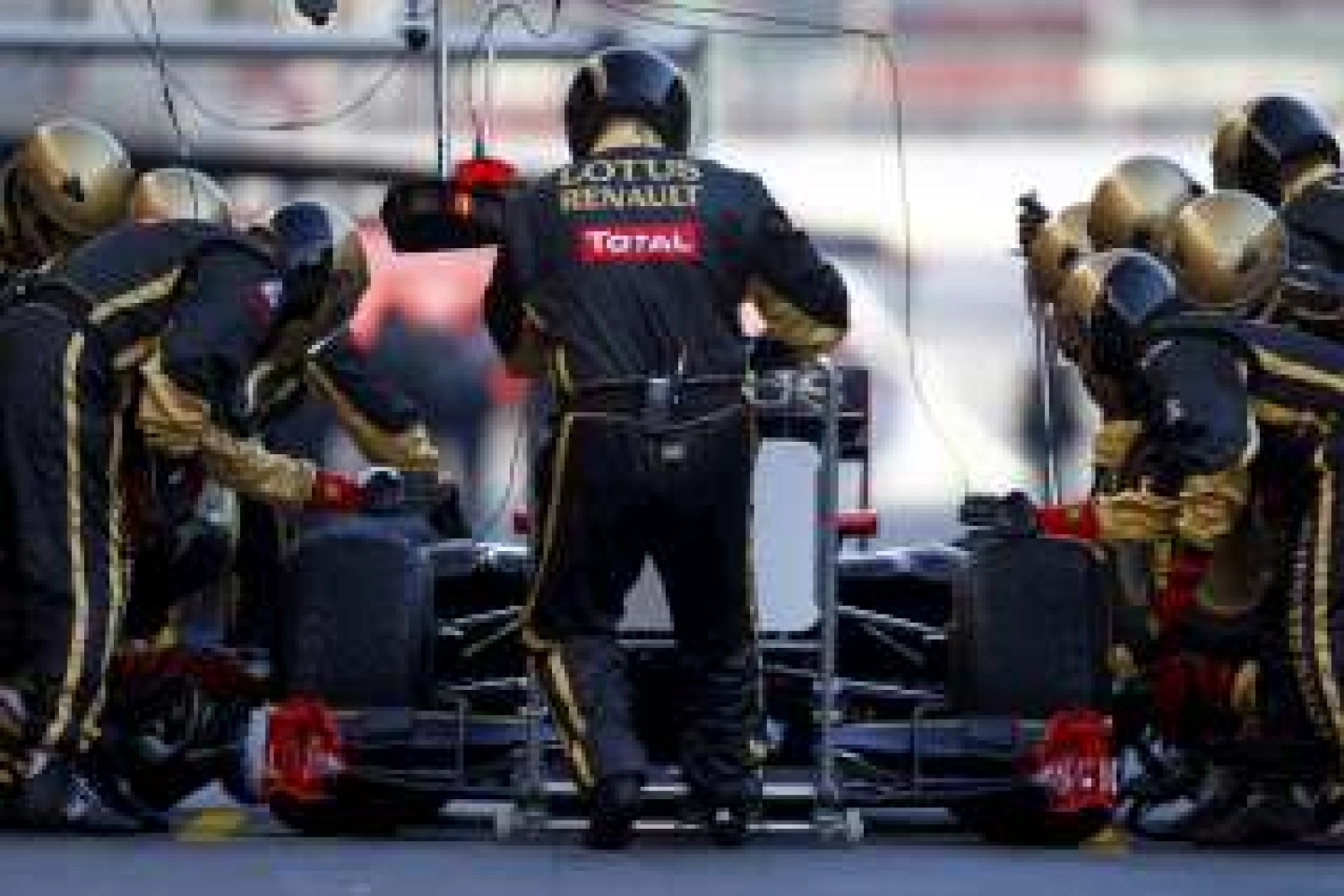
Pit stops will be very important this year, in addition to being more frequent.

Tire management has always been an important consideration for drivers. Indeed, the different types of rubber offer varying levels of grip and correspondingly different wear rates. Their use must be carefully considered to find the best strategy.
Especially since this year, a new factor must be taken into account. The Pirelli tires are definitely less durable than the Bridgestone tires that the drivers have had for several years. We recall the excessively long lifespan of the Japanese tires, demonstrated during the Monaco Grand Prix by Alonso, who made only one stop, switching to hard tires at the end of the first lap after starting from the back row. But the soft tires were too resilient as well, as Vettel showed in Monza with his stop in the last five laps to switch to hard tires, only to comply with race regulations. The only time drivers suffered from rapid tire degradation was during the Canadian Grand Prix, due to a problem with the track surface causing increased wear. And we remember the different team strategies, with some choosing to run several stints on soft tires, while others opted for one less by fitting hard tires.
During the winter testing, Pirelli tires showed rapid degradation, even too rapid for some teams. Indeed, the first super-soft compound provided by the Italian firm lasted only one fast lap, making it unusable. However, the tire manufacturers have adjusted and now offer more durable tires, but still noticeably less so than Bridgestone, prompting drivers to consider three pit stops during the race, or even four. Although Pirelli’s technical managers are more optimistic: « The conditions were not optimal for the tires during private testing. The heat of the first Grand Prix will suit our tires better, both in terms of wear and performance ».
Moreover, as the tires sharply drop in performance at the end of their life, the strategy cannot really be decided in advance, and the driver’s role will also be to monitor lap by lap the wear of their tires.
It remains to be seen how drivers will use the different types of tires at their disposal, even though their number is limited by the FIA as part of cost restrictions. If the differences between hard and soft tires are as significant as those seen during winter testing, it would not be surprising to see a driver switch to soft tires to catch up to an opponent during a race where pit stops are not too detrimental, like in Monaco or Canada. Other drivers might benefit from a smoother driving style to preserve their tires, giving them a few extra valuable laps on the same tires, even though it seems difficult to eliminate a pit stop even for the most economical driver. Furthermore, tires cannot be used in the same way at the beginning or end of a race, with a difference of over a hundred kilos of fuel.
Finally, the drivers in the top ten positions on the grid will be required to use the set of tires used in Q3 to start the race, which can prove to be a disadvantage if these tires fall apart after only two or three laps in the race. The top qualifiers from Q2 could thus benefit, starting with a free choice of tire type.
The engineers and drivers will therefore undoubtedly have to make very important decisions to establish a race strategy that promises to be decisive for breaking into the top 10, and to hope to step onto the top of the podium.