Ferrari in critical condition: explanations
The assessment of the first three Grand Prix of the season is unequivocal: only 50 points collected by the men from Maranello, and problems that are still difficult to define at present. Why is the famous prancing horse frowning? Are these difficulties really that new? What responses have already been considered?

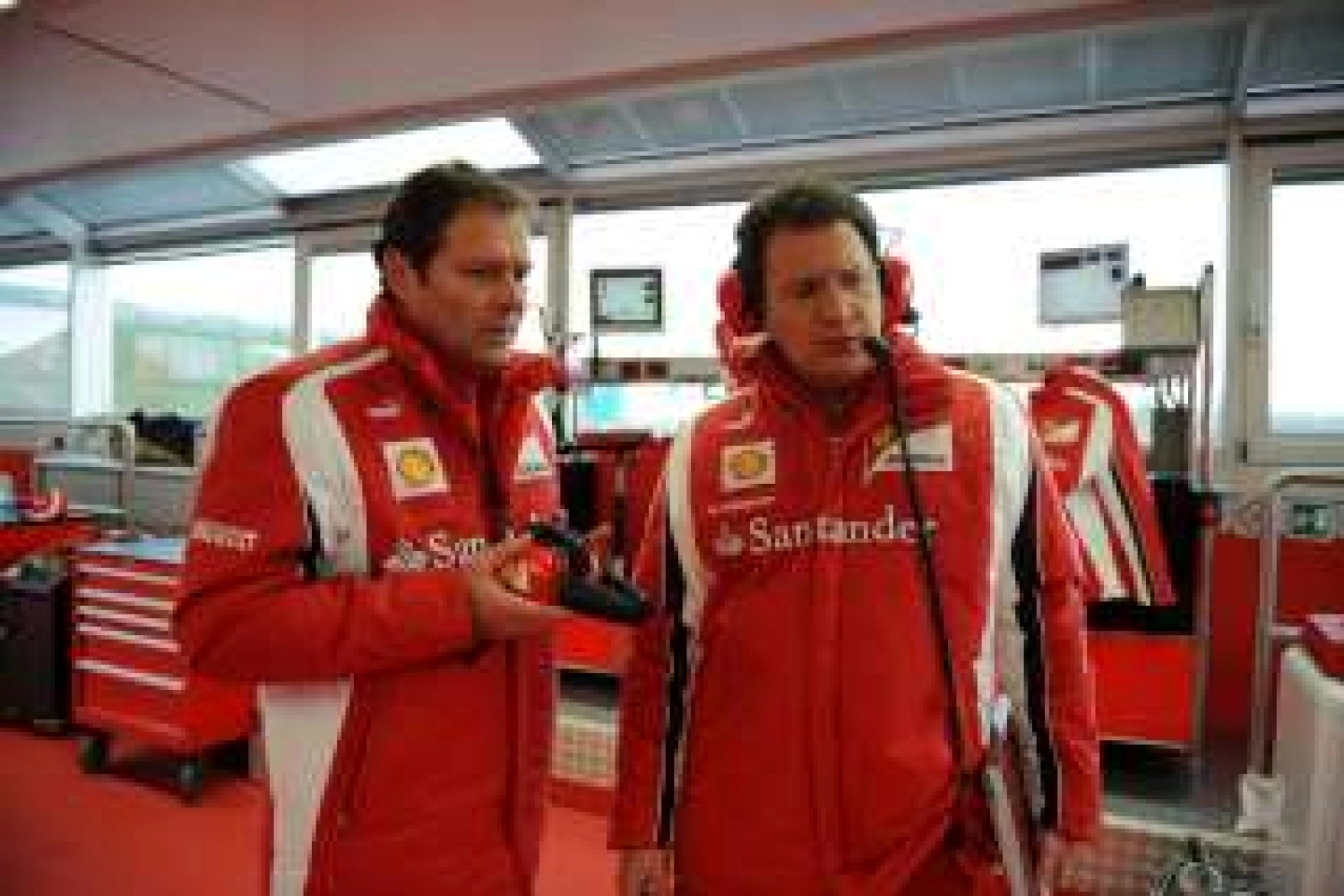
For a team whose battle horse is perfection, the meager spoils at the start of this season sound like a serious warning. It is also a sign that the Scuderia can no longer just nurse its wounds; it is time to act.
A team too Italian?
Since Jean Todt’s departure in 2008 and Stefano Domenicali’s appointment as team principal, the Maranello team has undergone profound changes. From a very international structure, Ferrari has strengthened its main positions by placing Italians from within the company. Besides Stefano Domenicali, Aldo Costa logically followed Rory Byrne, Massimo Rivola filled the vacancy left by Domenicali, Luca Marmorini succeeded Gilles Simon. But hadn’t the opposite path been taken as early as 1993, when at Di Montezemolo’s request, Jean Todt took the reins of Maranello? The Frenchman had ended a long period of drought, notably thanks to the increasing “globalization” of the team’s executives in the 1990s.
Today, although competent, these Italians bring a Latin management style to Ferrari, which is logical given their heritage, but it doesn’t really align with the standards of Formula One, which remains a very particular sport. Aldo Costa certainly learned from Ross Brawn, but he is not quite of the same caliber as his mentor, let alone Adrian Newey. Similarly, we can question the geographical location of Scuderia: isn’t it too far from the heart of F1, the “F1 Valley” as the English like to call it? Is it missing that inbreeding that other teams have, which allows them to go from being followers to leaders? The answer is probably simpler, as the era when Ferrari juggled between England and Italy in the 1980s did not yield particularly positive results, and conversely, Maranello dominated F1 like no other team by concentrating all its activities in Italy.
A wind tunnel that lacks wind?
The observation at the start of this season is simple: the 150° Italia clearly lacks downforce. The drivers, the technical director, the team principal, everyone says it, but no one knows how to fix it, or at least no one has succeeded yet. It strangely reminds us of the syndrome that affected the Renault team in 2007. Despite Ferrari bringing solutions that have proven successful in the wind tunnel, they do not provide the expected results on the track. For a few days now, the theory of a miscalibrated wind tunnel has resurfaced (just like during Renault’s time). Domenicali himself confirms: “We have a structural problem with the wind tunnel. We are working on it to resolve it.” The instruments have indeed provided values contrasting with the indications from the track, hence a necessary and indispensable recalibration.
For a few years, Ferrari has also been outsourcing its research by using the wind tunnel of the former Toyota team, based in Cologne, Germany. However, it is surprising that one of the most efficient wind tunnels in the world also provides data that does not correlate with the track.
Isn’t it already too late?
The current doubt is whether there will be enough time to review the race car with a “healthy” wind tunnel. The Turkish Grand Prix will take place on May 8, the Spanish Grand Prix on May 22, and the Monaco Grand Prix on May 29. Three races in about twenty days… But three European races, where it’s always easier to bring last-minute innovations.
Added to this is the impatience of Ferrari’s top executives, particularly Luca di Montezemolo, who no longer tolerates the rollercoaster ride that the team has been on since 2009 and the year of the technical regulation changes imposed by the FIA. President Montezemolo wants to see Ferrari where we and our fans expect it to be, much higher on the timesheets, so to speak. Let’s hope, at least, that the executives in Maranello don’t turn redder than their uniforms.