Blown diffusers: Who will be the most penalized?
Among the elements that enable Red Bull Racing to dominate the 2011 Formula One World Championship is the famous blown diffuser system, which allows exhaust gases to be channeled to the diffuser even during braking, thereby providing better downforce. To achieve maximum effect, one must play with the engine mapping, and not all engine manufacturers […]

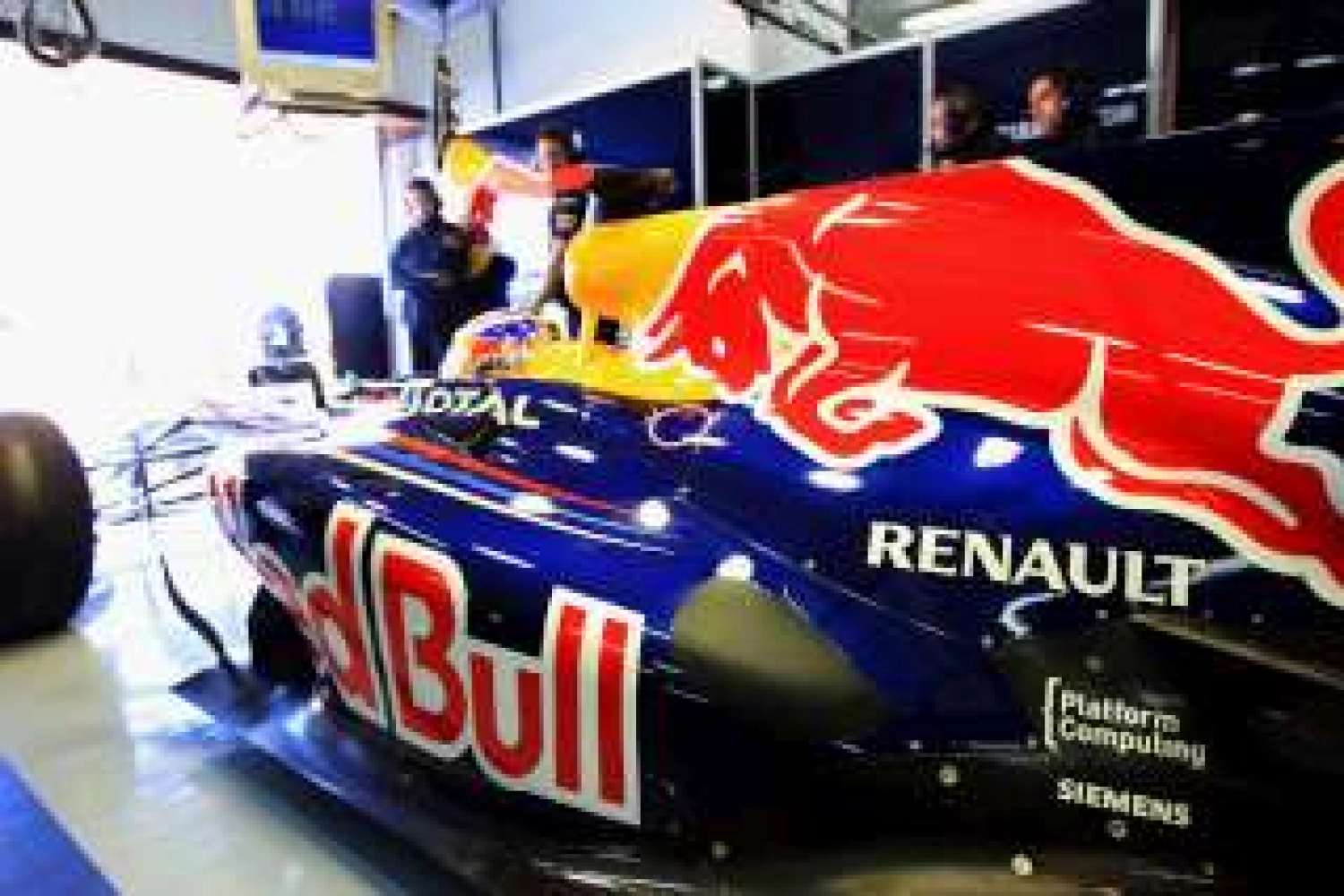
Among the elements that enable Red Bull Racing to dominate the 2011 Formula One World Championship is the famous blown diffuser system, which allows exhaust gases to be channeled to the diffuser even during braking, thereby providing better downforce.
To achieve maximum effect, one must play with the engine mapping, and not all engine manufacturers manage to use this principle optimally without compromising the reliability of their power unit. In this game, Renault turns out to be the most efficient engine.
The advantage held by Red Bull could very well melt away after the Canadian Grand Prix. Indeed, the International Automobile Federation will meet on June 16th and will discuss the diffuser issue raised by the Williams team, followed by HRT, a few weeks ago.
If the FIA were to ban this system, it would be no less than eight-tenths of a second per lap that could be lost by the RB7 designed by Adrian Newey, compared to four or five for teams like Ferrari or Mercedes GP.
Another team that could be seriously penalized by this ban would be the Lotus Renault GP team, which uses this principle across its entire floor with exhausts located at the front of the sidepods.
But it seems that the engine manufacturers, with the exception of Cosworth who cannot adapt their engine, would like to push the ban on the blown diffuser to 2012. The FIA’s response will come on June 16th.