Presentation Mexican Grand Prix: F1 reaches new heights!
After Texas and its eccentricities, meet on the other side of the border, in Mexico, for the 19th installment of the season. Return to this circuit, perched more than 2285 meters above sea level, whose specificities will impact the functioning of single-seaters.
Little historical point:
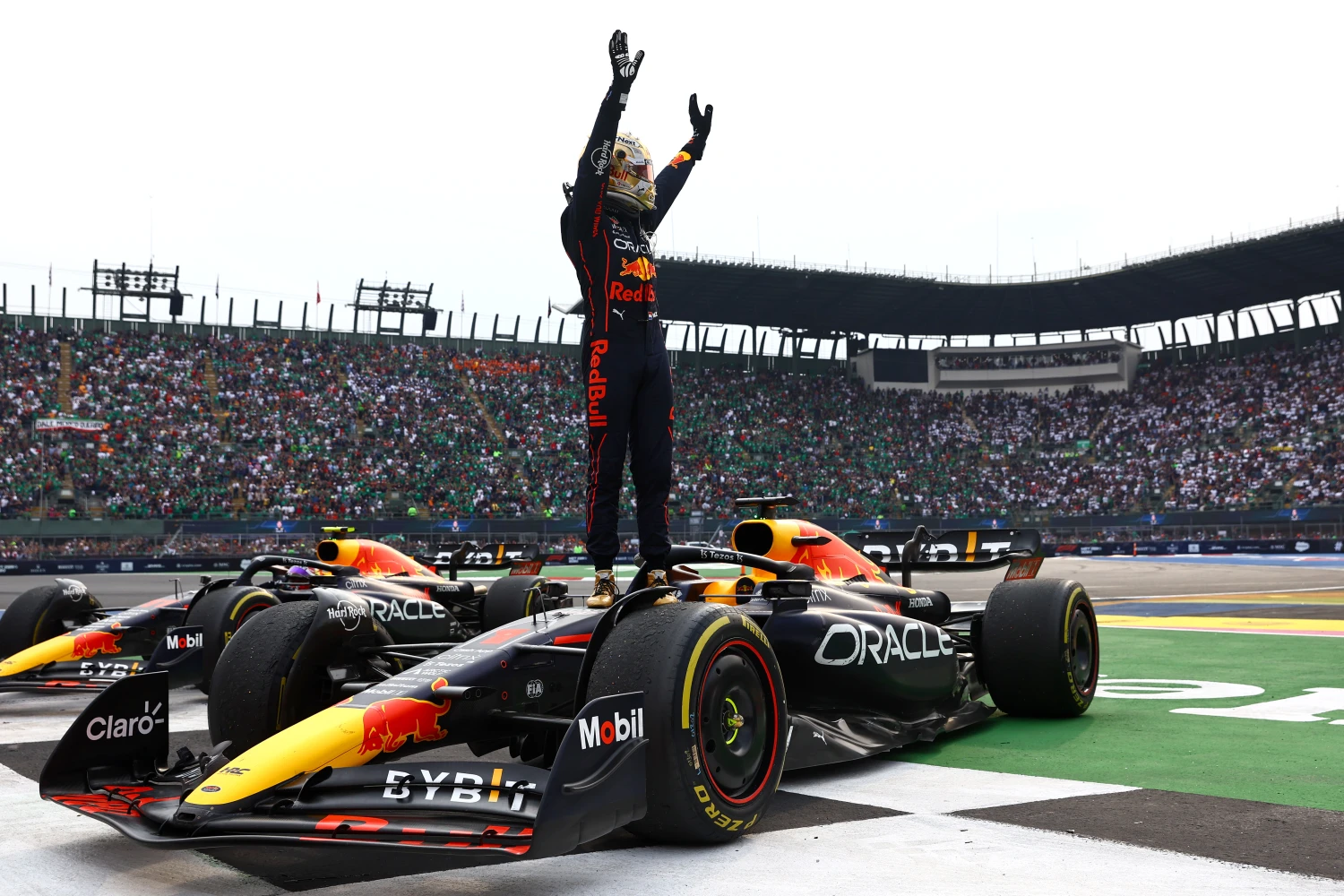
Built in 1959, this circuit found its place in the championship 4 years later, in 1963. An event which experienced 2 major interruptions: first from 1971 to 1985, then from 1993 before returning in 2015. This makes it a historical circuit, however it has hosted relatively few Grand Prix. Sunday will hold its 23rd edition at the Autódromo Hermanos Rodríguez. A name given in tribute to the two Rodríguez brothers, leading figures of Mexican motor racing in the 1960s-70s.
The Mexican GP has always been held on this track, even though in the 2000s, a project to build a circuit in Cancun aimed to host F1. A project that will ultimately not see the light of day, the circuit never having been built. Unless…
The characteristics of the circuit
The track is 4,304 km long, has 17 turns and 3 DRS zones for 2 detection zones. The drivers will start on Sunday for 71 laps of the race, which is a little over 305km.
In Mexico, starting in pole position is not necessarily an advantage. Starting at the beginning of a straight line of more than 800 meters, it is not uncommon to see the poleman being overtaken by his competitors. Last year Max Verstappen kept his pole gain thanks to a beautiful late braking at turn 1.
The sequence of turns 7, 8, 9, 10 and 11 is magnificent, reminiscent of Suzuka. They will have to be well negotiated to exit effectively before the last DRS zone of the circuit. After this last one, the entrance into the stadium will be noisy as usual, spectators will have time to admire the mechanics in the slowest sequence of the circuit.
Due to altitude, the air density is very low in Mexico, graining often appears on tires: the teams will have to adapt. You can find a similar wing setting to Monaco, to compensate for the lack of aerodynamic support, while maintaining a very low drag: this allows you to reach maximum speeds among the highest of the season!
A two-stop strategy recommended by Pirelli
At the pneumatic level, there will be very little degradation. Thus, Mario Isola explains the choice of having, in Mexico, the most efficient tires available.
« This year, we have decided to bring the three softest compounds – C3, C4, and C5 – to Mexico after in-depth reflection based on the information from last year, as well as the simulations that the teams provide us every time. This should lead to a greater variety of strategic choices throughout the race, also opening the door to a two-stop strategy. Last year, when the chosen tires were C2, C3, and C4, almost all the drivers stopped only once, mainly in soft and mediums. »
As in Japan with the testing of a new C2 tyre in free practice, this time it will be the new C4 that will be tested: « Mexico also gives us the opportunity to test a new variant of the C4 with all the teams. During the two hours of free practice on Friday, each driver will have two sets of these new prototypes that they can use at their discretion. Once we have analysed all the data, we will then decide whether or not to approve this version for use in 2024. »
It’s #MexicoGP week! 🇲🇽
↗️ Softer compounds for 2023
🧪 C4 prototype testing#Fit4F1 pic.twitter.com/F0OTB8IAb5— Pirelli Motorsport (@Pirellisport) October 24, 2023
In the sporting side, the Red Bulls should once again dominate the field. Will the McLarens continue on their roll? There may be doubts given their “low top speed”, which is such an important element in Mexico. Finally, we await confirmation of Mercedes’ upturn in performance, especially with their new floor. Reply from Friday, at 8:10 p.m., with the FP1!