Belgian GP: Strategy Summary
After each Grand Prix, casinoenligne.uk.com offers you a graphical analysis of the different strategies used during the race, especially focusing on the contenders for victory.

In his post-race statements, Kamui Kobayashi spoke about the difficulty of surviving with the soft tires and ultimately highlighted the problem that dictated the strategies. Having had very little practice on a dry track, the drivers and teams proceeded blindly with their adjustments, which resulted, by the end of qualifying, in the appearance of blisters on the front tires of some cars, causing concern until the start of the Grand Prix.
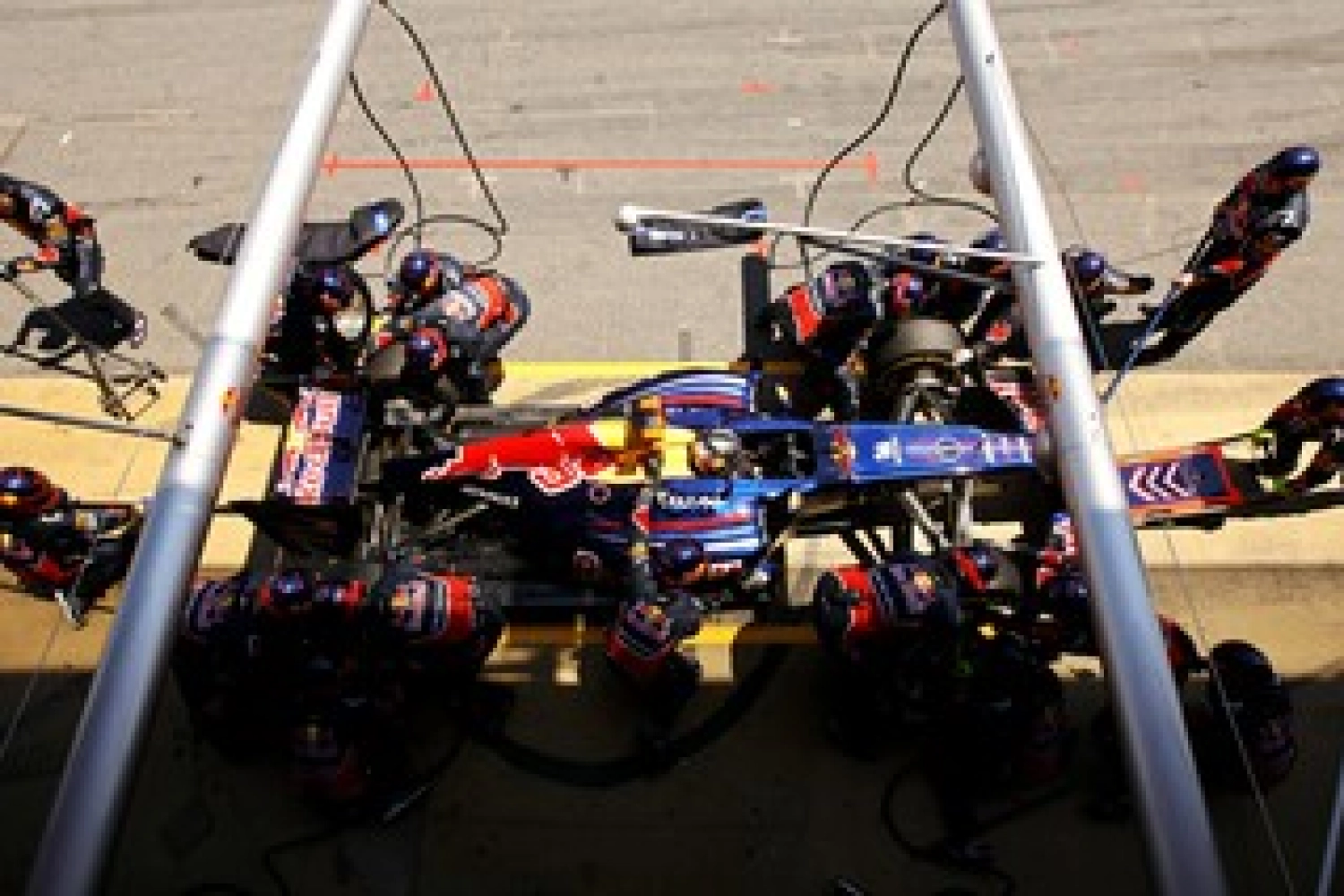
Christian Horner revealed after the race that he had considered the possibility of having his drivers start from the pits with new settings and medium tires, a potentially suicidal choice for a team competing for the championship but still prioritizing safety. Ultimately, the Red Bull drivers did start from the grid and discarded their qualifying tires on the third lap for Mark Webber and the fifth lap for Sebastian Vettel.
The strategy of the winner – Sebastian Vettel – was not the most interesting because it was fairly classic in the end. Unlike the German, who still benefited from the safety car to make his second stop, the strategies of his closest pursuers were directly dictated by the circumstances of the race. Having had a poor start, Mark Webber was switched to a long-haul strategy with two stints on medium tires, the first of which lasted 28 laps.
Behind the Australian, Jenson Button, who qualified beyond the 10th place, was able to choose to start on medium tires but, having suffered damage to his car from the debris of Senna’s R31 front wing, Button had to pit early and finished the race on a very aggressive strategy with three stints on soft tires. The fact that, in cooler temperatures, the McLaren uses the soft tires much better than its rivals and the 2009 champion’s ability to extend the stints were the keys to Jenson Button’s podium. Almost the same strategy was employed by Michael Schumacher, who started in the last position to finish 5th.
On his side, Fernando Alonso seemed somewhat trapped by his two-stop strategy, extending his stints on soft tires as much as possible.
The Eye of Paul Hembery
Spa-Francorchamps always offers thrilling races, even though it was unusual not to see any rain during the race this year.
Before the race, all the teams had very little information on a dry track at Spa, and this clearly increased the challenge. There was an issue in qualifying with blisters on the front tires, but we were confident that a similar scenario would not occur in the race, provided our usage recommendations were followed.
Of course, if a team had concerns about their situation, they had the option to change their settings and start from the pit lane. However, the majority of the teams did not feel the need to make these changes. The problem seemed to be the result of some cars placing excessive load on the inside of the front tire due to their settings, thus overheating their tires, but it did not affect the integrity of the tire structure at all.
Since there was no safety issue and because it would have been unfair to the teams that were not affected, the decision was made to start with the tires used in qualifying as stipulated by the current regulations. Although there was an option to change tires after qualifying, it ultimately proved unnecessary.
The medium tires worked without problems throughout the weekend. Michael Schumacher and Jenson Button started with the white sidewall medium tires, which contributed to their great comeback from the back of the pack.

To better understand this chart, you can use the FIA lap-by-lap summary by clicking here.