The KERS, overlooked by the public, could be decisive in Monza
The year 2011 saw the return of KERS on the majority of the cars. However, it remains rather discreet compared to the two other innovations of the season, even though it plays a major role this year, as will surely be demonstrated in the Italian Grand Prix.

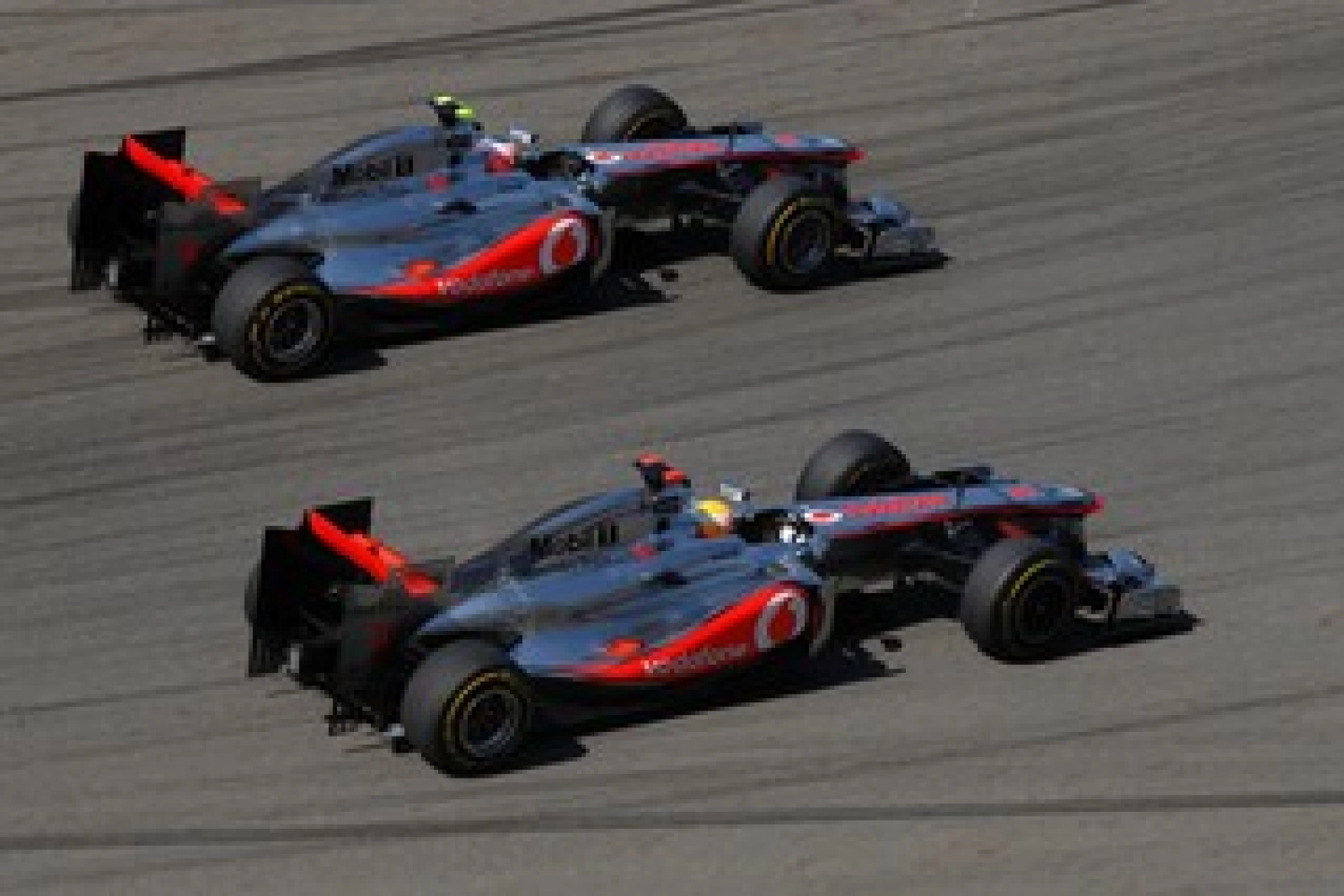
While all attention is focused as much on DRS as on the characteristic performances of Pirelli tires, in the eyes of the public, the return of KERS is somewhat overlooked.
However, a number of people suggest that the system played its own crucial role in the significant increase in overtakes this year, with the system being used either to boost drivers in the DRS zone during the overtaking maneuver itself, or even to defend against a car behind using the DRS.
While no real data exists on this point, some anecdotal evidence suggests that the KERS plays a role in all overtaking maneuvers for the cars using this system—as soon as the team employs it as a true area of research in electronic and battery technologies; in fact, it is precisely the philosophy that Formula 1 is made of.
The Mercedes-Benz KERS was developed by Mercedes-Benz HighPerformanceEngine in Brixworth (United Kingdom) with the support of Mercedes’ Research & Development department in Sindelfingen, Germany – a process that also results in a significant transfer of knowledge into series production in hybrid technologies. The KERS actually consists of a motor, the electronic block, and a number of batteries that make up the energy storage system.
During regenerative braking, where energy that would otherwise be dissipated as heat is harvested, the motor operates as a generator, supplying three-phase electricity to the electrical system. This allows energy to be stored in the battery. The system works in reverse when the driver requests additional power, with the generator becoming a motor to boost engine power. The energy recovery and power enhancement system has an efficiency of about 80%.
The engine in this system is about 10 times smaller than that of commercial cars, while the battery is 8 times smaller. Finally, there are about 3500 parts in a single KERS. This is a real example of cutting-edge engineering.
The gain per lap from a full use of KERS at Monza is more than 0.4 seconds. This is compared to the smallest value of the season, which was about 0.3 seconds in Hungary.
The best scenario for KERS acceleration is its use in relatively slow corners followed by long straights, which is exactly what Monza is filled with. There are 4 such opportunities per lap (after corners 2, 7, 10, and 11) when the car accelerates from a low speed to near maximum speed. This means there will be a significant benefit to lap time by using KERS after one of these 4 corners. KERS should be used 4 times per lap, with the additional power delivered to the wheels about 20 milliseconds after the KERS button is pressed.
The car spends over 12% per lap (more than 10 seconds) braking at Monza, with the major braking at the first corner seeing them slow down by about 260 km/h. In any case, Monza is currently the most special circuit for KERS energy recovery, with the fewest number of braking points per lap, only six in total at turns 1, 4, 6, 7, 8, 11.
We can therefore expect that the use of KERS during this Italian Grand Prix will be crucial for setting a good lap time, especially since the DRS can be activated in two distinct zones during the race, and freely used during qualifying.