Why does Mark Webber miss his starts?
Author of three pole positions in 2011, Mark Webber never managed to capitalize on this advantage in the races, often due to mediocre and sometimes even catastrophic starts, which the Australian discussed with an Australian newspaper.

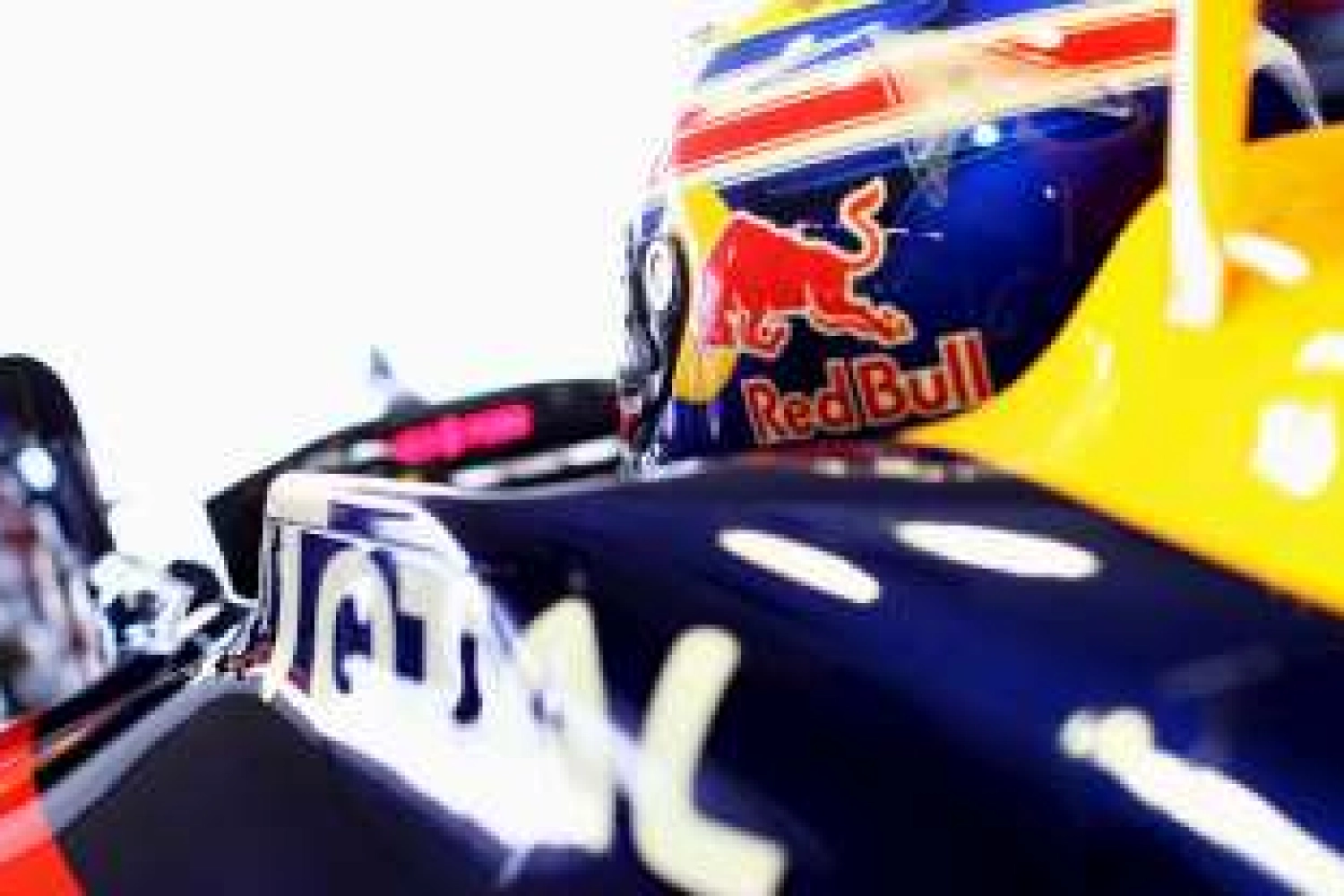
If there is one mystery as we approach the end of this season, it is the one that sees Sebastian Vettel with 8 victories, while his teammate, who was one of the main challengers to the German in his quest for the title in 2010, has none, despite 3 pole positions. The Australian seems to be affected by a curse this season, as he has never led the first lap despite starting at the front of the pack. According to James Allen’s statistical analysis on his blog, the Red Bull driver has lost no less than 22 places during the first lap since the start of the season, placing him last in this statistic, far behind Sebastian Vettel and Lewis Hamilton, who lost 4 each, and especially Felipe Massa and Fernando Alonso, who gained 4 and 8 respectively over the season, compared to their starting positions.
“A Formula One start is 60 to 70% the car, and the rest is up to the driver,” defends the Australian in the columns of the Sydney Morning Herald. “There have been some good starts – Melbourne, Valencia, Barcelona – but it’s not a field I would consider our strong point. Ferrari does a good job with starts, Alonso has produced some explosive ones like in Barcelona, as has Felipe [Massa], at times. However, I think I can nail mine when the technical aspect of the starting process goes well,” highlighting the specificity of a Formula One start.
On his blog a few weeks ago, Heikki Kovalainen detailed the F1 start procedure: « There are many variables, and it’s quite technical. More people are involved in a start than just the driver. We find the clutch biting point even before the formation lap, while the car is still on the pre-grid. Some spectators may notice that the cars move a bit and screech when they are on the grid. This is because we are calculating the grip between the tires and the asphalt and finding the biting point. During the formation lap, the tires cool down a bit because we have removed the heating covers, so at the moment of the start, usually in the last corner of the formation lap, where everyone drives rather slowly, we do a final clutch check. […] After the last corner, before I stop at my spot, an engineer on the pit wall monitors the telemetry data. He can then adjust the clutch setting and the biting point. […] Then, just before the start, I turn a knob on the steering wheel a few notches. After that, the success of the start depends on the driver’s reaction time and the estimates made by the engineer. »
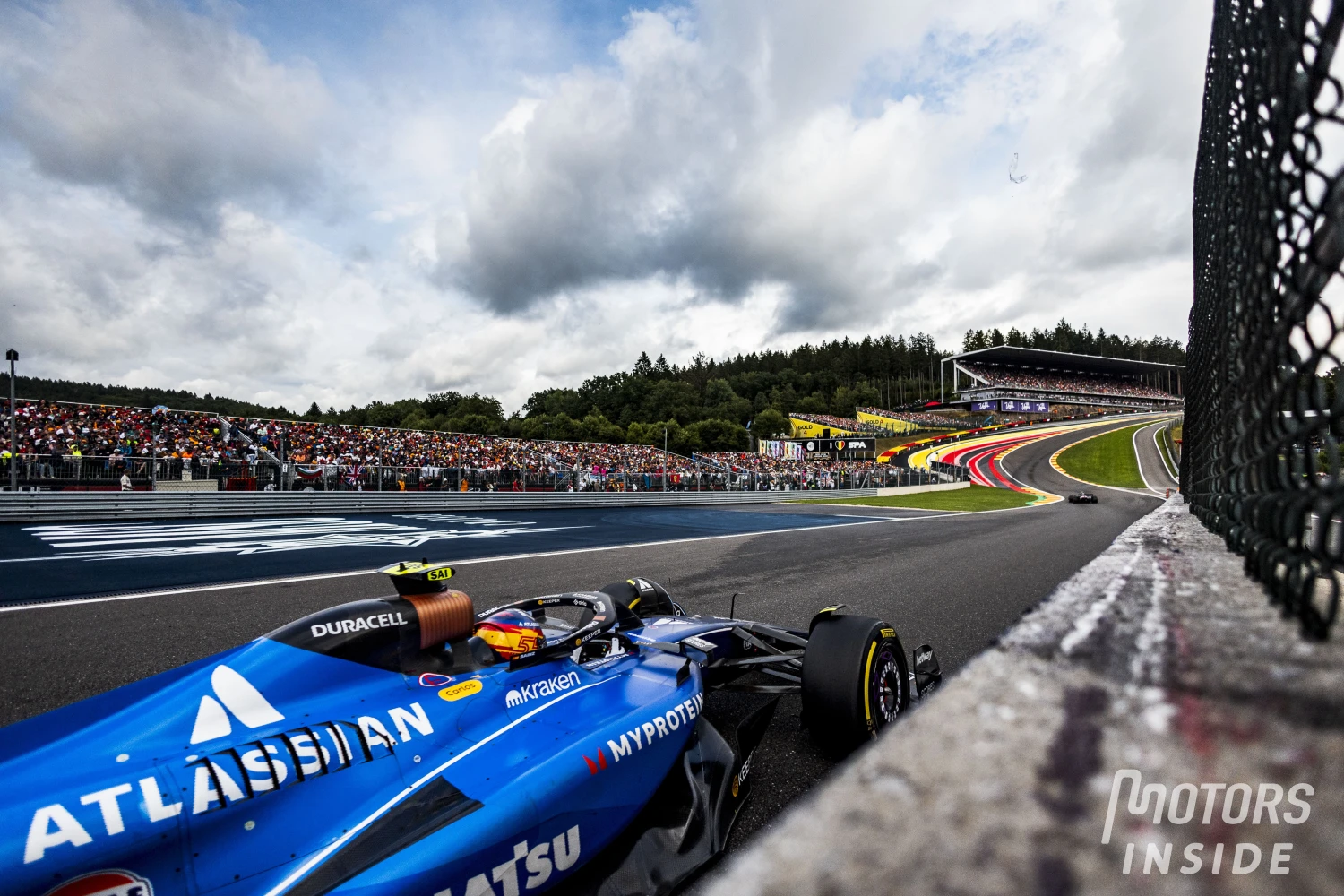
The driver only implements the start—which is no small task—but the quality of his execution largely depends on the preparation work on the clutch, a science that leaves little room for error, as was the case at Spa-Francorchamps where the Australian, starting 3rd, found himself only 8th at the end of the first lap: At Spa, it depended more on the calculations from Renault regarding the necessary torque level and Sebastian was less than 100 RPM away from making the exact same start as Mark, explains Christian Horner, who also reminds that the start requires a lot of focus for the driver, which leaves little room for error: It’s not like stopping at a red light on Parramatta Road, explains Webber. If the initial start—the first second of the start—goes well, the rest of the start generally goes well. The guys and I study the data after each race, and there’s often a technical reason that hinders us in the acceleration phase to the first corner.
It is indeed evident that the Australian driver has not always been supported by his car, sometimes let down by his energy recovery system (KERS), whose failure was glaring at the Malaysian Grand Prix earlier this season, where he lost 6 places compared to his starting position. But the Australian is not giving up: « We are constantly working to improve. Several things need to be coordinated, from the exact clutch temperature, over which the driver has no control, to the reaction time, which depends entirely on the driver. We have to put all these elements together in a very short time, and we only have one attempt per weekend, under these precise circumstances. »
The Red Bull driver can, however, count on the support of Christian Horner, who recalls that Mark has made some good starts. Unfortunately, the bad starts occurred when he was at the front. Webber himself also highlights the fact that all eyes, both on the track and at home, are intensely focused on the start, often overshadowing high-quality races.