Ecclestone hopes to go to Bahrain in 2012
Although the Bahrain Grand Prix was confirmed at the last FIA World Council meeting, Bernie Ecclestone admits that the race could be called into question if intangible evidence of ongoing violence were presented to him, but he does not want to be preachy and invites F1 to wait and see the situation for themselves before making a judgment.

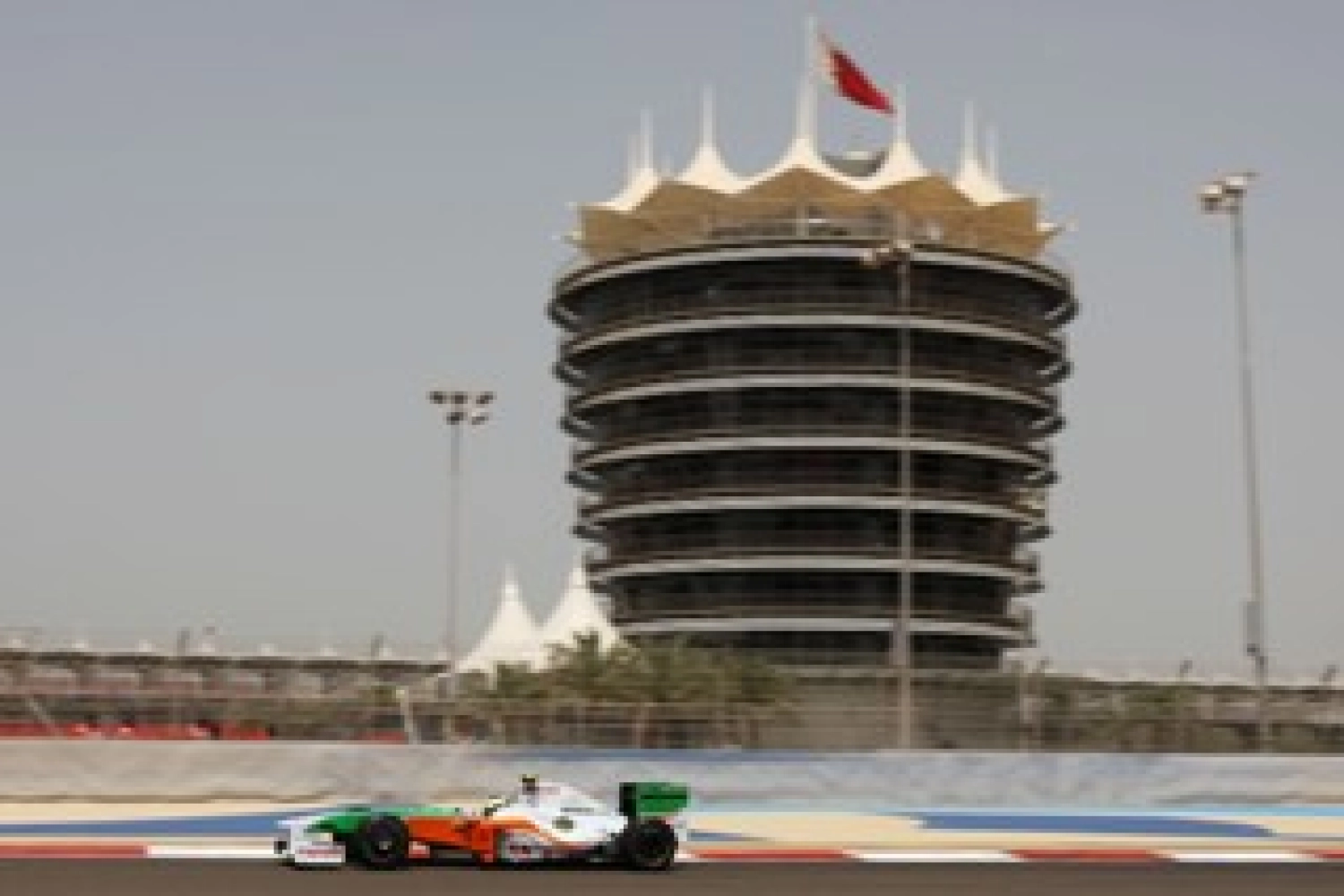
Although its presence on the 2012 calendar was confirmed at the last FIA World Council meeting, the situation in the Kingdom of Bahrain offers little optimism – and tourism – despite the reforms promised by the king and awaited by the protesters. While the recent attack on the British embassy in Bahrain is a strong sign, the report of the Independent Commission of Inquiry on the protests in Bahrain raises questions about the validity for F1 to travel to a country still plagued by violence and bearing the scars of the repression inflicted on the so-called Pearl Roundabout protest movement.
This independent Commission has indeed concluded that the authorities had resorted to unjustified and excessive use of force, denouncing torture carried out deliberately to extract confessions, punish protestors, or out of sheer revenge. Commissioned by King Hamad Bin Isa Al-Khalifa himself, the Commission assures that these acts did not respond to orders from the Bahraini authorities, but blames the latter for not intervening to stop the mistreatment by those responsible.
As recently as last Friday, riot police violently dispersed a convoy of protesters attempting to reach the now-famous Pearl Square in Manama, the capital of the country, while Matar Matar, a former deputy of the main opposition group – Wefaq –, claims that protesters were violently beaten […] the injured preferring not to go to a public hospital for fear of being arrested.
As Formula 1 observers question the necessity of a return to Bahrain as early as 2012, Bernie Ecclestone claims to have read the Commission of Inquiry’s report: “Yes, there were cases, but… I wanted to go. I was happy to go. I’d like to visit those prisons, those hospitals, or anywhere, and ask what really happened,” explained the Briton in an interview with the Guardian. The F1 financial chief, however, claims to have received assurances from local authorities: “I asked what was really happening and they replied there was no problem. The risk, if you go there, is that you’ll be taken to the best hotel, invited to dinner, and then taken back to your plane.”
Often criticized for awarding Grand Prix for large sums of dollars, rubles, or yuan, sometimes ignoring human rights, Bernie Ecclestone, like Saint Thomas, only believes what he sees and calls to give Bahrain the benefit of the doubt: « No matter where you go, the moment you get off the plane, when you visit someone’s country, you have to respect their way of life, their religion, their laws, or anything else. It’s not right to go to a country and tell them they have to change. Don’t go there. If you know something wrong is happening, abstain. »
Bernie Ecclestone then invokes his past experience: « We stopped going to South Africa years ago because of Apartheid. I witnessed things there that disturbed me. […] I hope we go to Bahrain and there are no problems, that the race goes on normally, that the public is happy, and there are no dramas. That’s what I hope. »
However, in the Daily Mail, Mark Webber, a rare driver who publicly opposed the organization of the Bahrain Grand Prix in 2011, reiterated his doubts before the race was confirmed in the calendar by the FIA: « Time is a healer, and people eventually move on. Will that be enough in this situation? We’ll know a bit more in the coming months. Clearly, the Bahrainis have started a struggle and are very, very far from discussions about a sporting event. It’s obviously something very serious happening and could, possibly, continue. »
The Australian therefore believes that it is necessary to take the time for reflection, which is why Bernie has so many races scheduled on the calendar, because he knows that some of them, whether for commercial or political reasons, as in the case of Bahrain, could be vulnerable.
Bernie Ecclestone admits that if indisputable evidence were to confirm the persistence of violence in Bahrain, he should seriously consider it, but he nevertheless reminds that no country is faultless: “We went to Argentina when dramatic things were happening there [editor’s note: coup d’état, military dictatorship, Falklands War]. There have been tragedies in Brazil [editor’s note: military dictatorship established in 1964]. Bad things happened there. I think you can look anywhere and you won’t find anyone faultless. Is England faultless? There are terrible atrocities we have committed,” questions Bernie Ecclestone in The Guardian, referring to the more or less recent history of Great Britain.
In any case, fundamentally, the situation in Bahrain only illustrates the complex – and often ambiguous – relationship between sports and politics: regularly claiming its neutrality in political conflicts, sometimes even boasting of its universality that transcends differences and conflicts, can sports remain blind to the suffering of minorities or peoples, at the risk of sometimes providing a platform for repressive regimes? That is the question…