The 2012 Ferrari as seen by Giorgio Piola
Less than two weeks before the presentation of the new Ferrari, Giorgio Piola, a journalist specializing in technical matters, reveals for the Gazetta dello Sport the different technical solutions that the latest creation from Maranello might feature.

Criticized last season for its overly conservative approach, Scuderia Ferrari, after a disappointing 2011 season, approaches the 2012 season with a strong determination to produce a more daring car. Following Aldo Costa’s departure to Mercedes, Ferrari entrusted the technical direction to Briton Pat Fry, a defector from McLaren, and even though the new vehicle for Fernando Alonso and Felipe Massa will still be the work of Nicolas Tombazis, the Greek engineer has been supported in his task by one of Maranello’s historical figures: Rory Byrne.
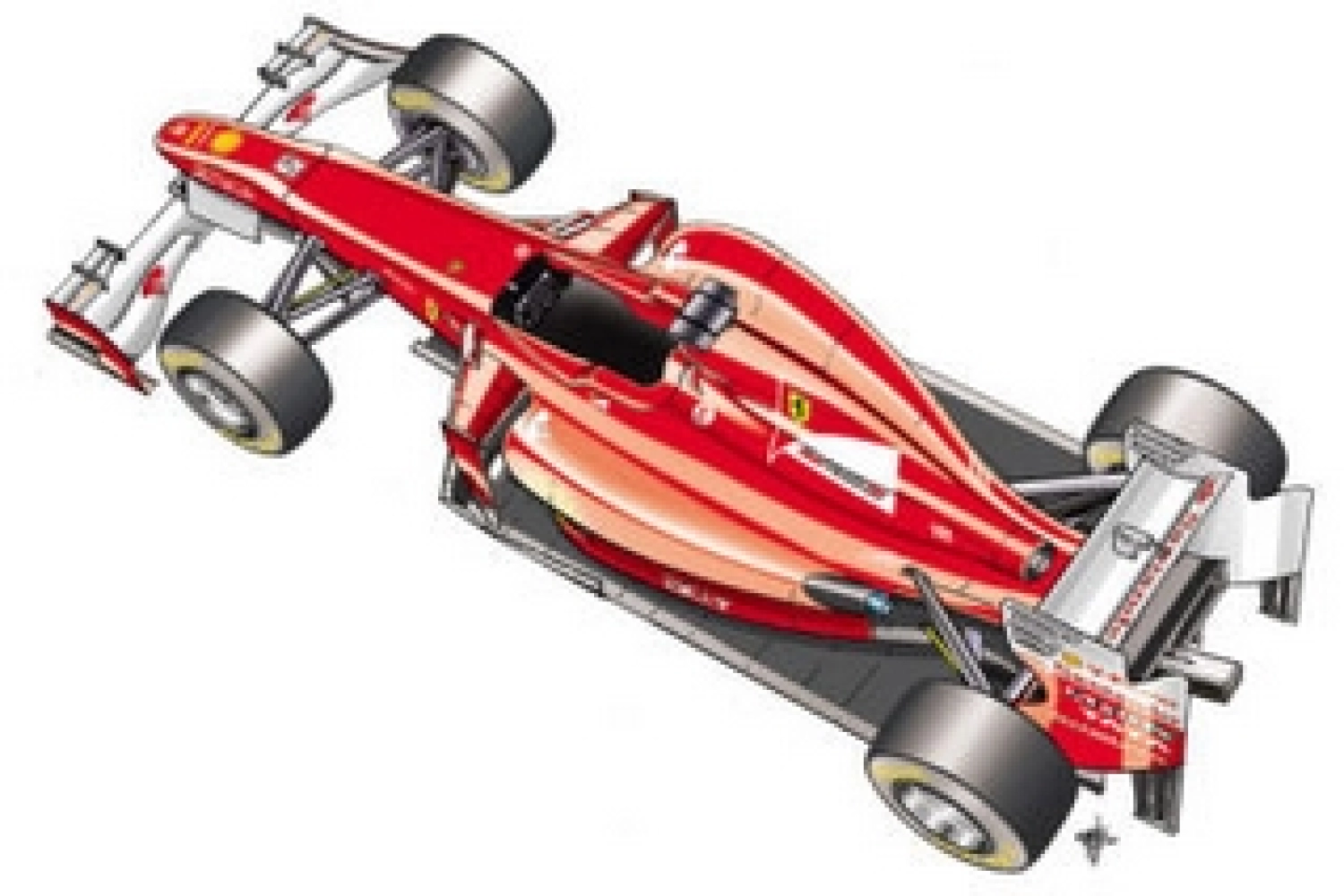
In the columns of the Gazetta dello Sport, Giorgio Piola—a journalist specialized in technical issues and recently made famous for uncovering the ingenious ground clearance correction system devised by Lotus—reveals some inside information about Ferrari’s 2012 model, which will be presented on February 3rd. The journalist thus reveals that the failure during the side crash tests of the Italian single-seater—which has since passed successfully—could be explained by the design of the deformable structure meant to protect the cockpit: Until now, these were transverse carbon cones that are now enclosed in profiled fins that have an aerodynamic function. As such, the 663 project would feature two large fins at the front of the side pods, aimed at channeling air towards the rear of the car, a key aspect this season, with the ban on blown diffusers.
This is accompanied by a complete modification of the sidepods, which are narrower and taller – somewhat like the MP4-26 – to direct maximum airflow towards the rear end, both above and below the sidepods. This would have forced Ferrari’s engineers to completely rethink the cooling system, with the radiators being longer and more inclined than on previous single-seaters.
According to the first leaks from Giorgio Piola, the exhausts should be placed as low as possible in relation to the new rules imposed by the FIA, to act on the lower plane of the rear wing, but the Italian journalist believes that the Scuderia could change its approach to draw inspiration from the solutions adopted by Red Bull and McLaren, with higher exhaust outlets to increase the efficiency of the upper plane of the rear wing. The 663 project is also characterized by a hot air evacuation from the engine at the rear of the car, directly inspired by the RB7.
The 2012 season should also be the year of Ferrari’s conversion to pull-rod suspensions, adopted over the past few seasons by most of its rivals, primarily Red Bull. Unlike push-rod suspensions, pull-rod suspensions are more compact, allowing engineers to utilize a narrower rear end, but they also lower the car’s center of gravity, improving stability and handling.
The engineers of the Scuderia reportedly went even further by also adopting pull rod suspensions for the front axle, which haven’t been seen on a Formula One car since 2001 on the Minardi PS01, then driven by a certain Fernando Alonso. This solution also allows clearing up space and thus improving the airflow towards the rear of the car. Giorgio Piola did not dismiss the possibility that the Scuderia might have a ride-height correction system, different from the one proposed by Lotus F1 and banned by the FIA. However, according to Omnicorse.it, the International Automobile Federation also banned the solution proposed by Ferrari.
The probable F12 or F2012 should also offer a lower driving position, thus explaining the relatively high level of the front of the car, even if it will comply with the regulatory requirements set by the FIA for safety reasons, regarding the height of the front nose. Giorgio Piola assures: « This will result in a small bump at the connection point with the nose, which will certainly not be among the highest we will see at the start of this season in Melbourne on March 18. »
If Cardinal Tarcisio Bertone, Vatican Secretary of State, was able to get a glimpse of the model of the future Ferrari during a private visit to Maranello, we will have to wait until February 3, at 10:30 am, to see the extent of the technical overhaul undertaken by Ferrari, and until February 7 to assess the first results in the hands of Felipe Massa during the first winter tests held in Jerez.