Malaysia: The Pilots’ Perspective
Physical and technical challenge, the Sepang circuit, host of the Malaysian Grand Prix this weekend, has become an essential stop, both appreciated and feared by Formula One drivers.

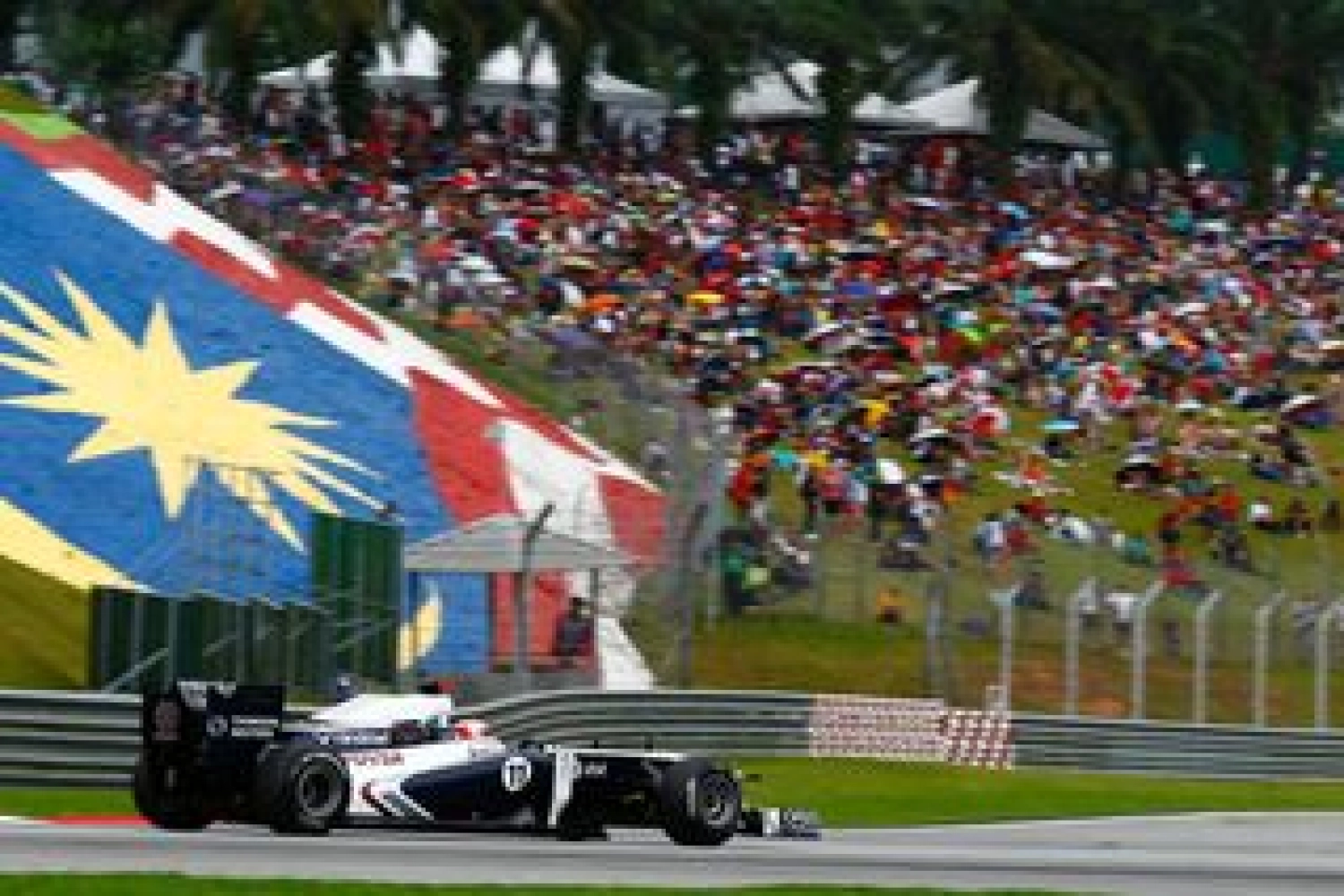
It is on the outskirts of Kuala Lumpur, near its airport, that the Sepang circuit is nestled, hosting the Malaysian Grand Prix since 1999. Filled with high-speed sequences, the Malaysian circuit is considered one of the best tracks to come out of the sometimes uninspired imagination of Herman Tilke: “Sepang is undoubtedly my favorite circuit. […] It is beautiful, the track is wide, with large fast curves, a kind of undulation in the layout that makes it very pleasant to drive. The last corner is tight, but I really appreciate everything about this circuit. Well, except maybe the heat and humidity. But ultimately, it’s just one more challenge for the drivers. I really can’t wait to be there,” enthuses Romain Grosjean. “The track is magnificent to drive: you really feel what a Formula One car can offer, particularly in the middle sector,” explains Mark Webber.
With an average ambient temperature of 34°C and an average track temperature of 40°C, Malaysia is indeed considered the benchmark Grand Prix to test drivers and machines: Sepang is undoubtedly the toughest track of the year, both for the cars and the drivers. Mechanically, it’s very demanding because there are many sequences of high-speed corners, and it’s very hot and humid. Cooling is key for the car, just as hydration is for the driver, analyzes Pedro de la Rosa.
Therefore, the drivers and technicians must first acclimate to the intense heat usually observed in Malaysia, so as not to suffer during the weekend, as Romain Grosjean attests: « Small things can be helpful. First, it is important to maintain a normal training routine, without giving in to the desire to sleep. Then, you must adapt your body to the time difference and the climate. Especially in Malaysia where the heat and humidity make it one of the most physically demanding races of the year. »
Lewis Hamilton confirms and assures that McLaren and himself are ready for the challenge: « We have traditionally managed the cooling of our car quite well, so I don’t think it will be a problem. Physically, it’s always a tough race, but we are improving our organization in all areas, and I think we have made interesting progress this year to ensure that the whole team will be better prepared to face the heat and humidity. »
But the weather conditions are not the only challenges that await the drivers, as Sebastian Vettel points out: « The Sepang circuit is actually more difficult than it seems. It has large runoff areas and a wide track, so it seems easy, but that’s not the case. The heat, the high humidity, and the weather are not the only challenges it poses, as the main one is finding the ideal balance. There are two straights of almost a kilometer [each] but you also need to put a lot of downforce on the car to generate enough grip in the corners, so you have to find the right compromise. »
Thanks to these specificities, the Malaysian circuit has become a fixture on the calendar, as Martin Whitmarsh, team principal of McLaren-Mercedes, reminds us: Sepang triggered the expansion of our sport in Asia at the turn of the millennium. I am glad that it remains one of the pillars of the calendar, but also that it has developed its own character and history. Unfortunately, the history of the Malaysian circuit was darkened last October with the death of MotoGP rider Marco Simoncelli: I think it will always be one of my favorite circuits […] It’s a technical and interesting circuit, but I must add with Marco’s accident that racing here will now always be a bit sadder and it will be hard to know that one of our fellow drivers died here. The men of the Scuderia also paid tribute to the Italian driver during a photo session held today at the circuit.
Chronological milestones:
1999: Inaugural Grand Prix won by Eddie Irvine (Ferrari) while Michael Schumacher makes his return to competition after his Silverstone accident earlier in the season.
2000: Ferrari was crowned world champion in the constructors’ category.
2003: Kimi Räikkönen (McLaren) claims his first career victory there, while Fernando Alonso (Renault) secures his first pole position and stands on a Formula One podium for the first time.
2005: First podium for Toyota thanks to Jarno Trulli’s second place.
2006: Giancarlo Fisichella and Fernando Alonso deliver Renault’s first one-two finish in F1 since the French Grand Prix in 1982, the second in the history of the diamond in F1.
**2007:** Lewis Hamilton (McLaren) sets his first fastest lap in a race at Sepang.
2008: First fastest lap in a race for Nick Heidfeld and BMW in Formula One. The German then held the record for the driver who competed in the most Grand Prix races before securing a fastest lap.
2009: Jenson Button (Brawn GP) sets his first fastest lap in a race of his career, achieving his first Hat Trick by also taking pole position and winning the race.
2010: Nico Hülkenberg scores his first points in Formula One.