Spain: Figures and Technical Data
Overview of the technical constraints imposed by the Circuit de Catalunya on the chassis, engine, and tires of Formula One cars.

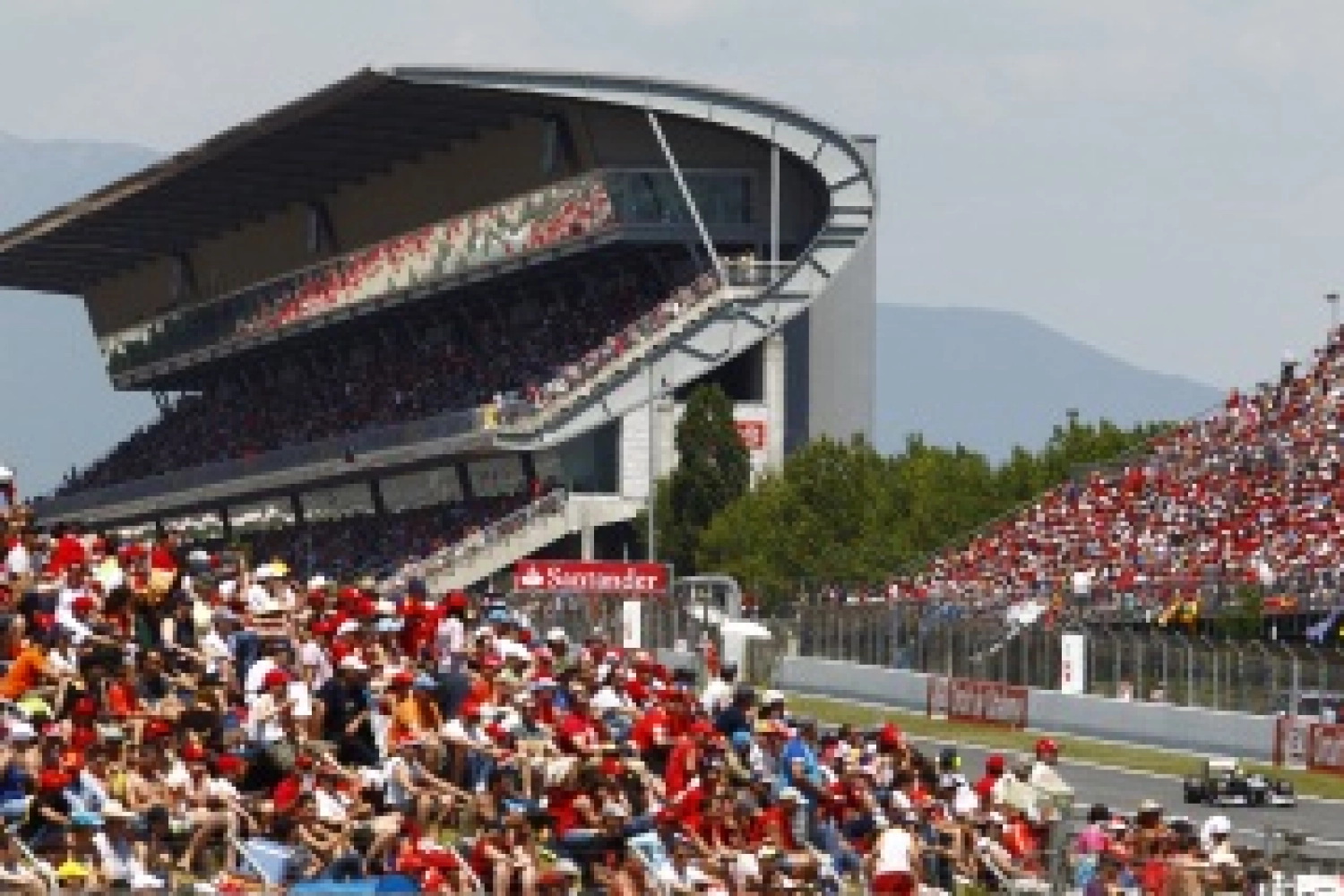
Built shortly before the organization of the 1992 Barcelona Summer Olympics, the Circuit de Catalunya will host the Spanish Grand Prix in Formula 1 for the 22nd time this year. The track is well known to the various teams as it is where two four-day test sessions took place before the season. In general, the circuit has hosted numerous test sessions in recent years.
The Spanish circuit is a “test” track because it offers a nice variety of turns and sections. Drivers encounter slow turns, medium-speed turns, as well as high-speed turns, heavy braking, and changes of direction. Observers often say that a single-seater that performs well on this track will perform well on any circuit – although it’s not always entirely accurate, it is most often the case.
It is difficult to overtake on the Circuit de Catalunya: in the 21 editions held so far, 20 times the winner started from the front row – 16 times for the pole position driver and 4 times for the second. The only exception is Michael Schumacher, who started from third place in 1996 for his first victory with Ferrari in pouring rain.
To facilitate overtaking, the FIA has implemented a 750-meter DRS zone on the pit straight. Detection will occur just after the last chicane, and the start of the DRS zone will be slightly before the timing line, ending just before the first turn.
Tom Kristensen will serve as the fourth track marshal this weekend in Spain. The Danish driver notably holds the record for victories at the 24 Hours of Le Mans, with eight wins.
Barcelona chassis side
The opinion of Mark Smith, Technical Director of the Caterham F1 Team:
« The Circuit de Catalunya is a track that all the teams know extremely well. We have already tested there twice this season, as the layout serves as a good test for most of the circuits we will see this season: it is fast, with high-speed corners, a long straight, and a number of slow corners where good traction is key.
It is also one of the most technically demanding circuits for the driver and offers a bit of everything. Turns 3 and 9 are high-speed corners, and finding the right balance for both is not easy. The final sector also presents a good challenge: the car has to make significant directional changes, so strong mechanical grip is needed to maximize lap time.
Barcelona is also a relatively open circuit, and the wind can have a significant effect on the car’s balance, especially when it changes direction. However, if the wind can be problematic, another major factor in Barcelona is how the track evolves over the weekend and even each day due to temperature changes, which can honestly be extreme. Although we are well aware of these factors, with the time we spend on the circuit, we must constantly monitor the weather to ensure that the car’s setup remains optimal.
Barcelona engine side
Rémi Taffin, Head of Track Operations at Renault Sport F1:
We covered more than 10,000 km thanks to the four partner teams that took part in the winter tests. We therefore know this track like no other. The circuit demands 60% full load with a combination of low and medium speed corners. It offers a good set of characteristics found on other circuits scheduled in the calendar, which is why it is very useful during pre-season testing.
With 60% of the lap spent at full throttle, we need to deliver a good level of engine responsiveness, especially in the third part, characterized by low and medium-speed sections.
We expect to do a lot of laps on Friday because our partners will be testing mechanical and aerodynamic developments, as they do every season at the first European race. We will therefore use engines that have already been used in a race for this first day, so as not to increase the mileage of the V8s that will be used for qualifying and the race. The tests that took place at Mugello last week have allowed us to understand these developments to optimize all our systems.
After the fantastic result in Bahrain, we of course hope to continue on this path. We also aim to extend the current streak in the Spanish Grand Prix, won by Red Bull in the past two seasons. In the last ten seasons, there has been at least one Renault engine on the podium seven times. Another record to uphold!
Barcelona on the tire side
Paul Hembery’s opinion, director of Pirelli Motorsport:
« The Spanish Grand Prix weekend should present a contrast to the last preseason tests in Barcelona, where low temperatures made it difficult for the tires to heat up. This time we expect warmer weather, which will be just another challenge added to the long list that the tires have to face.
We have designated the soft and hard tires to emphasize performance differences and create a different challenge for the teams, which will demonstrate the speed and durability of our products. This is also a significant step between our two designations for the first time this year, and it should allow teams to attempt different tire strategies and make a difference in the end.
Many have refined their knowledge of our range of tires and tried new parts at the Mugello circuit. Therefore, we expect a close Spanish Grand Prix, and perhaps, to see a fifth different winner in five races.
The opinion of Jaime Alguersuari, Pirelli test driver:
« First of all, it’s always a great pleasure to be on my home circuit, and the fans are always fantastic there. It’s something that all Spanish drivers and spectators feel. Barcelona is a very challenging track for the tires, but that makes it an excellent experience, where you always have to think about what you’re doing.
The choice of hard and soft compounds will make things very exciting, with degradation likely to be high. There will be many strategic possibilities. Turn 3 is the place that demands the most from the tire in terms of wear. It’s a very, very long right-hander that is almost flat-out depending on the car you have, and it seems to last forever when you’re in it and can never see the exit.
I have always preferred fairly stiff settings for Barcelona, with a car as close to the ground as possible, to get the best possible response from the tires. You need a reasonably high level of downforce, but it’s always a compromise in the end, as the lap is very varied. That’s really the challenge of Barcelona: getting the best out of the car and the tires at every point of the lap.
Barcelona in figures
5: This is the number of Gs the tires endure when braking at turn 10 – at the end of the inner straight of the circuit.
6: This is the record for the most victories by a driver. It is held by Michael Schumacher. The German driver holds another record, that of winning from the furthest starting position on the grid. The German driver started 3rd in 1996; in other editions, it has always been one of the two front-row drivers who has won.
7: It’s the record number of victories for Scuderia Ferrari at the Circuit de Catalunya. The Italian team leads ahead of Williams (5 victories), McLaren (4 victories), Red Bull and Benetton/Renault (2 victories), and Brawn GP (1 victory).
**16:** In seconds, it is the duration of the longest flat-out section, the pit straight. It’s also the number of drivers who started from pole position and won the race in 21 editions.
**40:** This is the probability of the safety car appearing during the race on Sunday.
57: This is the percentage of the lap of the Circuit de Catalunya that drivers spend at full throttle (but not necessarily at maximum speed).
250: The fastest speed reached in a corner by drivers in Bahrain, at Turn 12.
320: This is the maximum speed in km/h that the single-seaters will reach on the Spanish track according to McLaren.
1140: The length in meters of the pit straight where drivers can activate the DRS.
1991: The Circuit de Catalunya has been included in the Formula 1 World Championship calendar since 1991.
3500: This is the number of kilometers covered by Lewis Hamilton and Jenson Button at the wheel of the MP4-27 during the eight days of pre-season private testing held at the Circuit de Catalunya.
[From press releases published by Caterham F1, FIA, McLaren, Pirelli, and Renault Sport F1]