Soon no more tires for drivers in qualifying?
While Bernie Ecclestone would like to provide an extra set of tires to drivers who qualify in Q3 in order to prevent them from staying in the pits to save tires for the race, and although Pirelli claims to be ready to implement this immediately, the teams are opposed to it.

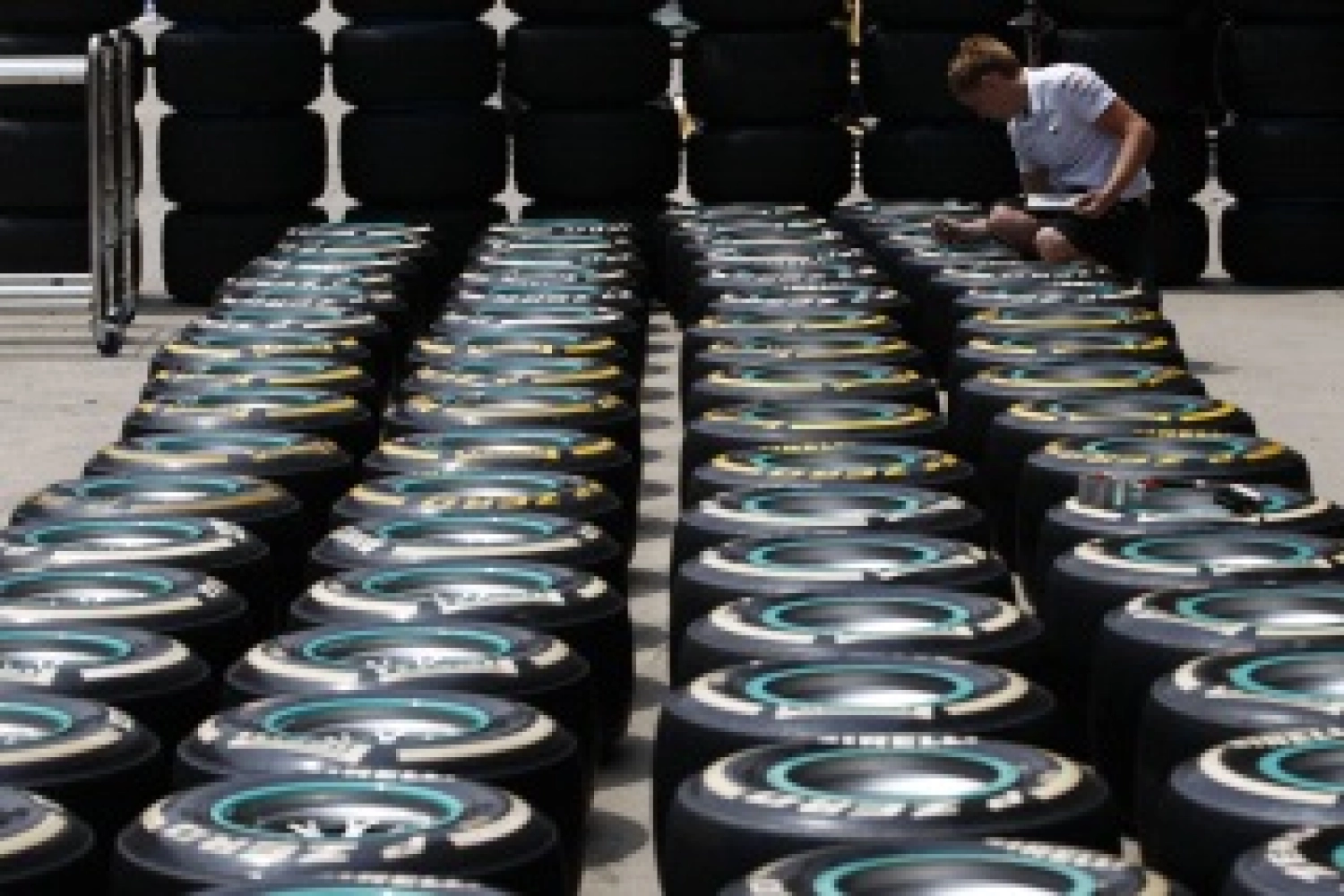
Although Pirelli has been contributing to the spectacle for two seasons now by providing teams with tires that have a deliberately short lifespan, the management of these tires right from the qualifying sessions has been one of the downsides. Indeed, since last year, it’s not uncommon to see drivers who qualify for Q3 choosing to save their tires for the race rather than wearing them out in vain, believing they have no chance of fighting for pole position.
As early as last year, the Milanese manufacturer, aware of the problem, proposed the introduction of qualifying tires, a suggestion that remained unheeded until Bernie Ecclestone reopened the discussion in an interview with the website Pitpass.com where he suggests that drivers should have an additional set of tires just for Q3: « What’s very bad with qualifying at the moment is the fact that some drivers think they can’t compete for pole position, so they prefer to save tires for the race. I said the thing to do was to give them all another set of tires so that at the end of qualifying, these tires would be gone, and there would be nothing to save. They would be forced to change. What we need is another set of tires, and then they will do more laps in qualifying. »
Concretely, all drivers qualified in Q3 would receive an additional new set of tires which they would have to return after qualifying, which should, theoretically, encourage all teams to run in Q3. Consequently, for the race, drivers qualified in Q3 would no longer be required to start with the tires with which they set their best time, but with a new set of tires of the same compound. Asked by the Italian magazine Autosprint, Paul Hembery, director of Pirelli Motorsport, believes that such a provision could be immediately applicable: « We could do it immediately. We could come with specific tires or keep the current compounds, but the teams say the format is very good, that the public likes tire strategies. But if fans in the stands do not see enough cars running in Q3, then they blame Pirelli, thinking we don’t want to spend more money to provide more tires. »
But the teams doubt the real interest of such a measure: « We have had many discussions, I think, among the teams about the tire situation in qualifying. We think the current rule is OK. We would not support additional tires, and I think if you look at the statistics, most of those teams [that don’t go out in Q3] have already done more laps before, so I don’t think it would really change much for the spectators », assessed Monisha Kaltenborn (Sauber) during one of the FIA press conferences organized on the occasion of the Monaco Grand Prix.
At Mercedes, which has often resigned itself to not completing any laps in Q3 to save new tires for the race, Ross Brawn assures not to have a firm and definitive opinion on the matter: « Of course, people come to see cars race, and even when there are cars that don’t go out, there are still six or seven cars fighting for pole position. The teams that don’t come out have generally resigned themselves to the fact that they can’t fight for the top spots, and I think for these teams, being able to preserve their tires is, in a way, a compensation for their performance in the first part of the race. […] Is the spectacle really ruined because some cars at the back of Q3 don’t run? I’m not sure. I think everyone focuses on what the guys fighting for pole position are doing. But if it’s proven that fans want to see ten cars fighting all the time in Q3, then we will accept additional tires. »
Franck Williams, on the other hand, seems rather favorable to this measure, believing it could benefit the outsiders: « I think it’s probably a good idea if you consider that it gives all teams a better chance. If you are really an experienced team with a brilliant engineer to manage things and you only have three sets of tires, you will always get the best out of them. If you don’t have such a person, you will always be at a disadvantage. If there is a fourth set of tires, it could aid one of the lesser-equipped teams. »
The fact remains that for Bernie Ecclestone, the Pirelli tires are not to be blamed, and the Briton actually wants to defend the Italian manufacturer and congratulate them for their contribution to the show, in response to criticism from some drivers: « Pirelli has done a superb job. A fantastic job. […] It’s more difficult for them to design tires that can only last 30% of the race and then drop in performance, than to make tires that last the entire race. »
The F1’s chief financial officer also recalls that the Milan firm designed these tires upon request and not on their own initiative: « It was part of the agreement I had with them that the tires only last a certain time during the race. It’s impressive that they managed to achieve that. They could have easily gone in the wrong direction with tires that last only 10 laps or, conversely, the entire race. Technically, it’s a huge accomplishment and, honestly, I didn’t think they would manage it. »
Paul Hembery, for his part, believes that the problems some drivers and/or teams are encountering are not related to the tires themselves, but to the regulations: « What has profoundly changed is the way the tires are used. […] Modifying the exhaust configuration in the regulations has undeniably made the cars less stable, which causes wheel spin and heats up the tread, so it’s normal that you can’t use the tires. »