Canada: The Pilots’ Perspective
Few destinations seem to achieve, like Montreal, a consensus among drivers. Yet the atmosphere in the Quebec city, the fervor of the fans, the memory of Gilles Villeneuve, and the unique character of the track now bearing the Canadian idol's name, make the Canadian Grand Prix an event marked with a white cross by all the drivers.

A small break in the European calendar, the F1 circus’s escapade to Canada always feels like a vacation. A cultural and multicultural metropolis, Montreal, a young and sporty city, offers F1 drivers a setting they enjoy during a Grand Prix. For Narain Karthikeyan, Canada is a unique race on the calendar, a mix between a city circuit with no run-offs like Monaco and with sections specific to a true circuit. But for Michael Schumacher, the Canadian Grand Prix is primarily about the atmosphere on the circuit and in the city. Canadian fans make this weekend a real celebration and for the drivers, it’s great to feel their passion for motorsports. It’s a source of motivation, emphasizes the German who assures that Montreal is always worth the trip.
Winner of a 2011 Grand Prix that will remain in the memories of the discipline for a long time, Jenson Button shares the analysis of the seven-time German world champion: « The city is filled with good vibes, the people are friendly and extremely welcoming, and the fans are incredibly passionate. It’s the perfect place to race, and you can feel the excitement building from the moment you step off the plane »
If for Kimi Räikkönen, winner in Montreal in 2005, the city itself is one of the best places on the calendar, Nico Rosberg highlights the carnival atmosphere that prevails there, while Nico Hülkenberg insists that the whole city is behind the race and is filled with fans. Vitaly Petrov agrees: Everyone loves racing here – it’s a beautiful city with really good restaurants, and enough bars to keep everyone who isn’t driving happy.
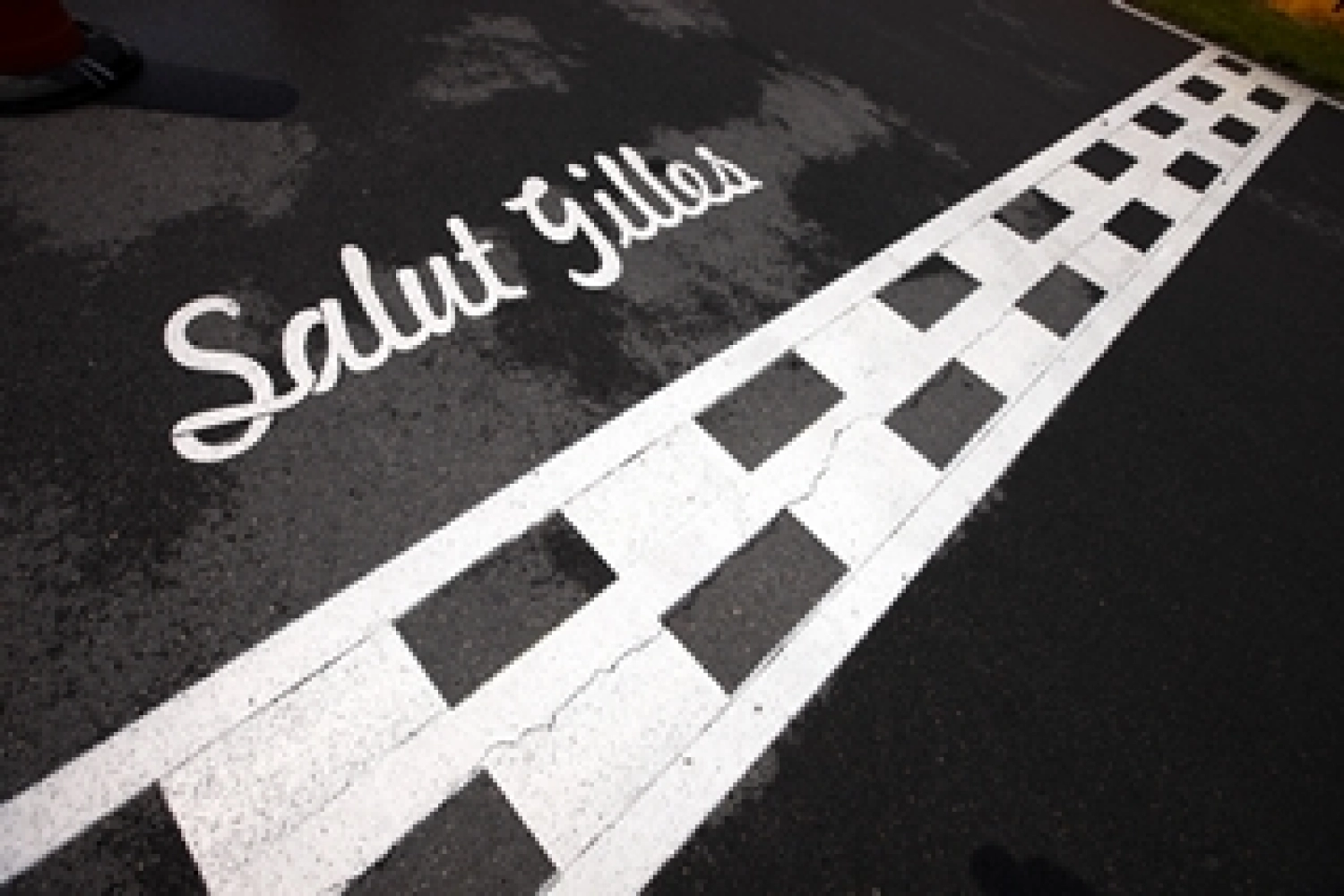
But the Montreal atmosphere is not the only thing that makes the Canadian event a special occasion in the hearts of fans and drivers, as the race takes place on the Gilles Villeneuve circuit: “Gilles Villeneuve was a great friend and rival of my father, which also makes this weekend very special. I am looking forward to it,” explains Nico Rosberg. The memory of the little prince of F1 will be even more present in the paddock, especially at Ferrari, as the 2012 edition will mark the thirtieth anniversary of the tragic passing of the Canadian idol: “We come to race on the circuit that bears his name and this city [Montreal, ed.] has always had a lot of Ferrari supporters, so we want to do well and offer our tifosi as well as Gilles’ fans something to celebrate,” ambitions Fernando Alonso.
But the circuit is not left behind, and Vitaly Petrov believes that it is a real challenge from the cockpit: There are a few key points to set up correctly to be fast on a lap – you need to manage brake wear and cool them sufficiently to be able to brake hard every time necessary, you need good traction in slow corners, and you have to attack the curbs aggressively to gain a few tenths for a good lap time. Nico Hülkenberg does not hesitate to rank the Gilles Villeneuve circuit among his favorites: It’s an atypical circuit, a mix between permanent sections and urban sectors, with many corners where the walls are very close. It’s easy to make a mistake because you have to use the curbs and get close to the walls for a good lap. The famous “Wall of Champions” has not stolen its name and commands respect even among beginner drivers. So, while Romain Grosjean is eager to discover the Quebec circuit after hearing all the praise from his fellow drivers, he will approach it with humility: It’s also a circuit that can “bite” you, as we’ve seen over the years with the famous “Wall of Champions.” Even if I’m not a Formula 1 champion, I will give this part of the circuit all the respect it deserves!
For Timo Glock, the proximity of the walls is just one of the factors that can make the race unpredictable: It’s also a place where you never know what might happen. We’ve had a lot of rain in the past and the “Wall of Champions” often plays a determining role in the outcome of the race or its preparation. It should be an exciting weekend, the German believes. Kimi Räikkönen, for his part, reminds us that the surface isn’t the same everywhere on the track; it can evolve throughout the race weekend and explains that this means changes in grip, which is another interesting challenge to solve. Sebastian Vettel agrees with the Finn on this point: Like the Albert Park circuit in Australia, the roads are public, so tire wear can be high. There is also a lot of wear on the brakes, which can pose a problem.
Moreover, the 2007 world champion insists that although it is an urban circuit, it features areas where overtaking is possible, so it is not necessary to put everything on qualifying like in Monaco. Pedro de la Rosa indeed confirms that the races are very open, with many overtaking opportunities, such as at the first turn or in the last chicane, while Pastor Maldonado points out that there is a strong DRS effect on the straights as well, so we should have overtakes this weekend.
The race can be even more open given that « the safety car appears so often during the race, to the point that there probably has never been a Canadian Grand Prix without its intervention, » says Kimi Räikkönen. « This peculiarity complicates strategies because you cannot predict when it will come into play. If it is deployed, you have to hope it’s at the right timing for you. »
All this might explain why Mark Webber ranks the Canadian event in his top 5 of the calendar: « It’s truly a very, very beautiful place and it always provides interesting Grand Prix for whatever reasons, and last year was no exception. »
For Lewis Hamilton, the track is fantastic and it has always suited him quite well: “It is super fast in certain areas, which requires finesse and precision, but you can also find yourself wheel to wheel with others at 320 km/h, and it’s an incredible feeling,” comments the 2008 world champion. “However, you still want a car with enough low-speed traction: all these long straights are generally preceded by tight hairpins, so it’s very important to put the power down well to set a good lap time.”
Thus, Felipe Massa reminds us that the Gilles Villeneuve circuit requires finding the right balance with the car: You have a lot of chicanes, so you need a car that’s good on curbs, and certain aspects are actually similar to Monaco, the biggest difference in Montreal being the need for good speed in the long straights. You also need traction to exit the chicanes, and you have to find the right compromise because you can’t put too much downforce on the car at the risk of having too much drag on the fast straight sections. Thus, Paul di Resta highlights the atypical nature of the Montreal circuit: You race with an aerodynamic package with low downforce, comparable to what you bring to Monza, you feel the car differently, as if it’s lighter without all that downforce. It always takes a few laps to get used to it again. Yet, Pedro de la Rosa insists on the fact that it’s also important to set the car similarly to Monaco to allow it to go fast in certain corners.
In summary, as everywhere the drivers race, « it is necessary to find a good balance to achieve the best possible time, but you need settings that allow you to really attack the curbs, especially in the last corner as it conditions the pit straight, » explains Heikki Kovalainen. « You also need to be sure to have a high top speed for the other straight, so you have to carefully consider the gearbox ratios and balance the 7th gear to handle the speeds we can reach with the DRS and KERS, both engaged. » Consequently, « the car needs to be good at braking to succeed in Canada, it is a very demanding circuit in this area, » adds his compatriot, Kimi Räikkönen.
But the last word goes to Sergio Pérez who, despite doing only three laps in 2011, will truly discover the Canadian circuit this season: « It’s a fast and flowing track where you can sometimes be close to the walls: it’s thrilling and exciting. » It is perhaps ultimately because the drivers have so much fun in Montreal that this enjoyment is so often shared by spectators and viewers around the world.
Some Chronological Landmarks:
1994: Michael Schumacher (Benetton) wins his first victory in Canada starting from pole position. The following year, the German will again secure pole position, but it is the Frenchman Jean Alesi (Ferrari) who will claim what remains his only victory in Formula One.
1997: Ferrari returns to victory thanks to Michael Schumacher’s success. The race is, however, stopped on the 54th lap after the accident of Olivier Panis.
2001: Michael Schumacher (Ferrari) secures his sixth pole position in Montreal, a record on the Quebec circuit.
2004: Michael Schumacher (Ferrari) wins his seventh and final victory in Montreal, an absolute record on the Circuit Gilles Villeneuve. This victory also remains, to this day, Ferrari’s last success on the banks of the Saint Lawrence. The Grand Prix also marks the debut of Timo Glock with Jordan, during which the German scores his first points in the World Championship.
**2005:** Kimi Räikkönen (McLaren) wins on the pathways of Parc Jean Drapeau, after Jenson Button (BAR-Honda) secured pole position.
2006: Fernando Alonso (Renault) claims victory after starting from pole position and allows Michelin to achieve its hundredth success in Formula One.
2007: Lewis Hamilton claims his first career win in Formula One after also securing his first pole position on Notre-Dame Island the day before. However, the race is primarily marked by the horrific accident of Robert Kubica.
**2008:** Robert Kubica (BMW) wins what remains, to this day, his only Grand Prix victory. But the Polish driver’s success was facilitated by the elimination of his main rivals in a pit lane collision, with Hamilton crashing his McLaren into Räikkönen’s Ferrari, which had stopped at the red light at the pit exit. However, the Englishman was not the only one caught out as Nico Rosberg drove his Williams into the future world champion’s car.
2009: No Grand Prix.
2010: After securing pole position, Lewis Hamilton (McLaren) claims a second victory in Montreal ahead of Jenson Button (McLaren) and Fernando Alonso (Ferrari)
2011: After a record-breaking race, Jenson Button wins for the first time in Montreal, overcoming race incidents to overtake Sebastian Vettel for the victory in a dramatic comeback during the final lap.