Belgium: Figures and Technical Data
Overview of the technical constraints imposed by the Spa-Francorchamps circuit on the chassis, engine, and tires of Formula One single-seaters.

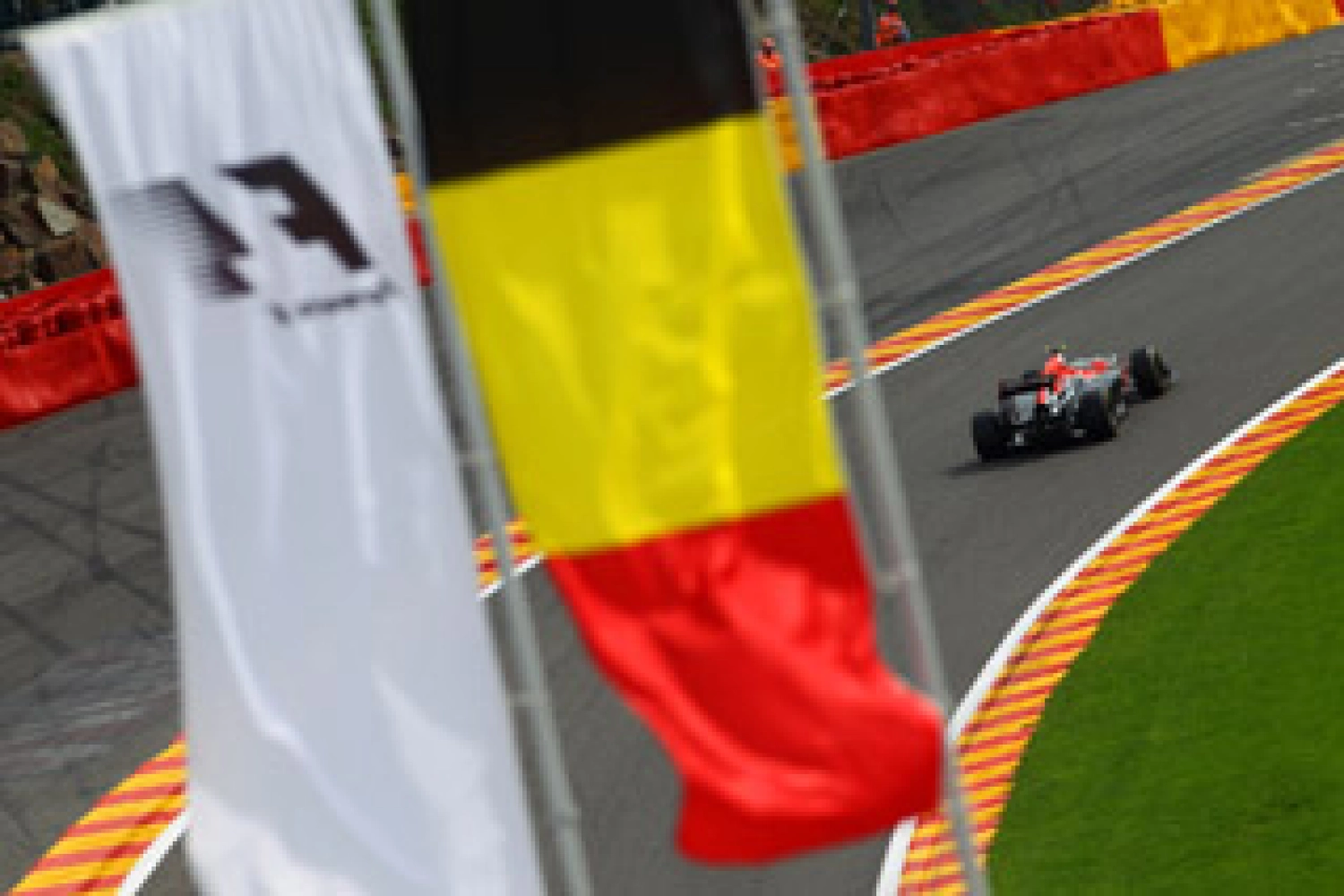
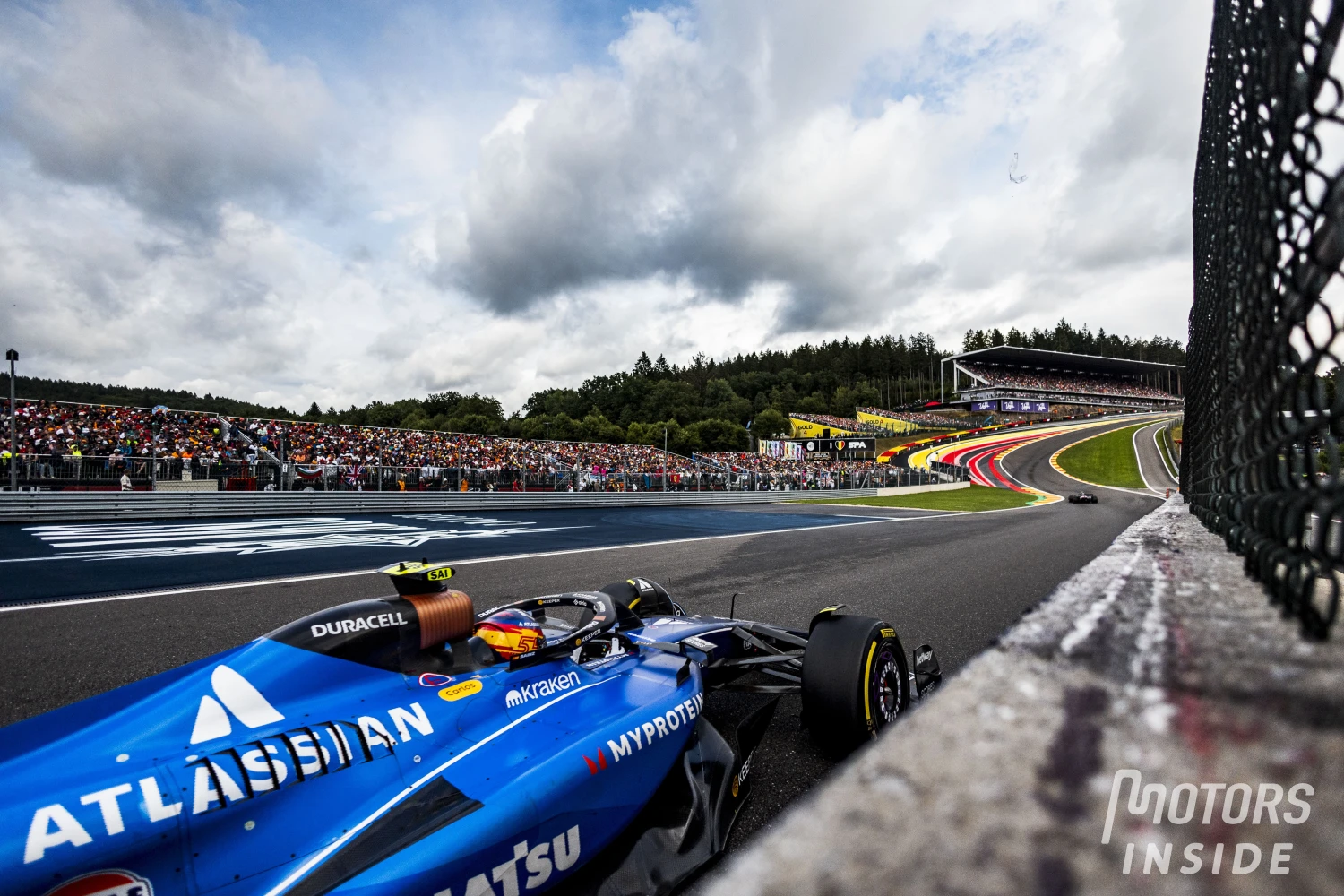
This weekend marks the end of the summer break, an opportunity for teams and drivers to get back on track. And what better place to do so than the legendary Belgian circuit of Spa-Francorchamps? The vast majority of drivers highly appreciate the rollercoaster of the Ardennes because it offers unique challenges that no other circuit provides throughout the year.
Besides being a weekend of resumption, this Belgian Grand Prix will be an opportunity to celebrate Michael Schumacher’s 300th Grand Prix, as the seven-time German world champion is the driver who has won the Belgian event the most times, on six occasions, surpassing Ayrton Senna (5 wins) as well as Jim Clark and Kimi Räikkönen (4 wins).
The Finnish driver, who now races for Team Lotus, has an interesting statistic at the Spa circuit, as in his seven participations, he either won or didn’t see the checkered flag: 4 victories in 2004, 2005, 2007, and 2009, 4 retirements, and 1 Grand Prix he couldn’t participate in due to a transmission problem in 2001.
On the regulations side, like last year, drivers are not allowed to use their DRS in the Eau Rouge corner. The DRS zone defined by the FIA is approximately the same as last year, just slightly shorter. Detection will take place at turn 2 (Eau Rouge) and activation will occur on the Kemmel straight up to the Combes corner.
Spa-Francorchamps chassis side
Giampaolo Dall’Ara, Head of Track Engineering at Sauber F1 Team:
Spa-Francorchamps is a circuit that offers a real challenge both for drivers and engineers. The level of downforce is lower than on most circuits, due to the long full-throttle sections and the design of the corners, which are mainly high-speed sequences with few slow turns. Regarding settings, it is not an easy circuit and it is also quite demanding on the tires, which this time will be the hardest: medium and hard. This is a logical choice because the surface is quite abrasive and there is a lot of load on the tires in the fast sections. But then, you also have unpredictable weather. In the morning, the track is often wet, and conditions can change quickly, which must be taken into consideration when preparing for the weekend and also during the race, where you may need to adapt the strategy.
Spa-Francorchamps engine side
Rémi Taffin, Head of Track Operations at Renault Sport F1:
« If Monza has a higher percentage of full load, Spa remains a bigger challenge because the corners are much more varied with altitude changes over a seven-kilometer lap. Maximum power is crucial for the long stretches in seventh gear. The RS27 is at full load for well over 20 consecutive seconds. Almost all our teams choose to use a new engine for this Grand Prix to take advantage of maximum power.
If high-rev power is crucial, it’s always important to maintain great linearity for corners like Blanchimont. The driver enters at full speed and must be able to maintain momentum without the rear slipping out. The stability of the rear end must not be overlooked because there are two major braking zones. At La Source, drivers drop to 70 km/h with the engine running at 8,700 rpm. At the Bus Stop, speeds go from 300 to 75 km/h. You also need to have a very good ratio for the seventh gear. It’s essential for making a good time.
It’s one of the circuits we use to test the reliability and performance of the engine on numerous parameters. We spend a lot of time on the bench to prepare for this race: about 4.5 hours and an additional 5 hours for calibration. For this reason, winning on this track is a bit more rewarding than on another circuit for an engine manufacturer.
Spa-Francorchamps on the tire side
The opinion of Paul Hembery, director of Pirelli Motorsport:
Spa is my favorite circuit. I recently went there for the 24 Hours: the track layout and the variety of the weather always seem to offer great races. From a tire perspective, it’s certainly one of the most challenging circuits of the season, due to high speeds and the extreme forces experienced in more than one way. The designation of hard and medium tires will allow drivers to push from start to finish, which is what Spa was originally designed for. The first half of the season began with the tightest championship start in the history of Formula 1 and I am therefore eager to see how the rest of 2012 will unfold, and which teams will have managed to take a step forward after the summer break. The grid is currently so tight, especially in the midfield, that it is impossible to make predictions.
Opinion of Jaime Alguersuari, Pirelli test driver:
« I think Spa is a fantastic race due to its rich sporting history. It is also where you find some of Formula 1’s most famous corners, such as Eau Rouge and Blanchimont. There are many high-speed corners, but also fast straights, making Spa a very fast circuit. It is a challenge for drivers as well as teams: the circuit requires intermediate downforce settings and good mechanical grip. For me, it will be very interesting, as I set my best qualifying time at Spa last year. My last test with Pirelli was also in Belgium, and you will find it difficult to find a driver who doesn’t like this race! From a tire perspective, Spa is relatively smooth, without being too hard on the tires, but it offers a unique challenge. Many high-speed sections cause considerable lateral forces on the tire construction. It is similar to the Japanese track at Suzuka and requires the same kind of settings and handling. »
Spa-Francorchamps in numbers
4: It is in G, the highest force to which the drivers are subjected during a lap of the Spa circuit.
7.004: This is the length in kilometers of the Spa-Francorchamps circuit, the longest of the season.
12: This is the percentage of time that drivers spend braking during a lap.
24: This is, in seconds, the longest section spent flat out by drivers on the Spa-Francorchamps circuit, and it is also the longest section of the season spent flat out.
72: This is the percentage of the lap driven at full throttle by the drivers, one of the highest of the season.
234: This is the average speed on a lap in Belgium.
330: This is the maximum speed reached by drivers at Spa according to Alan Permane (Lotus F1).
[Based on press releases published by the FIA, Lotus F1, McLaren, Pirelli, Renault Sport F1, and Sauber F1]