Ma Qing Hua and HRT collateral victims of the Senkaku Islands conflict?
While the HRT team would have liked to run the Chinese driver Ma Qing Hua again during the Free Practice 1 of the Japanese Grand Prix, the conflict between China and Japan over the sovereignty of the Senkaku Islands could force the Spanish team to reconsider its plans.

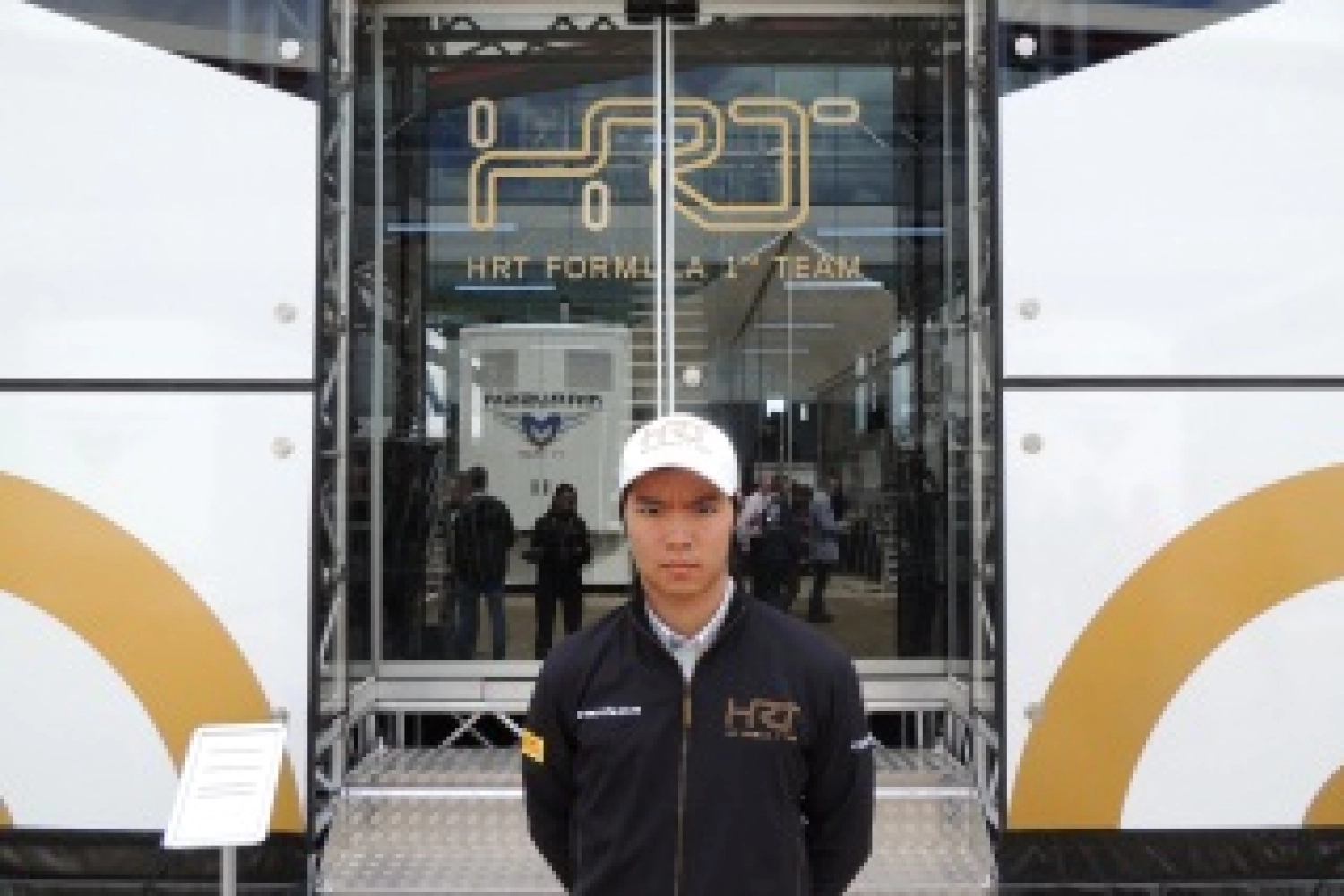
After Monza and Singapore, the HRT team was considering giving the wheel of the F112 of Narain Karthikeyan once again to Chinese driver Ma Qing Hua during the Free Practice 1 of the Japanese Grand Prix, which will take place in Suzuka from October 5 to 7, 2012. However, according to the German site Speedweek, the Spanish team may have to change its plans due to a lack of visa for the Chinese driver, amidst renewed tensions in Sino-Japanese relations.
Indeed, for over a hundred years, since the end of Japanese isolation in the 19th century, the two main economic powers of East Asia have maintained conflicting relations that culminated in two armed conflicts between 1894 and 1895, and then between 1937 and 1945. During the first Sino-Japanese War, the Middle Kingdom and the Empire of the Rising Sun entered into conflict over the suzerainty of Korea. Victorious over China after two years of fighting, Japan gained, through the Treaty of Shimonoseki, sovereignty over the territory of Formosa (currently Taiwan) as well as several islands or peninsulas. Japan then took the opportunity to claim sovereignty over the Senkaku Islands, under Japanese occupation, but which had not been officially ceded to Japan in the Treaty of Shimonoseki.
In 1945, during the capitulation of Japan, Taiwan was returned to China, like many territories conquered by Japan, except for the Senkaku Islands, which were placed under American administration until 1972. Devoid of any population, this small archipelago of 7 km² nonetheless constitutes a strategic territory, contested by China, Taiwan, and Japan, as it allows control over a vast maritime area rich in oil and gas. This simmering conflict is reminiscent of the recent resurgence of tensions between Argentina and the United Kingdom over the issue of the Falkland Islands, at a time when the world is experiencing a widespread crisis and the price of primary energy is soaring.
The current conflict between China and Japan is based on the Japanese government’s desire to purchase 3 of the 8 Senkaku Islands, which were previously owned by private individuals from Japan. China has obviously not remained indifferent to this announcement, which has exacerbated nationalist sentiment in the country, especially as Japan recently commemorated the Mukden Incident of 1931, which was the catalyst for what would become the second Sino-Japanese conflict starting in 1937. Both countries are currently in a context of heightened diplomatic tensions and demonstration of force, with China notably increasing its naval military presence around the Senkaku Islands.
However, even though the Chinese Minister of Defense has expressed his desire for the two countries to find a peaceful and negotiated solution and hopes to work with the Japanese government, some Japanese companies have decided to close their stores or factories in China for fear of reprisals as Beijing struggles to calm anti-Japanese protests. But the consequences are not only economic. In fact, the Chinese badminton team withdrew from the Japan Open, while Japanese cyclists, as well as journalists and photographers, were excluded from the Tour of Beijing.
The refusal of the Japanese authorities to grant a visa to HRT driver, Ma Qing Hua, is therefore part of this context and inevitably reignites the debate around the intrusion of political affairs into the sports arena, a debate that had already stirred the Formula One paddock as recently as the beginning of the season when journalists from the Middle East were denied visas by the Bahraini authorities.